Last updated November 2, 2026
 Whole-home duct cleaning
 Dryer vent cleaning
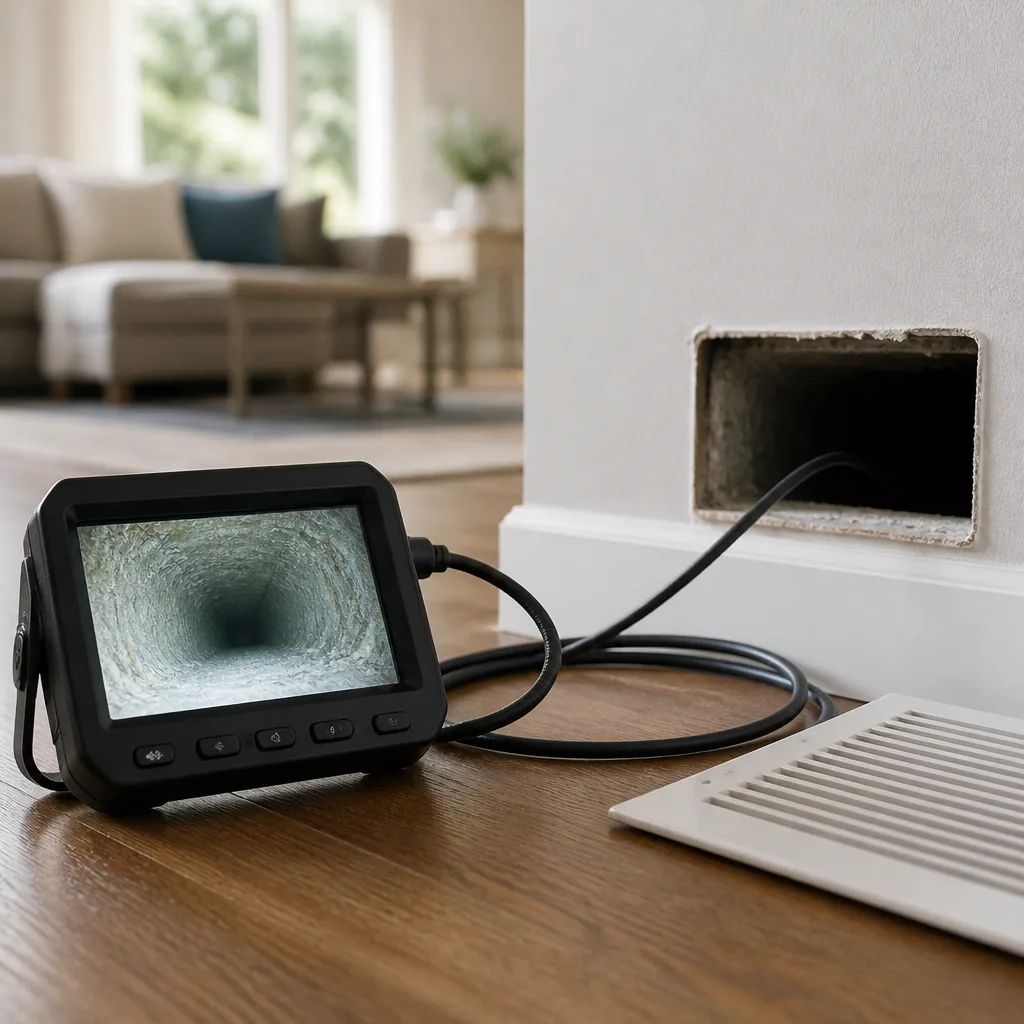 Camera inspection
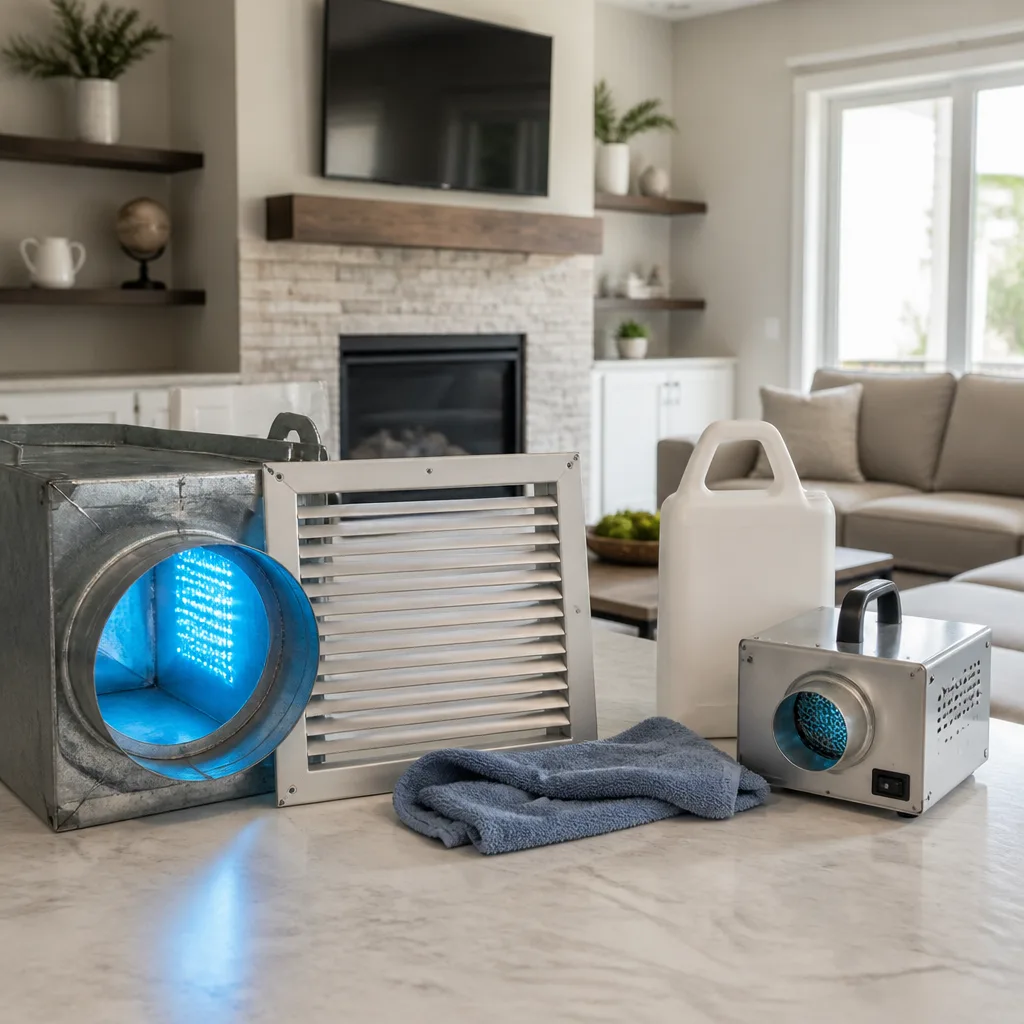 Sanitizing & deodorizing
Whole-system duct and dryer vent check with before-and-after photos - you see exactly what came out of your vents
That "$99 whole-house special" is a bait ad - the real number appears once they are in your hallway, or the "clean" is a shop-vac at the register. We photograph the inside of your ducts before and after instead.
DIY vs Professional Air Duct Cleaning: The Rialto Homeowner’s Decision Guide
Here’s a statistic most Rialto homeowners never hear: the ductwork in a typical 1,800-square-foot tract home contains between 40 and 70 linear feet of branch runs, and a consumer shop vac with every extension kit attached can effectively agitate maybe the first 18 inches of each branch. That leaves roughly 85% of the system untouched. This guide draws the precise line between what a prepared homeowner can legitimately accomplish with consumer tools and what requires professional Air Duct Cleaning, regardless of how much time and effort you’re willing to invest. We’ll cover the equipment gap in measurable terms, the containment problem that makes partial DIY work sometimes worse than none at all, and the specific tasks where doing it yourself is genuinely the right call.
Styles & brands we work with
- Whole-home duct cleaning
- Dryer vent cleaning
- Camera inspection
- Sanitizing & deodorizing
Quick Answer
DIY air duct cleaning in Rialto is genuinely effective for the first 12 to 18 inches of each duct branch, your register covers, return grilles, and dryer vent line, but it cannot replace professional cleaning beyond that point. Consumer equipment lacks the CFM, static pressure, and containment capability to extract debris from deep inside duct runs without redistributing it into your living space. The right approach for most Rialto homeowners is selective DIY maintenance paired with professional cleaning when inspection reveals contamination beyond the reach of your tools.
Table of Contents
- The Capability Map: What Your Tools Can Actually Reach
- The Containment Problem: Why Partial DIY Can Backfire
- The Equipment Gap in Measurable Terms
- Where DIY Genuinely Wins: Four Tasks You Should Do Yourself
- How to Do a Legitimate DIY Inspection
- What Rialto’s Climate and Housing Stock Mean for Your Ducts
- The Real Cost Analysis: DIY vs Professional in Rialto
- Common Mistakes to Avoid
- When to Call a Professional
- Frequently Asked Questions
- The Bottom Line
The Capability Map: What Your Tools Can Actually Reach
Let’s be precise about what consumer equipment does well, because there’s real value there. A shop vac with a good filter and a flexible brush kit can remove visible dust and debris from the first 12 to 18 inches of a duct branch. In most Rialto tract homes, built between the 1970s and early 2000s, that first foot and a half is where you’ll find the heaviest accumulation, because that’s where air velocity drops sharply at the register boot. You can make a visible difference in a Saturday afternoon.
Here’s an honest capability breakdown of the main consumer tools:
- Shop vac (5-6.5 peak HP, 100-150 CFM): Effective on register boots, the first 12-18 inches of branch lines, and visible debris at the register. Cannot generate enough static pressure to pull debris from the middle or far end of a 15-to-25-foot branch run.
- Flexible brush kits (12-24 foot rods): Can loosen debris and push it along. But without simultaneous negative-air extraction at the register, you’re moving dust toward the trunk line, not removing it from the system. Once the brush retracts, that debris settles back, often deeper than where it started.
- Compressed air (canned air or a small compressor): Blows debris off the immediate register area, and that’s about it. Air velocity drops quickly in an open duct system, and without containment at the opposite end, you’re aerosolizing dust into the room.
- Borescope or inspection camera (the $40-$80 range): Genuinely useful, and in our experience, this is where DIY pays off most. You can actually see the condition of your ducts and make an evidence-based decision instead of guessing.
The structural reality of most Rialto duct systems compounds the problem. Standard residential ductwork uses 6-inch or 8-inch flexible duct for branch lines, often run through attics that hit 140 degrees in an Inland Empire summer. That heat degrades the inner liner over time, creating rough surfaces where dust clings. A brush kit can scrape the top of that surface layer, but it cannot restore airflow capacity or remove contamination embedded in degraded liner material.
The Containment Problem: Why Partial DIY Can Backfire
This is the part most DIY guides skip, and it’s the most important concept in this entire article. When you agitate dust inside a duct system without negative-air containment, you don’t remove dust. You redistribute it.
Here’s what happens mechanically. Your HVAC fan is off during cleaning, so there’s no active airflow. When you push a brush or extend a shop vac hose into a branch line, you disturb settled particulate. The finest particles (the under-10-micron fraction, which includes mold spores, pet dander, and dust mite debris) become airborne inside the duct. Without a negative-pressure extraction system at the register pulling air out of the duct, those particles float. When you finish and turn your system back on, the first blast of air pushes them through your registers and into your living space, where they settle on furniture, bedding, and surfaces. Or they get pulled into your return and redistributed through the entire house.
We’ve seen this play out in Rialto more times than we can count. A homeowner spends a weekend cleaning ducts with a shop vac and brush kit, feels good about the visible dust they collected at the registers, and then notices more dust on furniture in the following weeks. They didn’t fail because they did a bad job. They failed because the equipment cannot create the pressure differential that makes extraction possible past the first foot and a half.
The technical term for what professionals use is source-capture negative air. A professional system connects a high-CFM vacuum unit to the ductwork, typically at the plenum or trunk line, creating continuous airflow from the living space into the duct and through a HEPA filtration system. That airflow carries disturbed particulate out of the ducts and traps it in filters rated to capture 99.97% of particles down to 0.3 microns. Consumer equipment cannot replicate this, not with any attachment, because the airflow volume is insufficient to maintain negative pressure across a full duct run.
So the practical takeaway is this: if you choose to DIY the first foot and a half, understand that you’re doing register maintenance, not duct cleaning. That’s a legitimate task with real benefits. But don’t push a brush down a 15-foot branch run without professional extraction, because you’re not removing the problem. You’re relocating it.
The Equipment Gap in Measurable Terms
Numbers tell the story better than adjectives, so let’s put concrete figures on the difference between what you can buy at a hardware store and what a professional air duct cleaning in Rialto deploys.
The best consumer shop vac you can reasonably buy (the 6.5 peak horsepower units from brands like Ridgid or Craftsman) produces between 150 and 185 CFM (cubic feet per minute) of airflow at the hose end, with static pressure around 55 to 70 inches of water lift. That’s genuinely impressive for a $100-$150 machine, and it’s why shop vacs handle the first 18 inches so effectively.
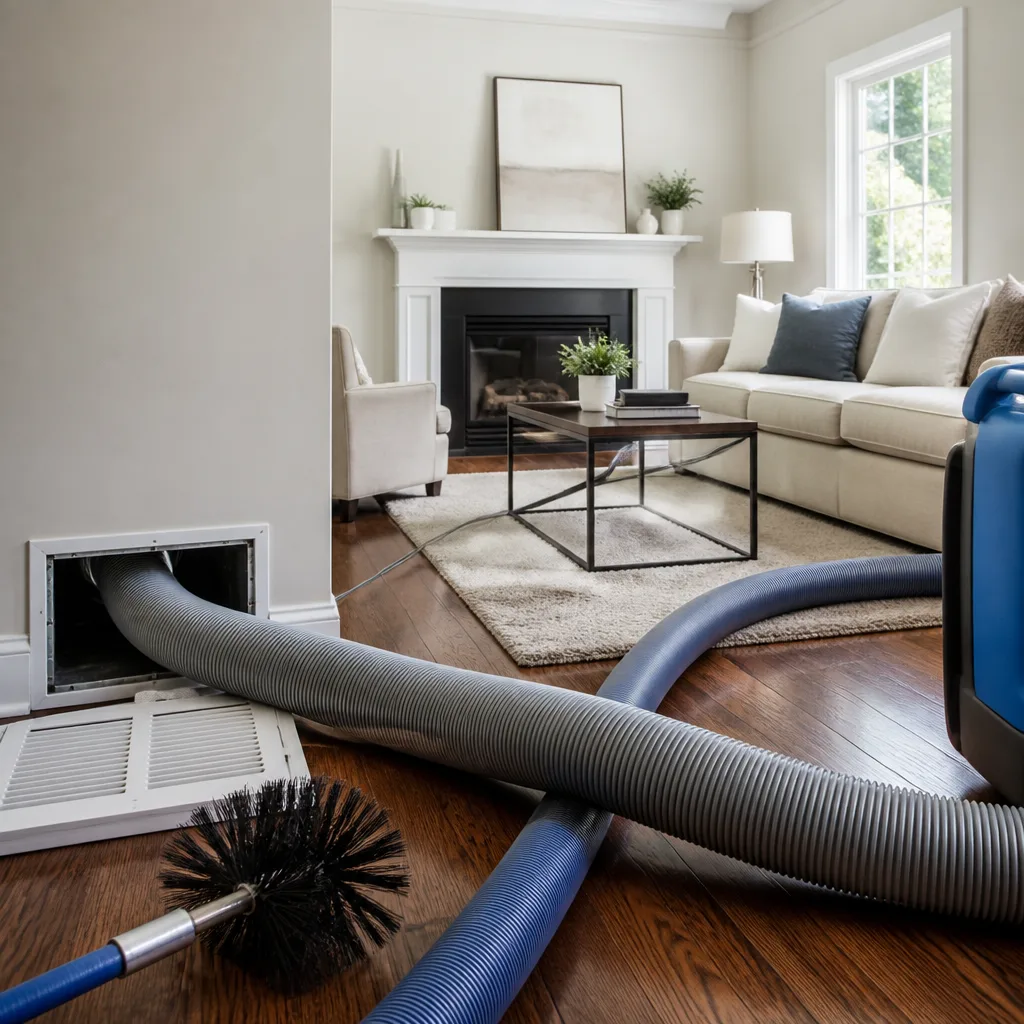
A professional portable extractor like the Nikro industrial vacuums used in professional duct cleaning produces 400 to 700 CFM and 95 to 130 inches of static pressure. And that’s before you add the Abatement Technologies containment and filtration equipment that professional remediators use to keep the work area sealed. Professional rotary brush systems, like the Rotobrush platforms standard in professional duct cleaning, don’t just brush the inside of a duct. They agitate the entire interior circumference simultaneously while the vacuum extraction system maintains negative pressure the entire time the brush is in the duct.
The difference that matters for a Rialto homeowner:
- CFM (airflow volume): Professional equipment moves 2 to 4 times the air of the best consumer shop vac. Higher CFM means debris is carried out of the duct, not just stirred up.
- Static pressure (suction force): Professional equipment generates roughly 1.5 to 2 times the suction force, which is what pulls debris from the far end of a 20-foot branch line back to the extraction point.
- Agitation method: Consumer brushes scrape one surface at a time. Professional rotary brushes or compressed-air agitation (the “skipper” or “whip” tools) contact all surfaces continuously, breaking the mechanical bond between dust and duct walls.
- Filtration quality: The best consumer shop vacs use HEPA filters, but filter efficiency degrades as the filter loads. Professional Nikro systems are engineered for continuous HEPA filtration over a full job, with filter-loading monitors and pre-separator stages.
- Containment: This is the one area where no consumer product exists. Abatement Technologies portable containment units create a sealed negative-pressure environment. You simply cannot buy this at any hardware store.
The gap is not about effort or technique. It’s about physics. Airflow is a measurable, limited resource, and the equipment that generates professional-grade airflow is not sold to consumers.
Where DIY Genuinely Wins: Four Tasks You Should Do Yourself
We’re not going to tell you that everything requires a professional, because that’s simply not true. There are four maintenance tasks a Rialto homeowner should absolutely handle themselves, and doing them well will extend the life of your system and improve your indoor air quality between professional cleanings; for deeper tasks, see our How to Hire an Air Duct Cleaning Contractor in Rialto: A Step-by-Step Guide.
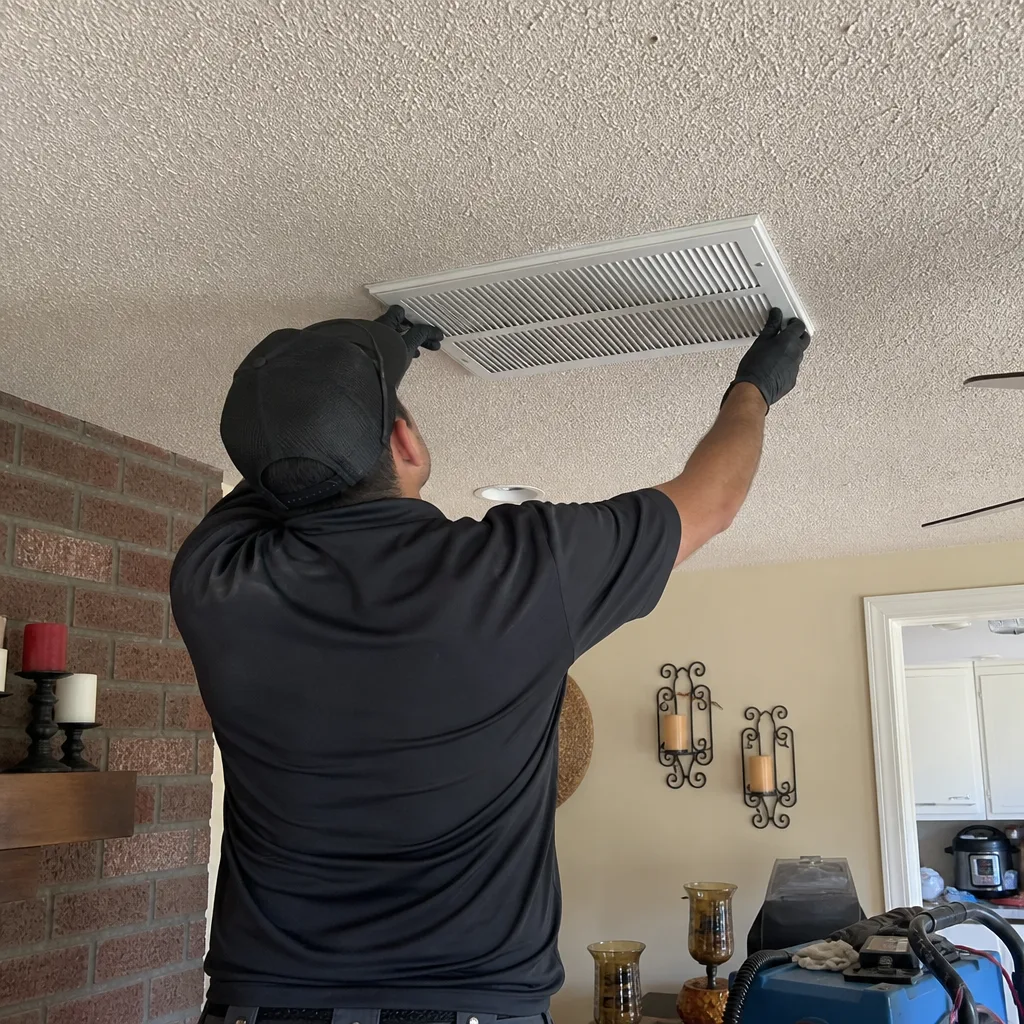
Task 1: Register and grille cleaning (every 2-3 months). Remove your register covers (they typically pop off or unscrew with two screws), wash them in warm soapy water, and vacuum the visible interior of the register boot with a shop vac and crevice tool. This is the most impactful 15-minute air quality task most homeowners never do. The register boot collects the heaviest visible dust in the system, and cleaning it prevents that dust from blowing into your living space every time the furnace or AC kicks on.
Task 2: Return grille vacuuming (monthly during cooling season). Your return grille is the intake point where air enters your HVAC system. In Rialto, where air conditioning runs heavily from May through October, return grilles accumulate dust quickly because they’re pulling air from your living space constantly. Vacuum the grille surface and reach into the return cavity as far as your hose will go. This is high-value, low-risk DIY work.
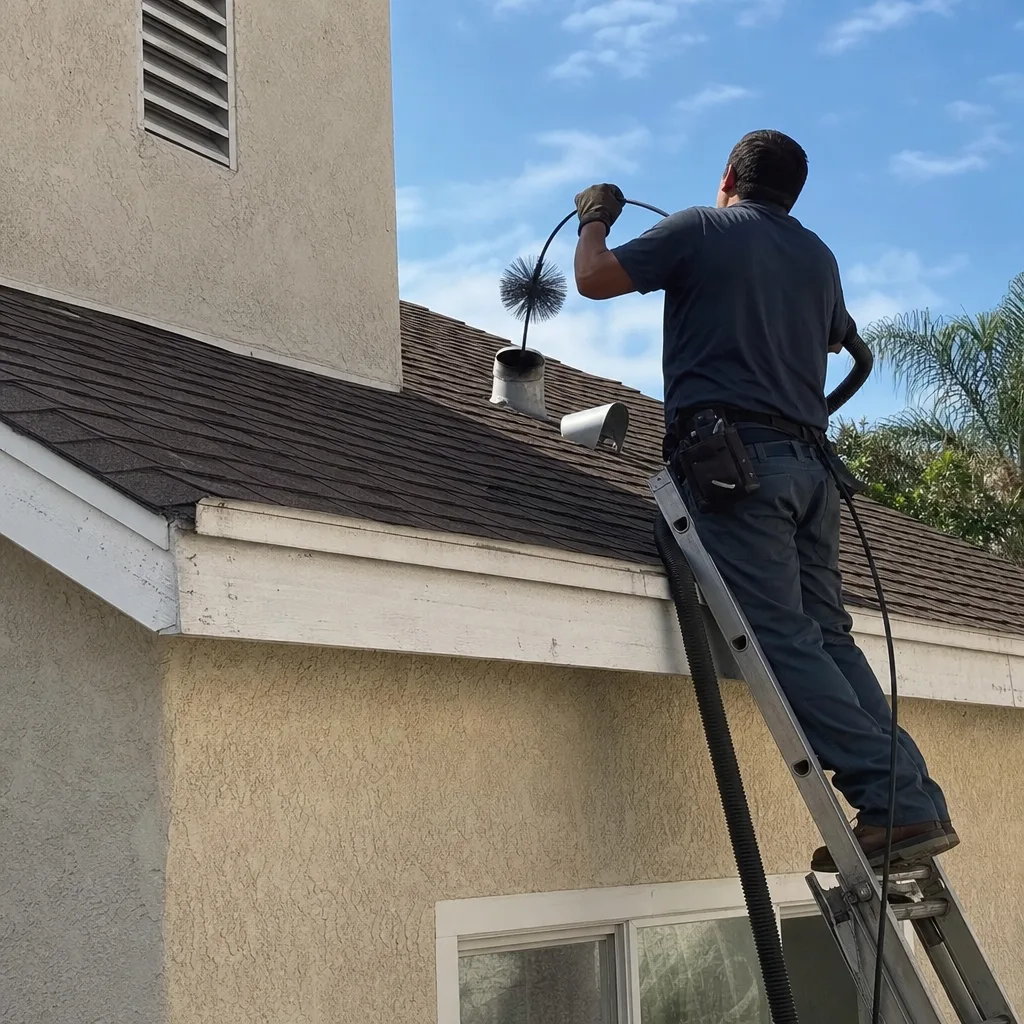
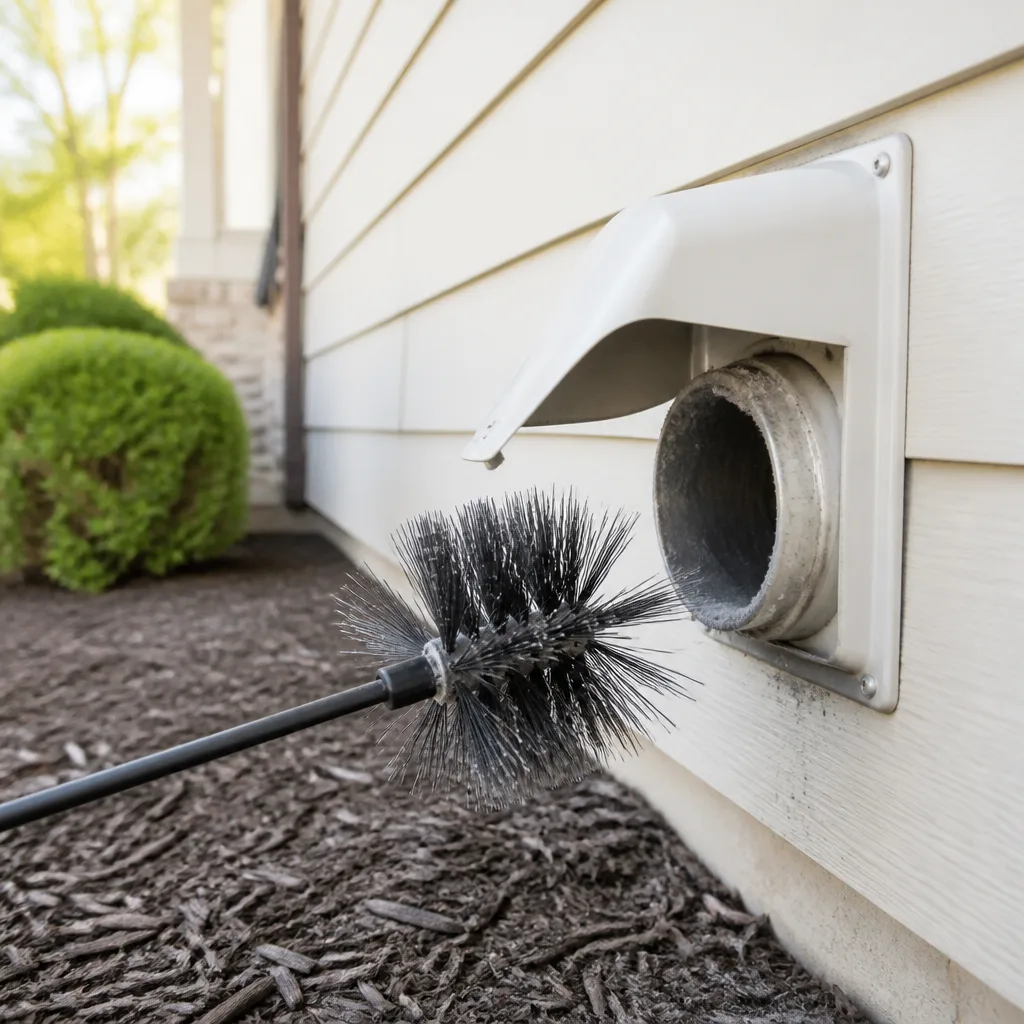
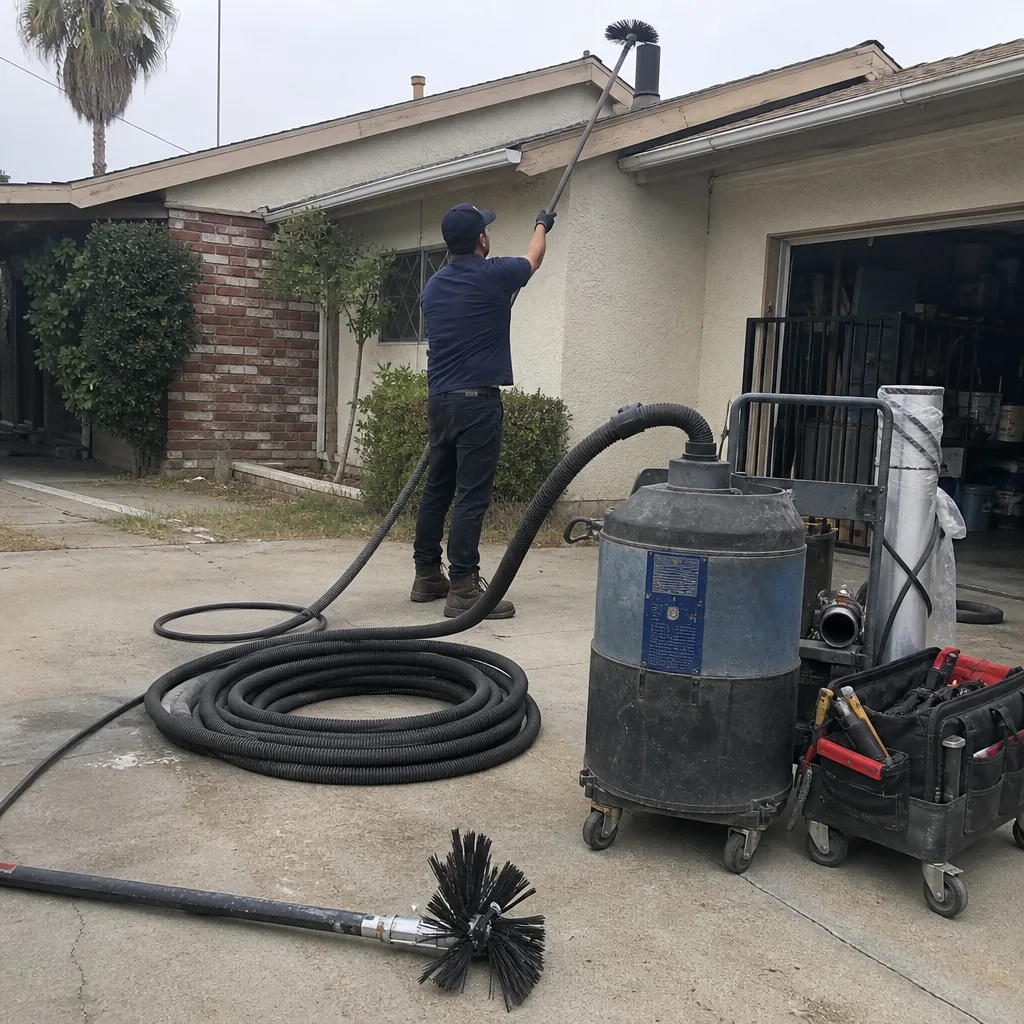
Task 3: Dryer vent clearing (every 12-18 months). This is a real DIY opportunity, and it’s more important than most people realize. A dryer vent brush kit (a $30-$50 investment) can clear a straight or gently curved dryer vent run up to about 15 feet. Shorter runs in single-story Rialto homes are often entirely manageable. Longer runs, especially those with multiple elbows or a vertical rise through the roof, may exceed what a hand brush can clear. And if your dryer vent terminates on the roof in a two-story home, that’s a job for professionals with the right equipment. We treat dryer vent cleaning in Rialto as a dedicated fire-safety service, because lint buildup is a leading cause of residential fires, and a hand brush can leave compacted lint behind in long or convoluted runs.
Task 4: Filter replacement (every 1-3 months, depending on filter type). This is the single most important ongoing maintenance task a homeowner performs. A 1-inch fiberglass filter should be replaced monthly during peak heating and cooling seasons. A 4-inch pleated media filter typically lasts 3-6 months. If you’re upgrading filtration, the Honeywell and Aprilaire media filter lines are the residential standards for a reason, and both are easily installed by a homeowner with basic mechanical aptitude. A clean filter doesn’t just improve air quality. It protects your blower motor and evaporator coil from dust loading, which is the most expensive repair a neglected system can need.
How to Do a Legitimate DIY Inspection
Before you spend money on either DIY tools or professional service, gather data. A $40-$80 borescope inspection camera that connects to your smartphone is the best DIY investment in this entire guide, because it transforms duct cleaning from a vague “it’s probably dirty” into a specific, evidence-based decision.
Here’s a step-by-step inspection process we recommend to Rialto homeowners who want real information before deciding:
- Turn off your HVAC system at the thermostat. You want no airflow for a clean visual inspection, and you don’t want to risk a surprise blower activation while your camera is in the duct.
- Remove a register in a high-traffic living space (living room, family room, or master bedroom). These branches see the most airflow hours and typically show the most accumulation.
- Insert your inspection camera slowly down the branch line. Move slowly and watch the screen. Duct liner tears, visible mold (green, black, or brown patches), and heavy dust accumulation are all visible with even a basic camera.
- Photo-document everything. Screenshot or record at multiple depths in the duct. This gives you a baseline and helps you evaluate whether a future condition is improving or worsening.
- Check for signs of duct leakage while you’re at it. Look for disconnected joints, sagging flexible duct runs, or visible light entering through gaps. Duct leakage is an efficiency problem and an air quality problem that cleaning alone cannot fix. If you find structural issues, that’s an air duct repair in Rialto situation, not a cleaning situation.
- Repeat in one additional register on the opposite end of the house. The branch run farthest from your air handler often shows the worst accumulation because it receives the lowest static pressure.
What you’re looking for: more than about 1/8 inch of uniform dust accumulation, visible debris (construction material, pet hair mats, pest droppings), any signs of moisture or mold, and any visible structural damage to the duct liner or connections. If you see heavy dust or debris, especially past the first few feet, that’s evidence that professional cleaning is warranted. If you see light accumulation near the register only, your DIY register cleaning routine is likely sufficient.
What Rialto’s Climate and Housing Stock Mean for Your Ducts
Rialto’s specific conditions shape what accumulates in your ducts and how fast. We work in these homes every week, and the patterns are consistent. The Inland Empire’s hot, dry summers mean air conditioning runs heavily from May through October, sometimes continuously during heat waves. More runtime means more air volume passing through your ducts, which means more particulate deposition per month than a coastal home would see.
But the bigger factor is the dust itself. Rialto sits in the path of Santa Ana wind events that carry fine particulate from the Cajon Pass and the high desert. Homes near the northern parts of the city, closer to the foothills, see notably higher dust loading than homes in the southern sections. That fine, silty dust is precisely the particle size that penetrates deep into duct systems and settles in the low-velocity zones of branch lines and trunk corners.
The housing stock matters too. Most single-family homes in Rialto were built between the 1970s and early 2000s. Many of those homes have original or aged flexible ductwork. Flex duct, especially the older grey plastic variety, degrades in attic heat over decades. The inner liner becomes brittle, develops small tears, and provides an ideal surface for dust adhesion. Some of these systems have never been professionally cleaned, and the accumulation in a 30-year-old system is fundamentally different from what a newer home would show.
There’s also a practical reality of real estate turnover. Rialto is a city where people move in and out frequently, with a significant rental market and a steady flow of first-time buyers. New occupants often have no maintenance history for the HVAC system. Construction debris from remodels, drywall dust from renovations, and years of previous occupants’ dust and pet dander are all possibilities. A professional inspection and cleaning after purchase is a reasonable part of moving in, and many of our Rialto clients schedule service precisely after a home purchase for that reason.
The Real Cost Analysis: DIY vs Professional in Rialto
Let’s compare costs honestly, because the framing matters. DIY duct cleaning is often presented as “free” because you already own a shop vac, but a proper DIY setup isn’t free at all if you need to buy the right tools:
- Shop vac with HEPA filter: $100-$150 for a capable unit, if you don’t already own one
- Flexible brush kit (12-24 foot): $30-$60
- Dryer vent brush kit: $30-$50
- Borescope inspection camera: $40-$80
- Total DIY investment for a proper setup: $200-$340
And that buys you the capability to clean registers, the first 18 inches of branch lines, and shorter dryer vent runs. It does not buy you the capability to clean the full duct system.
Professional Duct Cleaning Rialto home service pricing in the Rialto market typically runs from $350 to $600 for a complete residential system, depending on the size of the home, the number of systems, and the level of contamination. That’s a one-time cost for most homeowners, with repeat service typically recommended every 3-5 years. Some companies quote lower, in the $99-$199 range, and that’s where the bait-and-switch reputation in this industry comes from. A $99 duct cleaning is almost always a per-vent upsell situation where the final invoice bears no relationship to the advertised price.
We quote one flat price per system, agreed before any work begins. No per-vent pricing. No surprise line items. You’ll know the complete cost before we start, and you’ll get before-and-after photos documenting what was actually removed from your ducts. That’s the only honest way to price this work.
For most Rialto homeowners, the practical math works like this: invest $40-$80 in a borescope and do the inspection yourself. If you see contamination beyond the register boots, that’s your evidence that professional cleaning is warranted. If you see a clean system, you’ve bought yourself peace of mind and a useful tool for future inspections. That’s a good outcome either way.
Common Mistakes to Avoid
- Believing that a $99 duct cleaning coupon is a complete service. The per-vent upsell model is the most common complaint in the duct cleaning industry nationwide, and Rialto is no exception. A flat rate, agreed before work starts, is the only pricing model that protects you.
- Pushing a brush into a flexible duct and calling it cleaned. Without high-CFM extraction, you’ve moved debris deeper into the system, and it will find its way into your living space. Partial DIY cleaning without proper containment can genuinely make air quality worse than it was before.
- Skipping the inspection after a home purchase. If you’ve just bought a home in Rialto, you have no maintenance history and no way to know what’s in your ducts. Construction debris, drywall dust, pet dander from previous occupants, and years of accumulated particulates are all possibilities.
- Using a standard shop vac filter and calling it sufficient. Standard shop vac filters (the basic foam sleeve or simple cartridge) are rated for coarse debris, not fine particulate. They exhaust fine dust back into your room. Proper HEPA filtration is non-negotiable for any duct work that disturbs fine dust.
- Treating air duct cleaning as a substitute for furnace filter changes. Filter replacement is ongoing maintenance. Duct cleaning is periodic remediation. They’re different tasks serving different purposes, and neither replaces the other.
- Ignoring the dryer vent because it’s not part of the HVAC system. Dryer vents accumulate lint faster than your air ducts accumulate dust, and the failure mode is dramatically worse: lint is the leading cause of residential dryer fires. Treat dryer vent maintenance as a fire-safety priority, not an afterthought.
- Withholding information about pest activity or water damage from a duct cleaning professional. Rodents, insects, and moisture in ducts are remediation issues, not cleaning issues. A legitimate company needs to know what they’re dealing with before they begin, for their safety and yours.
When to Call a Professional
You’ve done the DIY inspection, and you’re looking at the evidence. Here’s where the line sits. Call a professional when you see heavy dust accumulation beyond the first 18 inches of branch lines, any visible mold or moisture staining, evidence of pest activity, construction debris in the ductwork, or any structural damage including disconnected joints, torn flex liner, or crushed duct sections. These are the conditions that consumer equipment cannot address and that may require repair capability in addition to cleaning. Duct Cleaning Rialto offers free estimates in Rialto, and we’ll show you what we’re seeing in your system before we quote you a price. Call (833) 630-3666 to schedule an inspection.
Frequently Asked Questions
DIY air duct cleaning is worth it for the tasks consumer tools can actually accomplish: register and grille cleaning, the first 12 to 18 inches of each duct branch, return grille vacuuming, filter replacement, and shorter dryer vent runs. It is not worth attempting on the full duct system, because consumer equipment lacks the CFM, static pressure, and containment capability to extract debris from deep within branch lines. We recommend DIY maintenance paired with professional inspection and cleaning on a 3-to-5-year cycle for most Rialto homes.
Professional air duct cleaning in Rialto typically costs between $350 and $600 for a complete residential system, with the final price depending on home size, number of HVAC systems, and contamination level. Be cautious of any quote significantly below that range. Extremely low advertised pricing is almost always a per-vent upsell model where the final invoice bears little relationship to the advertised price. We quote one flat price per system, agreed before any work begins. For an exact quote, call (833) 630-3666.
Most Rialto homes need professional air duct cleaning every 3 to 5 years, with the interval depending on several factors including pet count, local dust exposure (homes near the northern foothills typically need more frequent cleaning due to Santa Ana wind deposits), smoking, recent remodeling, and the age of the ductwork. Newer homes with good filtration may go longer. Older homes with original flex duct may need attention sooner. A borescope inspection is the honest way to assess whether your ducts need service now.
A shop vac can effectively clean the first 12 to 18 inches of each duct branch, the register boots, and visible surface dust near the registers. It cannot clean the full duct system, because shop vacs produce 150-185 CFM of airflow at the hose end, while professional extraction equipment produces 400-700 CFM with substantially higher static pressure. That airflow difference, combined with rotary agitation, is what removes debris from deep inside duct runs. A shop vac used past the first foot and a half without professional containment will redistribute dust, not remove it.
Professional duct cleaning with proper source-capture extraction does improve indoor air quality by removing the accumulated particulate that recirculates through your living space every time the HVAC system runs. The effect is most noticeable for allergy sufferers, homes with multiple pets, and homes that recently underwent remodeling. DIY cleaning without proper extraction does not provide the same benefit and can temporarily worsen air quality by disturbing settled dust without removing it. For homeowners who want to upgrade filtration after cleaning, we work with Honeywell and Aprilaire media filter systems that capture a much higher percentage of fine particulate than standard 1-inch filters.
You should receive before-and-after photo documentation showing the condition of your ducts at the same locations before and after service. That’s the only honest way to verify the work. We photograph the inside of your ducts with inspection camera equipment at the beginning and end of every job, and we encourage you to review those photos while we’re on site. If a company cannot or will not provide visual proof, that’s a red flag. We also encourage the DIY borescope inspection described in this guide, because an informed homeowner is the best check on any contractor’s work.
The Bottom Line
The DIY-vs-professional debate, framed honestly, is a question of capability, not cost. A prepared Rialto homeowner with a good shop vac, a brush kit, and a borescope camera can accomplish meaningful work: register cleaning, the first 18 inches of each branch, dryer vent clearing on shorter runs, and evidence-based inspection. That’s real value. But the physics of full-system duct cleaning require equipment that isn’t sold at Home Depot. Professional-grade CFM, static pressure, rotary agitation, and source-capture containment are the difference between removing contaminants and rearranging them. Your ducts are a system, and like any system, maintenance and remediation are different tasks. Know which one you’re doing. We’re happy to help you figure it out, with an honest assessment and no pressure, when you’re ready, and you can always browse our more guides & resources in the meantime. Call (833) 630-3666 for a free estimate in Rialto.
Written by the team at Duct Cleaning Rialto, serving Rialto since 2015.
See the difference
 Before
 After
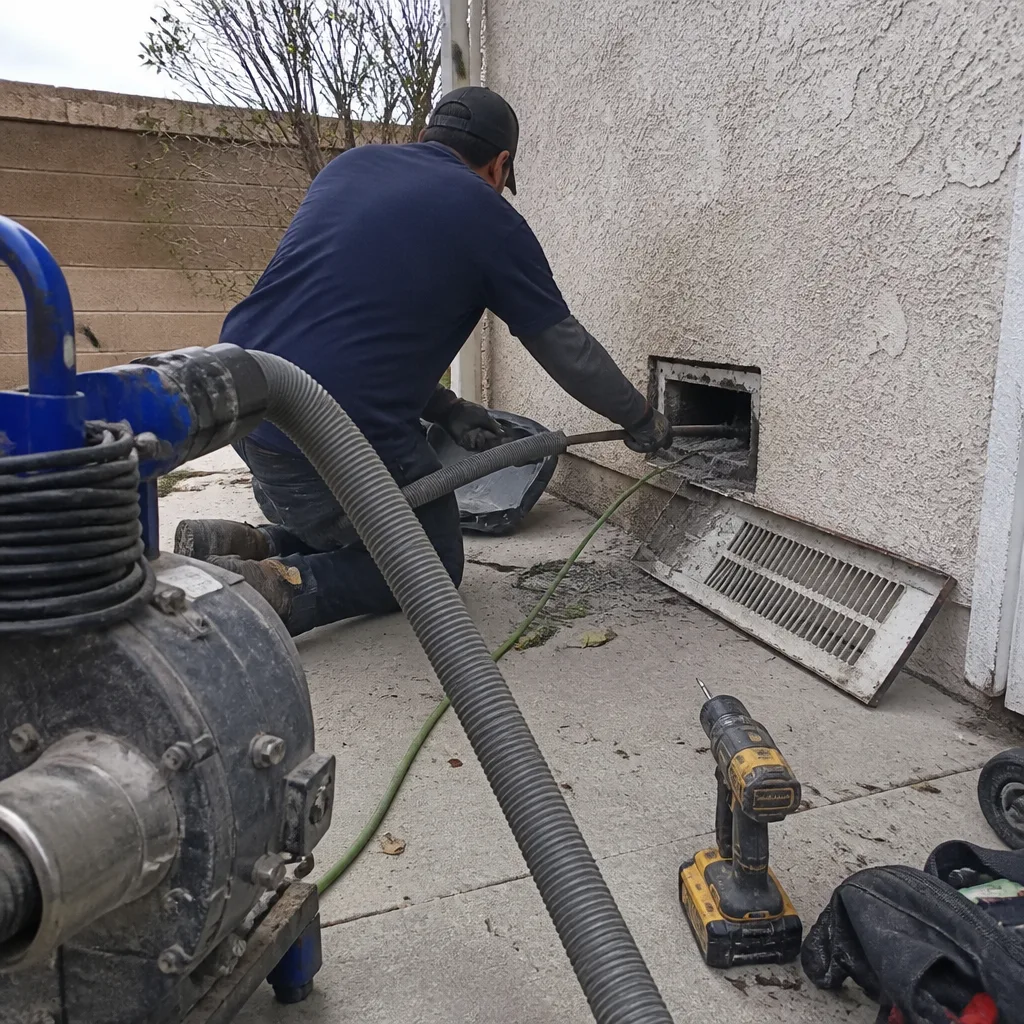 Before
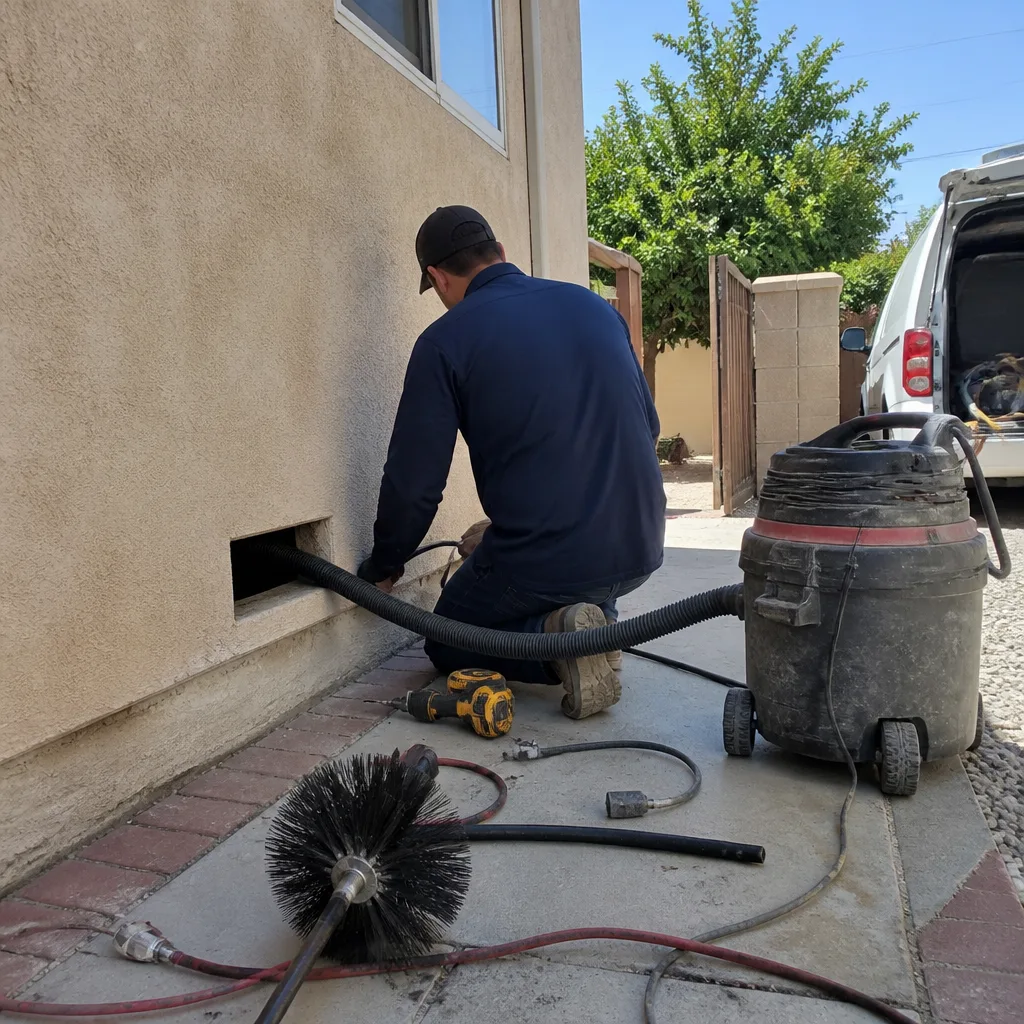 After
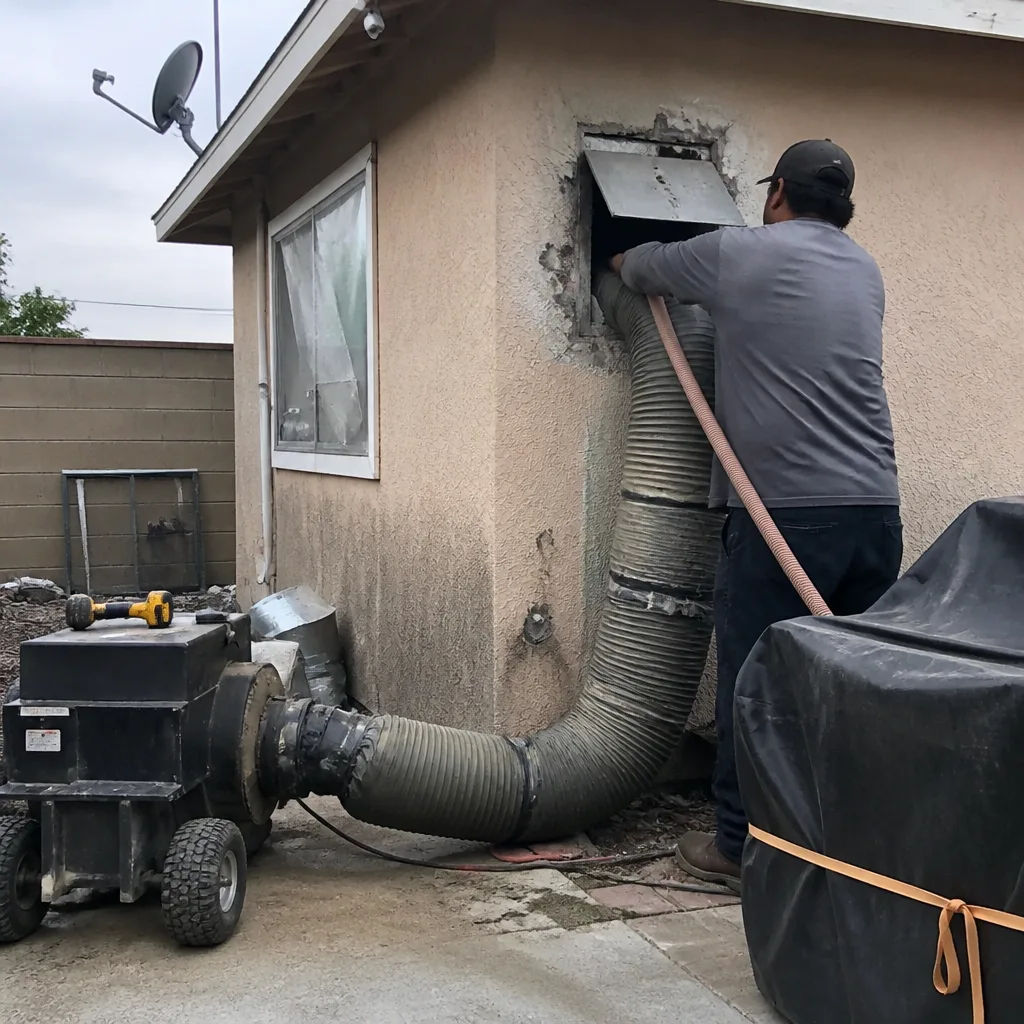 Before
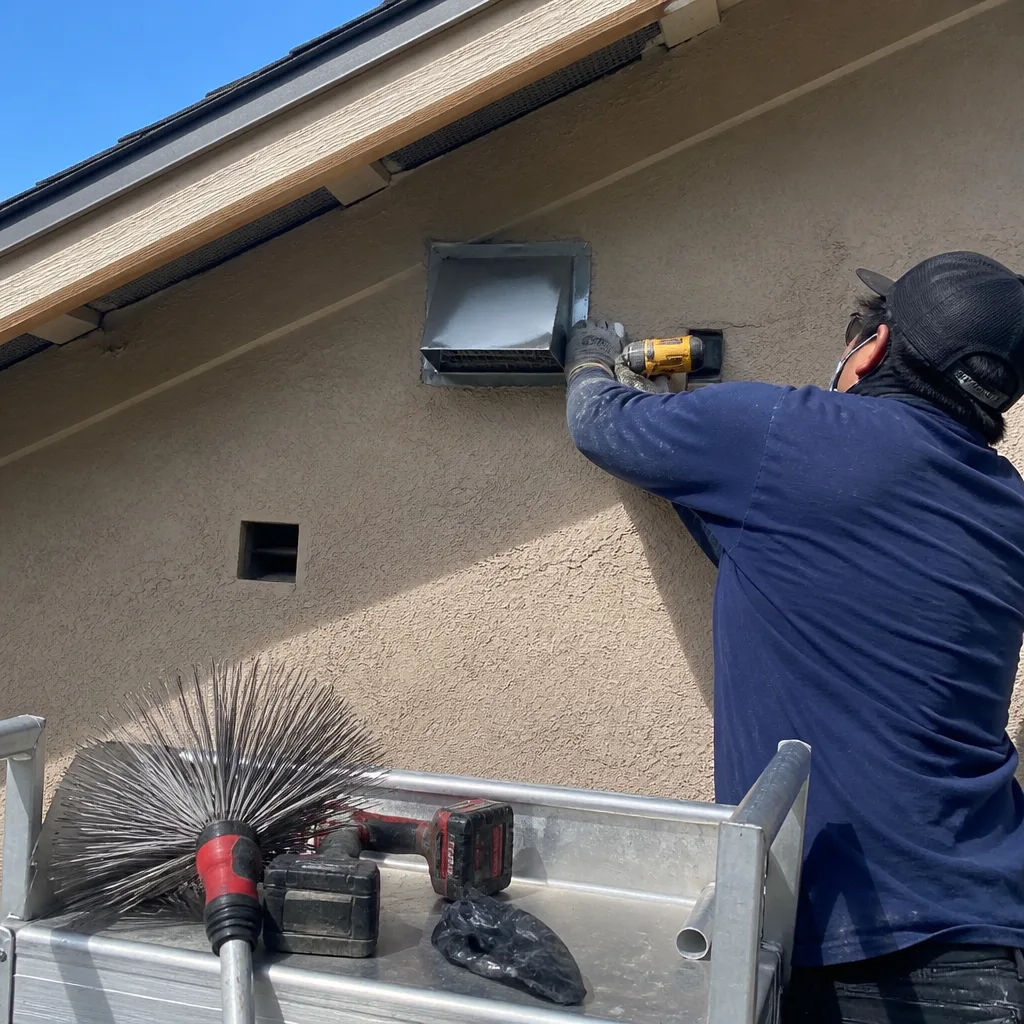 After