
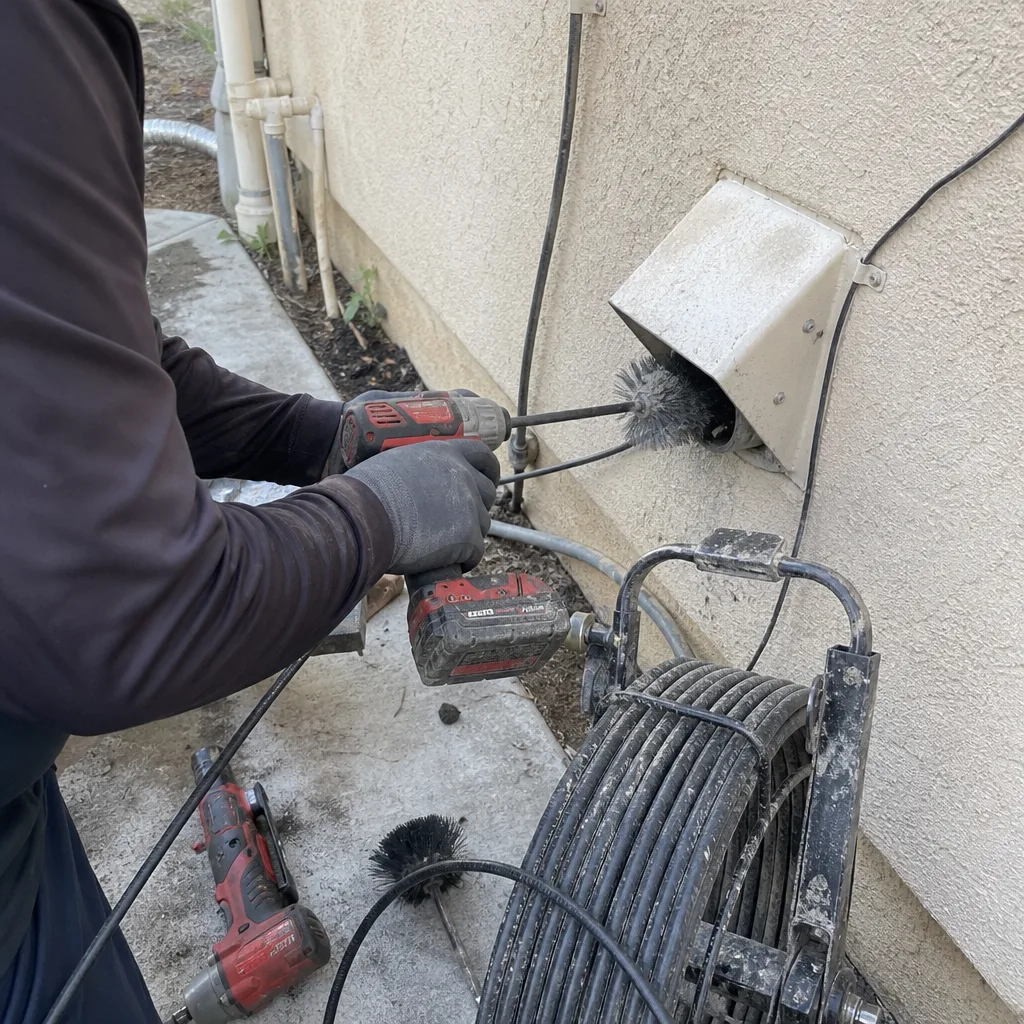
Last updated November 3, 2026
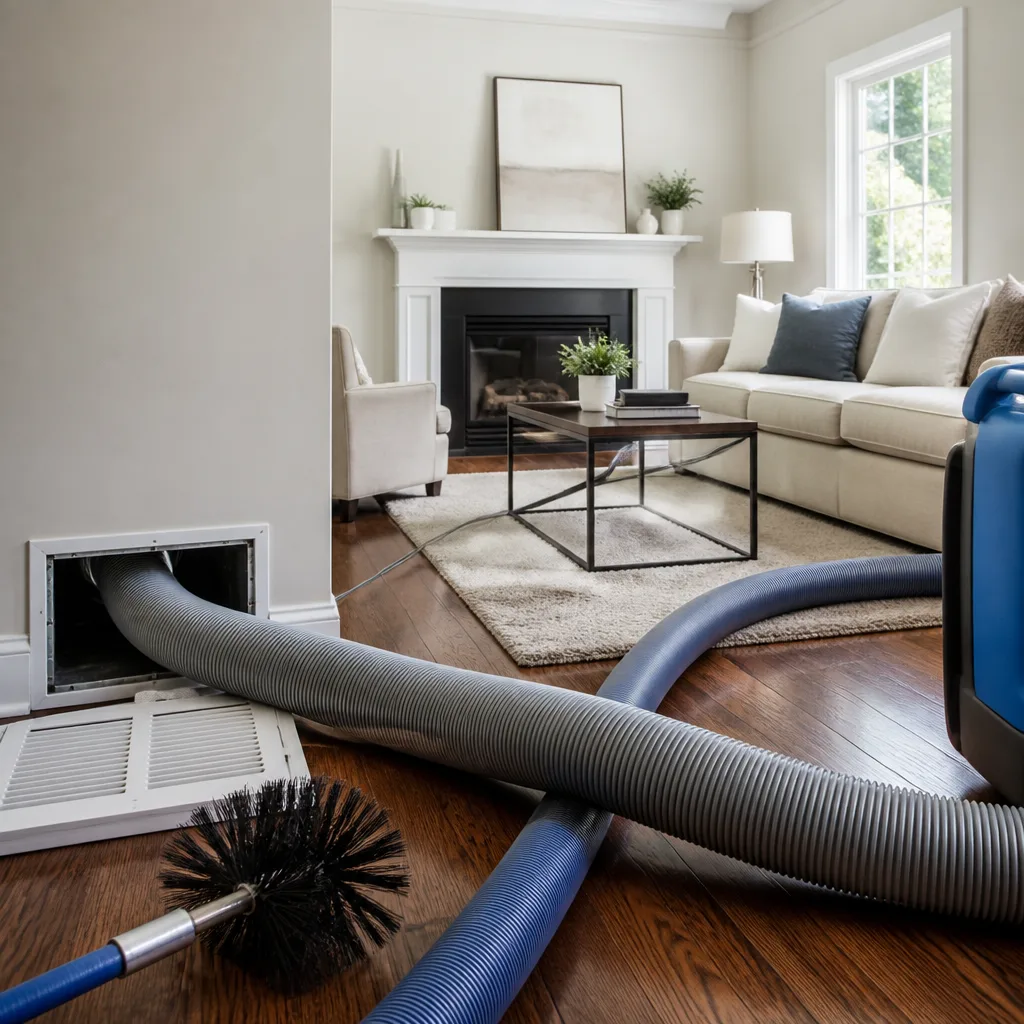 Whole-home duct cleaning
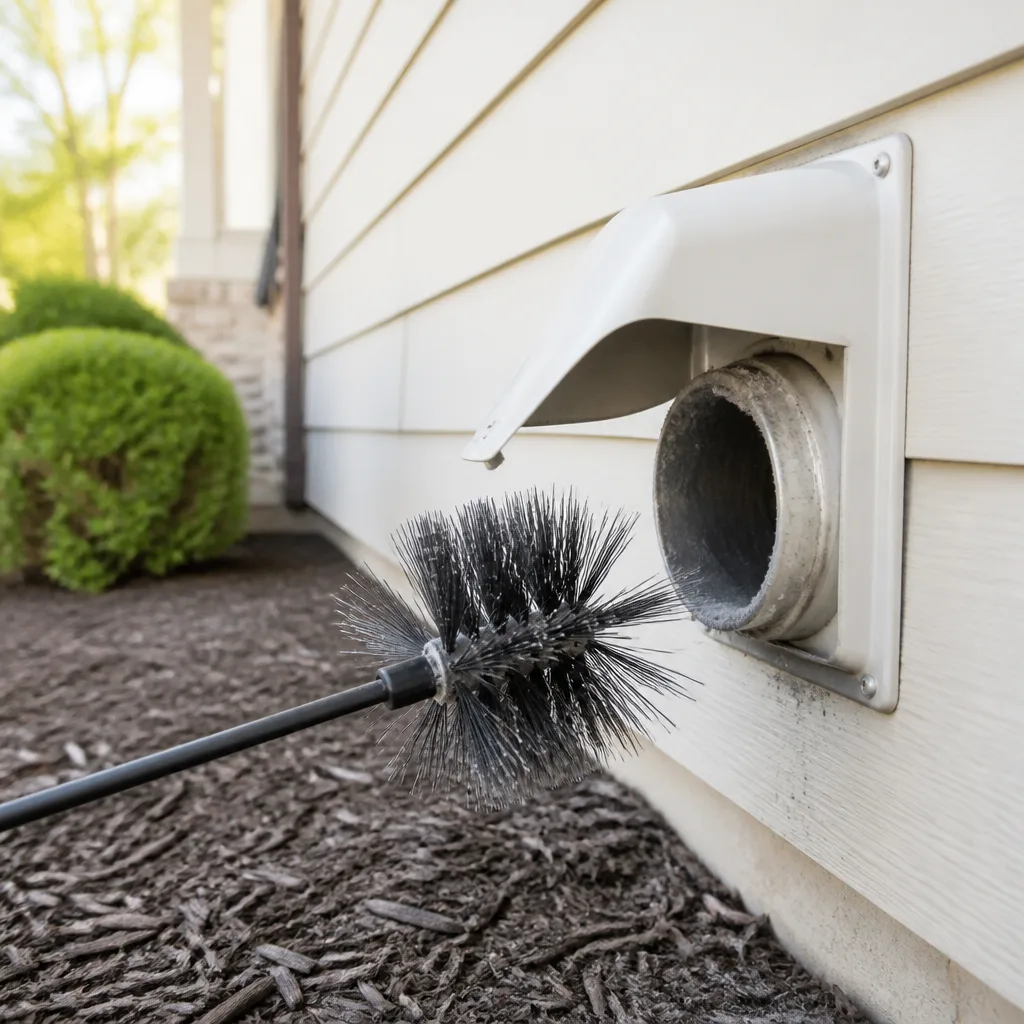 Dryer vent cleaning
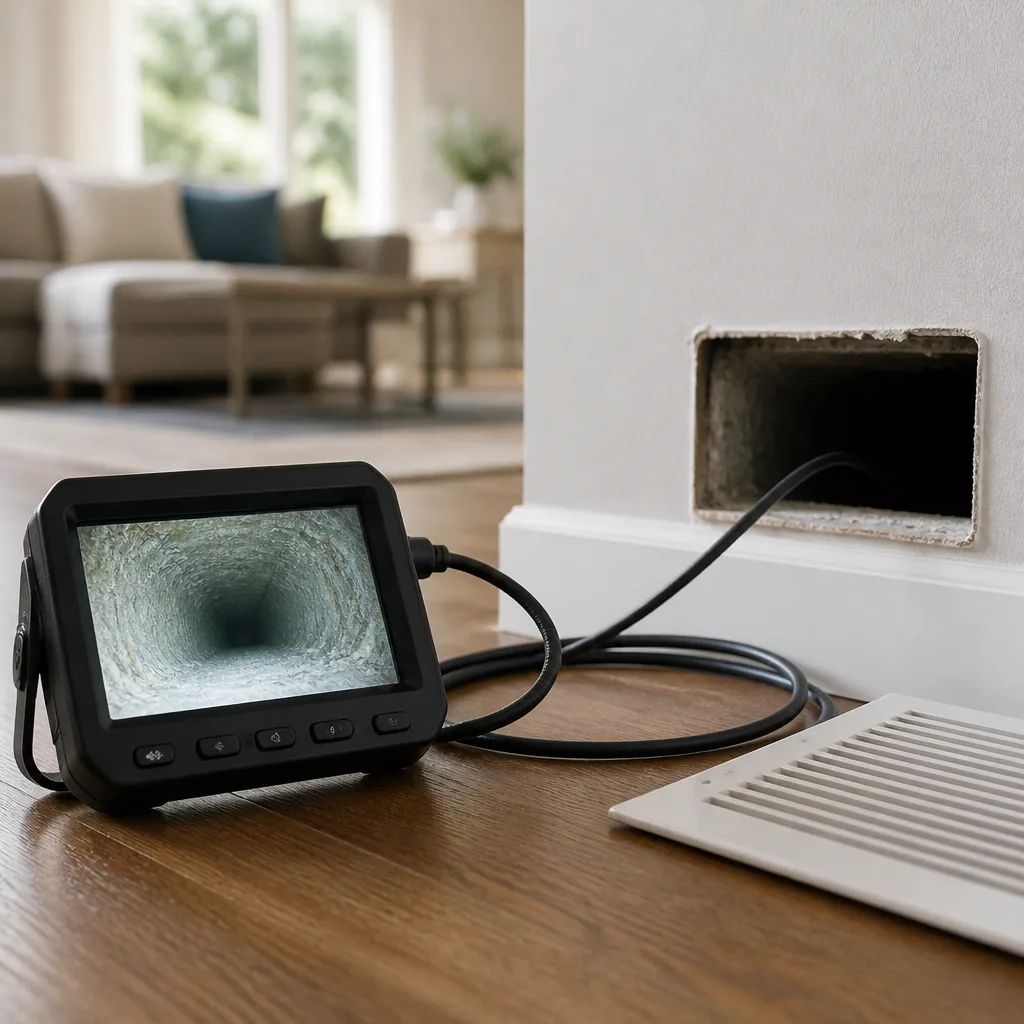 Camera inspection
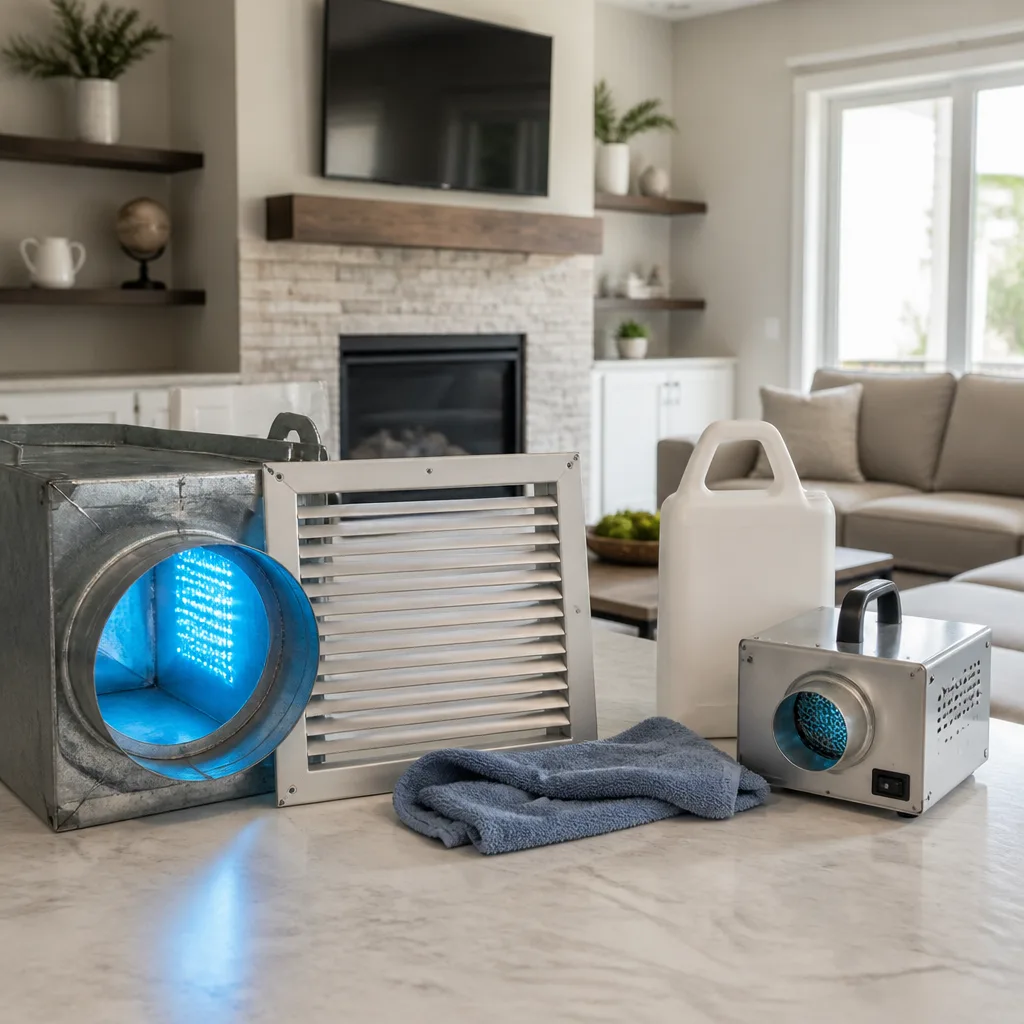 Sanitizing & deodorizing
Whole-system duct and dryer vent check with before-and-after photos - you see exactly what came out of your vents
That "$99 whole-house special" is a bait ad - the real number appears once they are in your hallway, or the "clean" is a shop-vac at the register. We photograph the inside of your ducts before and after instead.
The Complete Air Duct Cleaning Guide for Rialto Homeowners
The EPA’s most widely cited guidance on air duct cleaning was written before the Inland Empire became one of the most wildfire-smoke-exposed metropolitan regions in the United States. That matters for Rialto homeowners because the assumptions baked into those old recommendations, about dust accumulation rates, about how often cleaning is actually needed, about what “normal” contamination looks like, no longer match the air you’re actually breathing. This guide replaces the generic playbook with something built for this specific city: its dust, its fire seasons, its slab foundations, and its long, hard-working cooling seasons. For more guides & resources, visit our blog. By the end, you’ll know how to inspect your own system, what professional cleaning actually does, what it should cost, and how to spot the difference between a real cleaning and a surface wipe-down.
Quick Answer
Our Air Duct Cleaning services in Rialto typically cost between $350 and $700 for a full single-family system, take 2 to 4 hours, and should include visual documentation of the work before and after. In this climate, most homes benefit from cleaning every 3 to 5 years, though homes near the 210 freeway corridor, properties with recent construction exposure, and households with pets or allergy-sensitive occupants often need more frequent service. A legitimate cleaning uses negative-pressure HEPA equipment that captures debris at the source, not a portable shop vac that simply loosens dust and redistributes it through your living space.
Styles & brands we work with
- Whole-home duct cleaning
- Dryer vent cleaning
- Camera inspection
- Sanitizing & deodorizing
Table of Contents
- Why Rialto Ducts Foul Faster Than National Averages
- What Professional-Grade Equipment Actually Does Inside Your Ductwork
- How to Inspect Your Own Vents and Filter: Specific Visual Indicators
- Why Slab-Foundation Homes in Rialto Have a Different Contamination Profile
- Trunk, Branch, and Boot Cleaning vs. Register-Only Service: The Scope Difference
- Cleaning Alone Cannot Fix Compromised Ductwork
- What Wildfire Smoke Seasons Leave Behind in Duct Systems
- What Air Duct Cleaning Costs in Rialto: A Realistic Breakdown
Why Rialto Ducts Foul Faster Than National Averages
National air duct cleaning recommendations assume a relatively stable outdoor air environment. They were built for places where the HVAC system runs seasonally, where outdoor particulate levels follow predictable patterns, and where a home can go months without the blower pulling outside air through the return. Rialto breaks all of those assumptions at once.
This stretch of the Inland Empire sits at the eastern edge of the Los Angeles Basin’s airshed, downwind of the Cajon Pass, and within daily reach of dust kicked up from the Santa Ana River wash and the dry foothills to the north. The result is a fine, abrasive particulate load that settles into ductwork even when the system is idle. Once the system runs, which it does heavily here, that dust gets pulled through returns at high volume.
Then there’s the cooling season. Rialto routinely logs over 100 days a year where air conditioning is not a comfort choice but a survival necessity. Your blower motor runs hundreds of additional hours compared to coastal homes just 60 miles west. Every hour of runtime pulls more particulate across your filter, through your return plenum, and into your supply ductwork. A duct system in Rialto can accumulate in four years what a Seattle or San Francisco duct might take eight or ten years to collect.
We see this pattern consistently on the Air Duct Cleaning in Rialto jobs we perform. Homes with filters that would look normal for six months in other markets show visible gray-brown caking on return duct walls here in half that time. The fine dust from the washes and the daily freeway traffic along the 210 and I-10 corridors is engineered to infiltrate. It is small enough to bypass standard filters and heavy enough to settle and adhere inside duct runs once airflow slows.
Wildfire smoke adds another layer the national guidance never anticipated. Since 2020, Rialto has repeatedly experienced smoke episodes from fires in the San Bernardino National Forest, the Angeles National Forest, and points further north. During those events, homes with central air conditioning pull smoke particulates into the return system. Much of it traps in the filter, but the finer fraction moves through and deposits inside supply ducts. After smoke clears, that residue remains until someone physically removes it.
The practical takeaway for Rialto homeowners is this: if you have not had your ducts cleaned in five or more years, you are operating outside what this specific climate requires, regardless of what a general national timeline says.
What Professional-Grade Equipment Actually Does Inside Your Ductwork
Not all duct cleaning is the same procedure with different branding. The gap between a professional-grade negative pressure cleaning and a discount “blow and go” service is the difference between removing contamination and rearranging it. See DIY vs Professional Air Duct Cleaning: The Rialto Homeowner’s Decision Guide to understand why the distinction matters.
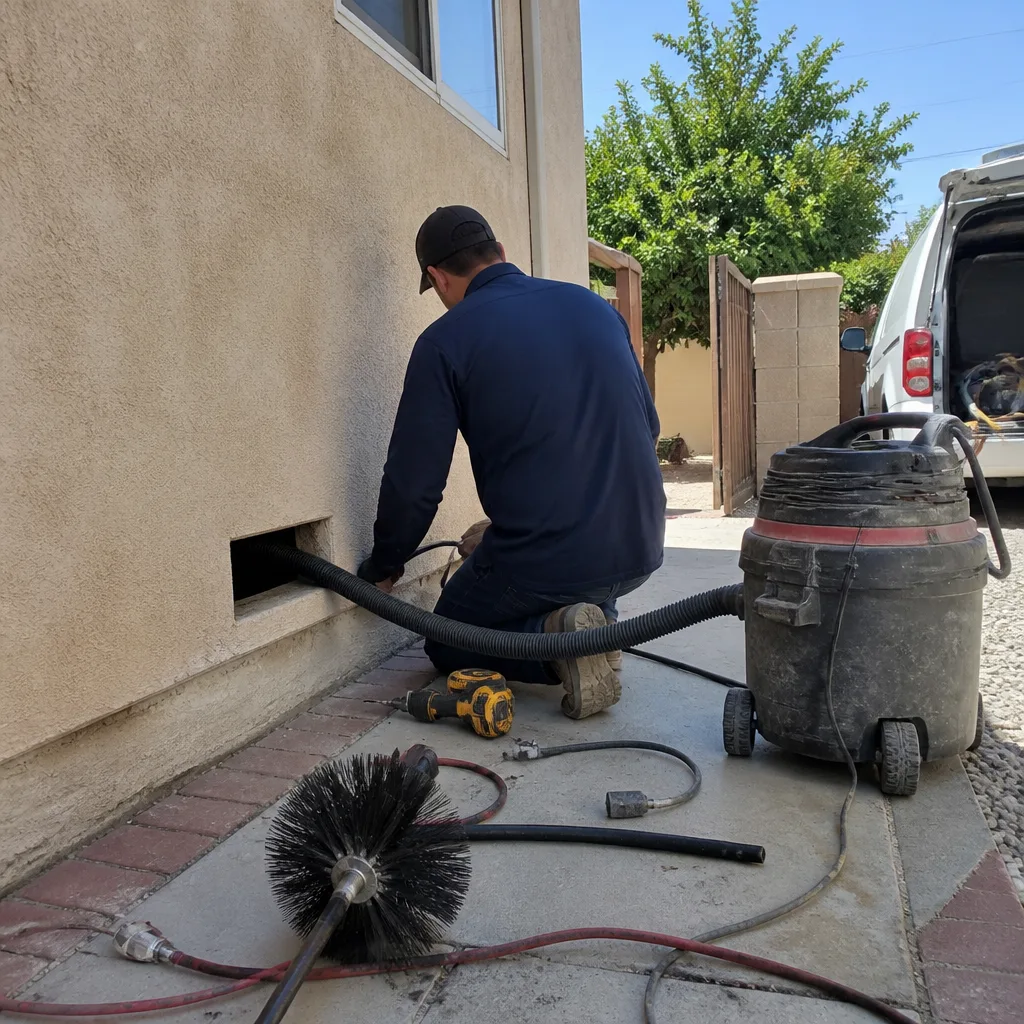
Professional duct cleaning works on a containment principle. A powerful vacuum unit, in our case Nikro HEPA-rated equipment, connects to the duct system at one access point and pulls the entire system into negative pressure. The home’s supply and return runs become a sealed circuit under suction. Nothing that gets loosened inside the ductwork can escape into your living space because the pressure differential holds it inside the system until the vacuum captures it.
Agitation is the second component. A vacuum alone cannot remove debris that has adhered to duct walls over years of exposure to moisture, oil aerosols from cooking, and static attraction. That is where rotary brush systems like the Rotobrush line come in. A motorized brush head travels through the duct runs, mechanically scrubbing the surfaces to dislodge the caked particulate. The loosened material immediately moves toward the vacuum source because the entire system is under negative pressure.
Containment matters beyond the ducts themselves. Professional crews deploy Abatement Technologies air filtration equipment to create a physical barrier between the work area and the rest of the home. This step, standard in mold remediation and asbestos abatement, gets skipped by most low-cost duct cleaners. Without it, the process of accessing ducts, cutting access points, and running tools creates airborne particulate that migrates into rooms. With proper containment, the air outside the immediate work area stays measurably cleaner than the air inside the ducts being cleaned.
The third piece of professional-grade work is verification. A shop-vac cleaning leaves you with no evidence of what was or was not removed. Professional work includes visual documentation of the duct interiors before and after. You should see the interior surfaces of your own supply runs on camera. You should know whether the boots at each register were opened and cleaned, or simply wiped at the visible face.
We use Rotobrush agitation and Nikro HEPA vacuum technology on every job because the equipment is built for IAQ professionals, not for quick residential turnarounds. The distinction shows up in what gets captured, and in what stays out of your living room air.
How to Inspect Your Own Vents and Filter: Specific Visual Indicators
You don’t need a camera scope to know whether your ducts are due. You need to look at the right surfaces with a flashlight and pay attention to a few specific indicators. Here is a step-by-step inspection you can do in 15 minutes without any special tools.
- Remove a supply register from a room you use daily. Choose a bedroom or the living room, not a hallway rarely occupied. Use a screwdriver to remove the two screws holding the register faceplate. Lift the register out and set it aside.
- Shine a flashlight into the boot. The boot is the metal transition piece between the duct run and the register opening. Look at the interior surfaces, especially the bottom and the sides. You are looking for gray or brown caking that looks like dryer lint matted onto the metal. A thin dust film is normal. A visible buildup with texture is not.
- Check the register face itself. Look at the fins and the back edges. In a clean system, the register face may hold light dust you can wipe away with a finger. In a fouled system, you will find dark, sometimes greasy film that does not wipe clean without soap. Greasy residue indicates oil aerosols from cooking have mixed with dust, and that mixture hardens over time.
- Examine your return grille. The return pulls air back to the HVAC unit. Run a white cloth or paper towel across the grille slats and the wall area immediately surrounding it. If the cloth comes back gray-black with fine particulate, your return duct is pulling that same material through. The return duct typically fouls faster than supply runs because it sees unfiltered air first.
- Pull your filter and look at its service history. A filter that is darkening significantly within 30 days in Rialto indicates a heavy particulate load entering the system. That load moves through the filter media and deposits deeper in the ductwork. If your filter looks like it needs replacement every three to four weeks during cooling season, inspect your ducts.
- Look for uneven room-to-room dust patterns. If one bedroom accumulates visible dust on furniture within days of cleaning while an adjacent room stays cleaner, the difference is often the condition of the supply boot serving that room. A fouled boot distributes fine particulate directly into the space every time the fan runs.
These visual checks tell you more than any generic timeline. A Rialto home with a heavily soiled return grille, a matted boot in one bedroom, and a filter that darkens monthly needs cleaning regardless of when the system was last serviced. A home with light film at the register faces and a filter that runs two to three months before darkening can likely wait.
Why Slab-Foundation Homes in Rialto Have a Different Contamination Profile
Rialto’s housing stock skews heavily toward slab-on-grade construction, especially in the neighborhoods built from the 1950s through the 1990s. A slab foundation changes how ductwork is laid, how it interacts with soil conditions, and what kinds of contamination tend to develop inside it.
In many slab homes, at least some of the supply duct runs are embedded in or pass through the concrete slab itself. The duct may sit in a channel cut into the slab, or run through a soffit built around the slab penetration. What matters for contamination is that the duct interior sits close to the ground, where temperature differences create condensation conditions that raised-floor ducts do not experience the same way.
During Rialto’s summer cooling season, the air moving through those slab-level ducts is significantly colder than the surrounding concrete and soil. That temperature differential creates condensation on the interior surfaces of the duct run, particularly at the boots and at any point where cool air meets warmer, humid outside air. That intermittent moisture makes duct interiors sticky. Dust adheres. Over time, the combination of fine particulate from outside air and intermittent condensation creates a matted layer on the duct walls that does not blow free on its own.
Raised-floor homes, which are more common in older parts of Rialto near the historic downtown and in some custom builds, have a different profile. Their ducts typically run through unconditioned crawl spaces. The contamination there comes more from infiltration: gaps in duct joints pulling crawl space dust, rodent activity, and unconditioned air. The ducts still foul, but the mechanism is different, and a cleaner who knows the difference will inspect for different failure points.
Slab homes in Rialto also face a specific repair pattern. Concrete settlement and shifting can crack or separate duct runs under the slab. Those separations pull soil gases and fine dust directly into the air stream. A cleaning alone cannot fix that problem, but a thorough cleaning process that includes an inspection of accessible duct runs can identify when the issue exists. That is why we operate Air Duct Repair in Rialto as its own service, not as a side note. A slab-home duct problem is structural until proven otherwise.
Trunk, Branch, and Boot Cleaning vs. Register-Only Service: The Scope Difference
The biggest gap in the air duct cleaning industry is not between companies, it is between service scopes. Two companies can both say “air duct cleaning” and perform materially different work. Understanding the levels protects you from paying for a surface wipe disguised as a cleaning.
A proper full-scope cleaning in Rialto includes three distinct zones of the duct system. The trunk lines are the main supply and return runs that connect directly to the HVAC unit. The branch lines are the smaller ducts that split off the trunks and carry air to individual rooms. The boots are the transition pieces at the end of each branch line where the register attaches. Each zone requires a different access point and a different agitation approach.
A register-only cleaning, which is what many discount services actually perform, accesses the duct from each register opening. The technician removes the faceplate, runs a brush or vacuum hose into the first few feet of the branch line, and moves to the next register. The trunk lines never get accessed. The main return run never gets opened. The deep section of each branch, where dust settles in low-velocity zones, never gets touched. The result is a home that looks cleaner at the register faces while the majority of the system remains untouched.
We have seen the aftermath of register-only work in Rialto homes. Homeowners pay for a cleaning, see cleaner-looking register fins, and assume the system has been serviced. Six months later, the same dust patterns return because the reservoir of contamination in the trunk lines and branch interiors never left. The airflow carried it right back to the registers.
Ask any company you are considering exactly how they access the duct system. “Through the registers” is the wrong answer for a full cleaning. Professional work should include an explanation of how they access the supply plenum, the return plenum, the main trunk runs, and each branch line. If they cannot describe their access method, they are not doing the work they are quoting. If they can, the quoted price will reflect the additional labor, and that extra money is buying something real.
Cleaning Alone Cannot Fix Compromised Ductwork
Duct cleaning removes what should not be in the ducts: dust, debris, construction material, pet hair, the accumulated film of years of indoor living. Duct repair addresses what should be there but is broken: the physical continuity of the system itself. The two services solve different problems, and confusing them wastes money.
Compromised ductwork takes several specific forms in Rialto homes. Duct joints and seams separate over time from vibration, from thermal expansion cycles, and from the settling common in slab construction. Air handler vibration transmits through the duct runs and shakes connections loose. Each separated joint becomes a leak point that pulls attic or crawl space air into the conditioned air stream. That leak defeats the purpose of cleaning because new contamination enters continuously.
Duct work can also be physically damaged. Rodents chew through flexible duct. Storage in attics crushes runs. Poorly installed original ductwork sags and separates at hanging straps. Each scenario introduces either air leaks or physical breaches that allow unfiltered air into the system. Cleaning does not seal a leak. Cleaning does not restore a crushed duct. Cleaning does not reattach a separated boot.
This is why we explain to every customer that our scope includes identifying what cleaning can and cannot solve. During the cleaning process, accessible sections of the duct system are inspected for separation, damage, and air leaks. When we find problems that cleaning alone cannot resolve, we say so plainly and provide the repair option as a separate service. Air Duct Repair in Rialto is a standalone offering because the skills and materials required to seal, replace, or reconnect duct runs are different from those required to clean them.
The complete solution is clean ducts and intact ducts. A perfectly cleaned system with leaks will re-contaminate within months. A perfectly sealed system with years of accumulated dust will continue circulating that dust until it is removed. Our three-service model exists because the problems coexist in the same homes.
What Wildfire Smoke Seasons Leave Behind in Duct Systems
Wildfire smoke is no longer an occasional event for Rialto. Since the 2020 fire season, smoke from fires in the San Bernardino Mountains, the Angeles National Forest, and even distant fires in Northern California and Oregon has repeatedly pushed AQI readings in the Inland Empire into unhealthy ranges for days at a time. That smoke does not only affect outdoor air. It changes the interior of your duct system, and the evidence remains long after the sky clears.
Smoke particulates are much finer than the dust that normally accumulates in ducts. The visible ash fraction gets caught by standard filters. The invisible PM2.5 fraction, particles smaller than 2.5 microns, passes through most residential filters and moves into the air stream. Those fine particles deposit on duct interiors, particularly in low-velocity sections where the air slows enough for them to settle out. They also bond with any existing moisture or oil residue on duct surfaces, creating a smoke-tainted film that cannot be removed without mechanical agitation.
That film has practical consequences. During the days and weeks after a smoke event, even after outdoor air quality improves, homes with contaminated ducts continue to circulate smoke-tainted air. Occupants notice a lingering campfire smell that returns whenever the AC runs. Sensitive occupants, including those with asthma or allergies, report symptoms that persist after the skies clear. The smoke is not outside anymore. It is inside the ducts.
Professional cleaning after a significant smoke season removes that residue. The brush agitation breaks the smoke-dust film from the duct walls, and the negative pressure air flow carries it out of the system into the HEPA vacuum. A post-cleaning visual inspection shows the before and after difference. In our experience, Rialto homes that have experienced two or more smoke seasons since their last duct cleaning show visible residue on practically every accessible duct surface.
For homes with occupants who are genuinely sensitive to smoke residue, this is also where upgraded filtration earns its keep. We recommend Aprilaire media filters and IAQ products in many of these households. A high-MERV media filter captures the fine fraction that standard filters miss at the return, and a properly sealed duct system prevents smoke intrusion through leaks during future events. The filter does the ongoing work. The cleaning resets the system. Together they keep Rialto homes measurably cleaner during the next smoke event.
What Air Duct Cleaning Costs in Rialto: A Realistic Breakdown
Air duct cleaning in the Rialto market spans a wide price range, and the differences reflect real differences in scope, equipment, and effort. Here is a realistic breakdown of what homeowners in this area should expect to pay for legitimate, full-system cleaning, as distinct from the loss-leader pricing used by some low-cost operators.
| Home Size / System Type | Typical Price Range | What Should Be Included |
|---|---|---|
| Small single-family (under 1,500 sq ft, single return) | $300 – $450 | Full trunk and branch agitation, boot cleaning, return flush, before/after documentation |
| Standard single-family (1,500 – 2,500 sq ft, 1 – 2 returns) | $400 – $600 | All of the above, plus multiple access points, return-side deep cleaning |
| Large single-family (2,500 – 4,000 sq ft, multiple returns) | $550 – $800 | All of the above, plus additional branch access, longer mechanical agitation time |
| Two-story homes | Add $100 – $200 | Second-floor runs require additional access and equipment reach |
| Dryer vent cleaning (add-on or standalone) | $100 – $175 | Full vent run cleaning from dryer connection to exterior termination, with documented before/after airflow |
These numbers represent the real labor and equipment cost for professional-grade work. A quote below $300 for a standard single-family home in Rialto almost certainly represents a register-only scope, a bait price that will rise once the technician arrives, or a crew using equipment that cannot provide full-system agitation and capture. The low advertised price exists to get a van in your driveway. The price you ultimately pay will be higher, and the work will still fall short of what a properly equipped provider delivers.
One price structure difference matters more than the total: some companies quote per vent, some per square foot, and some per system. We quote one flat price per system, agreed before any work starts. That number includes the full scope: trunks, branches, boots, returns, containment, agitation, and documentation. You should know the total before anyone rolls a truck. If a company cannot give you a firm price before dispatch, the reason is usually that the real price will be negotiated after the technician sees your home, and that negotiation rarely favors the homeowner.
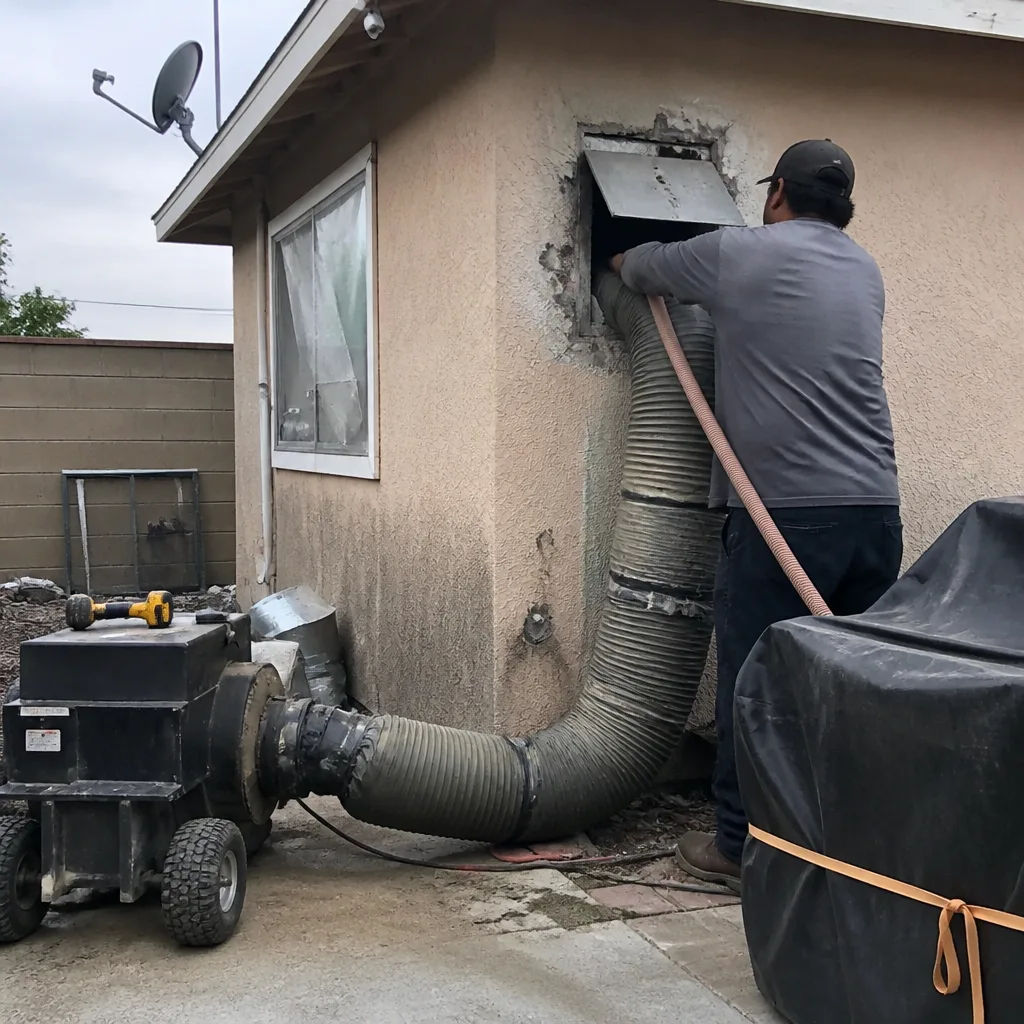
Dryer Vent Cleaning in Rialto is priced separately because it is a separate system with a separate fire-safety purpose. It is not a free add-on, and a company that throws it in as a bonus is not doing real vent work. Lint removal from a dryer vent run requires the same professional approach as duct cleaning: access, agitation, containment, and verification.
Common Mistakes to Avoid
- Believing the $79 advertised price is the final price. It never is. The van shows up, the technician finds reasons to upsell, and the final invoice lands in the same range as a legitimate provider, except you’ve now wasted a morning and still don’t know what equipment was actually used.
- Judging cleaning quality by visible register faces. A register-only service leaves the trunk lines untouched. Your registers can look clean while the majority of your duct surface area remains caked. Always ask how the trunks and main returns are accessed.
- Assuming newer homes don’t need cleaning. Newer construction in Rialto often has construction dust inside the ducts from the day of move-in. Drywall dust, sawdust, and insulation fibers get pulled into open duct runs during framing and finish work. A 2020-built home can need cleaning sooner than a 1990 home that has been serviced.
- Ignoring the dryer vent because it’s “not part of the HVAC.” The dryer vent is the most dangerous duct in your home. Lint accumulation is a leading cause of residential fires, and Rialto homeowners who have never had their dryer vent cleaned are operating with an unknown fire load in an enclosed chase.
- Skipping the pre-inspection. You have the ability to inspect your own boots, registers, and filter before calling anyone. If you know your system is fouled, you can speak from evidence when evaluating contractors. If a company refuses to show you the before and after conditions, walk.
- Treating duct cleaning as a one-time permanent fix. In the Rialto airshed, contamination returns. The timeline depends on your home, your filter, your proximity to dust sources, and the fire seasons. A system cleaned today is clean today. It will not stay that way forever.
- Assuming all companies use equivalent equipment. A portable shop-vac system and a Nikro HEPA negative pressure system are not different brands of the same thing. One captures debris at the source; the other moves it around. The quote should tell you which you are getting. If it doesn’t, ask before booking.
See the difference
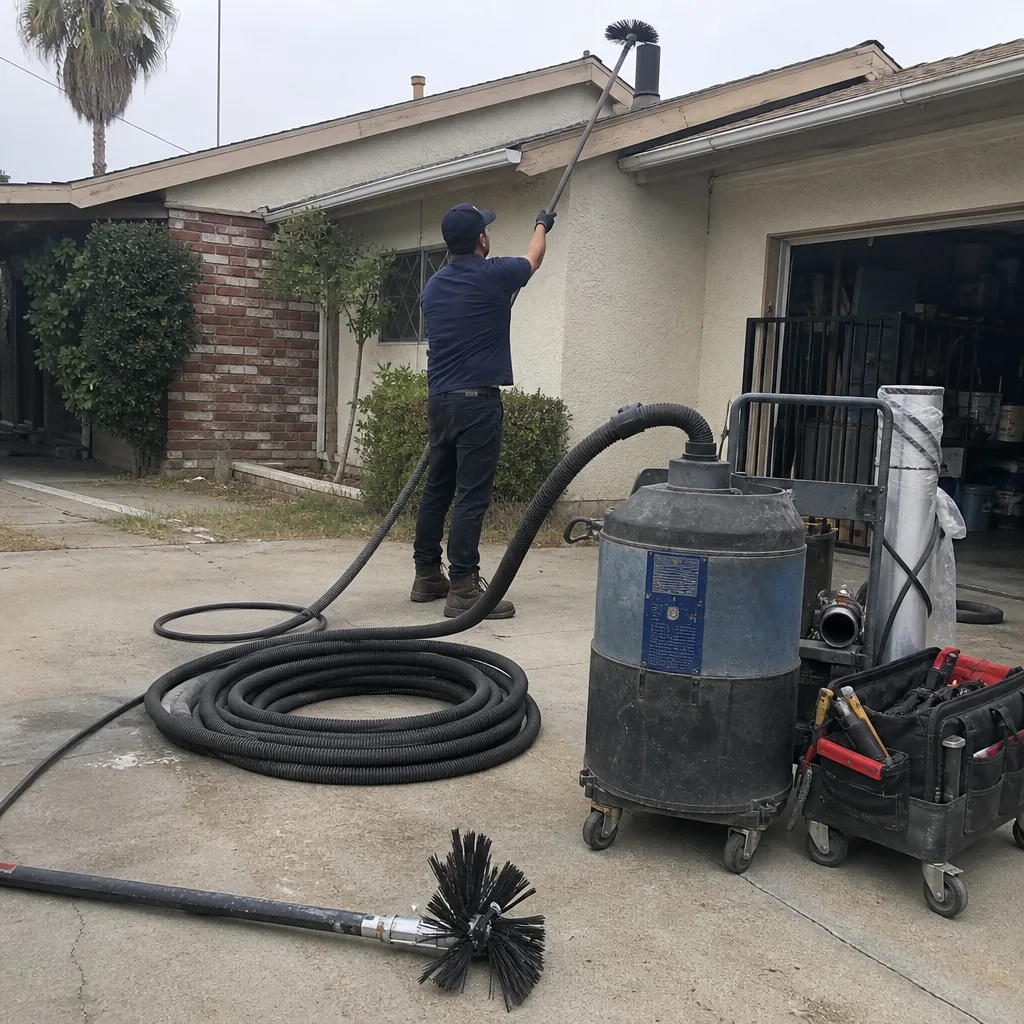 Before
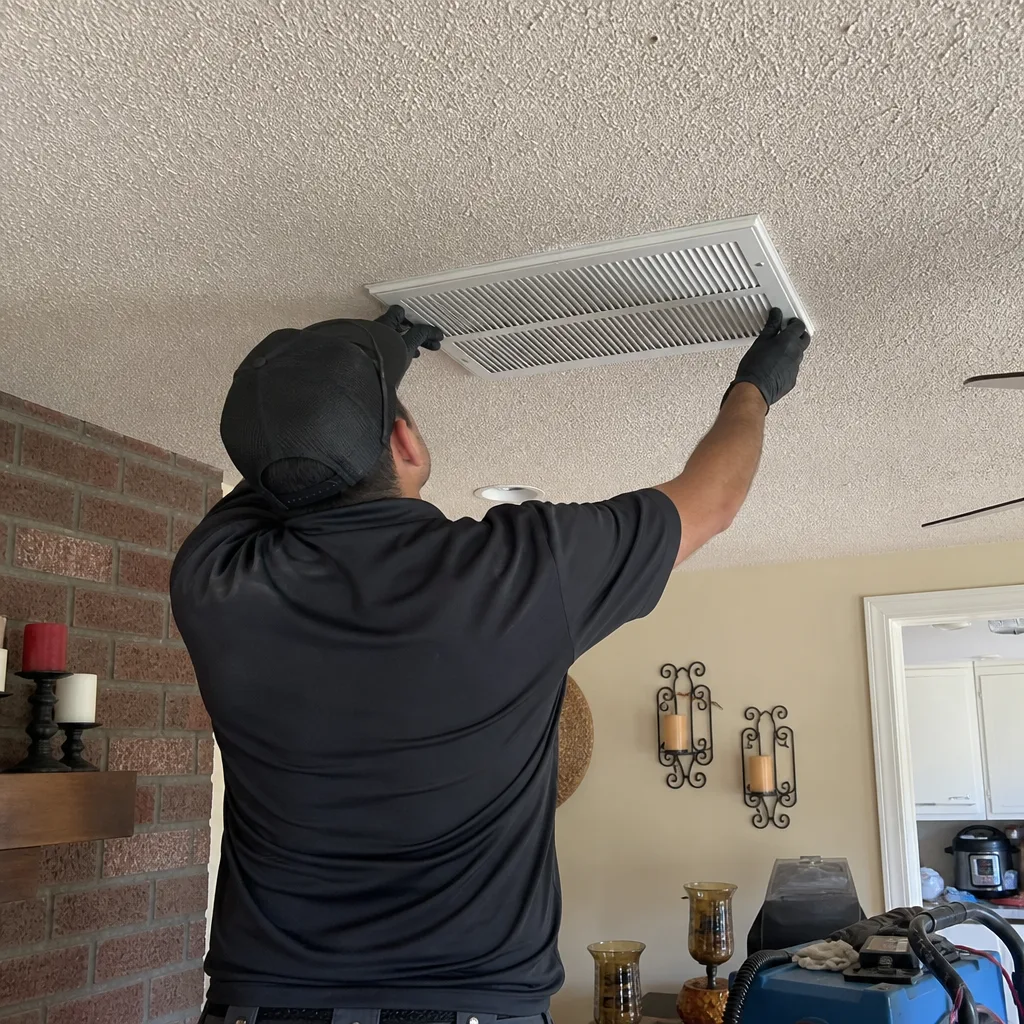 After
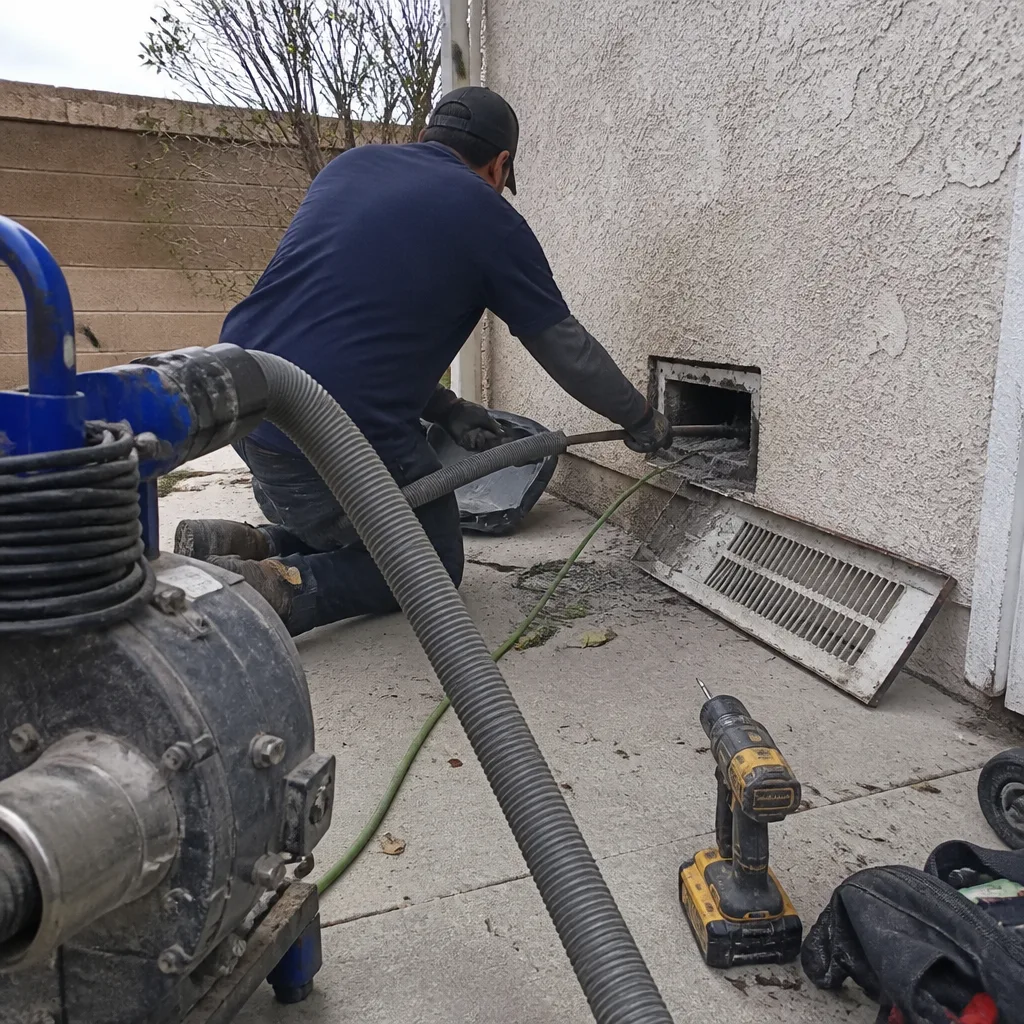 Before
 After
 Before
 After
When to Call a Professional
You should call a professional when your own inspection turns up evidence you cannot ignore: matted buildup inside a boot you can see with a flashlight, a return grille that coats a white cloth black, a filter that darkens in under 30 days, or lingering smoke odor that returns every time the system cycles. You should also call after any period of major construction or renovation in the home, after a significant wildfire smoke season, after purchasing a home with no documented duct cleaning history, or when a household member develops persistent respiratory symptoms that correlate with system runtime. For a deeper look at local considerations, see The Complete Guide to Air Duct Cleaning in Rialto. Duct Cleaning Rialto offers free estimates to homeowners throughout the Rialto area. Call (833) 630-3666 and we will assess your system honestly. If your ducts are clean and intact, we will tell you that too.
Frequently Asked Questions
Most Rialto homes benefit from air duct cleaning every 3 to 5 years due to the high particulate load from desert-adjacent dust, freeway proximity, and heavy cooling-season runtime. Homes with pets, occupants with respiratory conditions, recent construction exposure, or proximity to open land may need cleaning more frequently.
Full-system air duct cleaning for a standard single-family home in Rialto typically costs $400 to $600, with smaller homes ranging from $300 to $450 and larger homes up to $800 or more. A legitimate quote is a firm, flat, per-system price agreed before work starts, not a cheap per-vent teaser that grows once the technician arrives. Call (833) 630-3666 for an exact quote. Estimates are free.
Cheaper quotes typically represent register-only scope, which means the technician cleans the visible area behind each register but never accesses the main trunk lines or return plenum where most contamination lives. The low price is a door opener, not a real quote. The final bill usually climbs, and the work still leaves the majority of the system untouched.
Ask for before-and-after visual documentation of the duct interiors. A legitimate professional-grade cleaning includes camera or photo evidence showing the condition of your trunk lines, branch runs, and boots before and after the work. If the company cannot provide documentation, you have no way to verify that the system interior was actually cleaned.
If your home has been exposed to one or more significant wildfire smoke seasons and the system has not been cleaned since, the smoke residue is likely still present on your duct surfaces. Smoke particulates pass through standard filters and deposit inside the duct system. After a heavy smoke season, a professional cleaning removes that residue and eliminates the smoke odor that returns when the system runs.
It can, if the musty smell is coming from accumulated dust and organic material inside the duct runs. It cannot fix a moisture problem, a mold source inside the air handler, or a leak that is pulling attic or crawl space air into the system. Those issues require repair, and a professional inspection should distinguish between the causes before any cleaning quote is given.
Cleaning removes accumulated contamination from the interior surfaces of the duct system. Repair fixes structural problems: separated joints, crushed runs, disconnected boots, air leaks, and damaged sections. A compromised duct system can be perfectly cleaned and still pull in contaminated air through leaks, which is why both services need to work together. Duct Cleaning Rialto home services are built around that reality.
The Bottom Line
Rialto’s dust load, wildfire smoke exposure, slab construction, and long cooling seasons mean your ducts work harder and foul faster than national averages account for. The right response is a professional-grade cleaning every 3 to 5 years, using negative-pressure HEPA equipment and mechanical agitation that actually captures debris at the source. The wrong response is a cheap register-only wipe that leaves the system dirty and your family breathing the same particulates six months later. Clean ducts and intact ducts, that is the standard. If you want an honest assessment of where your system stands, call (833) 630-3666 and we will tell you what we find.
Written by the team at Duct Cleaning Rialto, serving Rialto since 2015.