
Last updated November 2, 2026
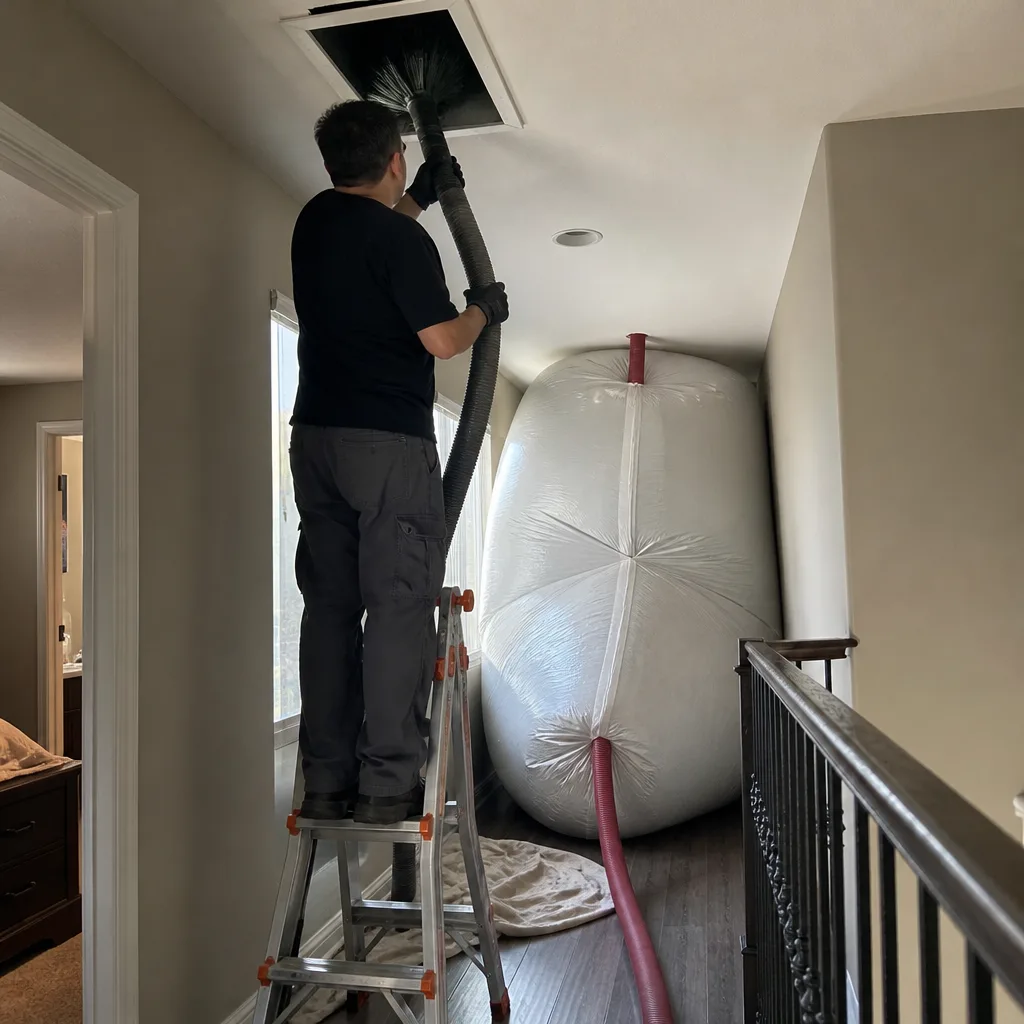
 Whole-home duct cleaning
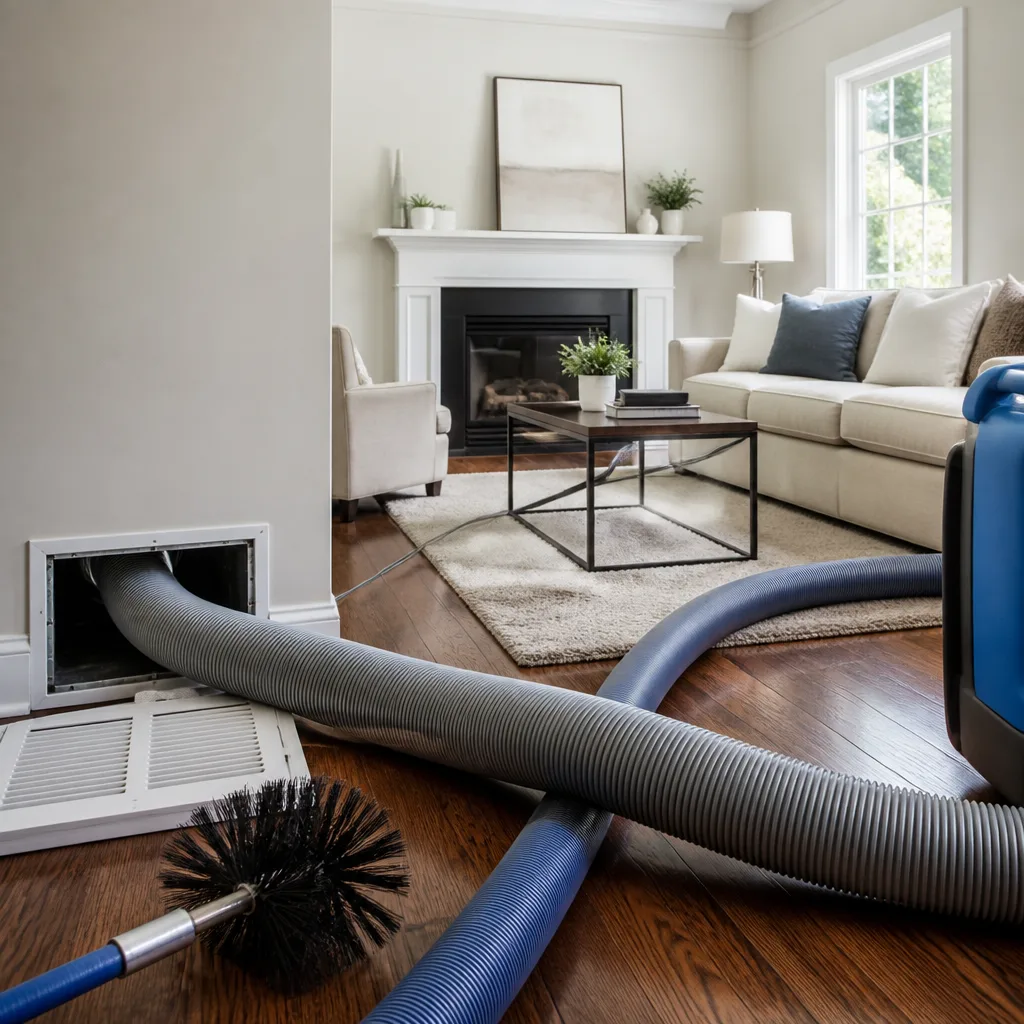
 Dryer vent cleaning
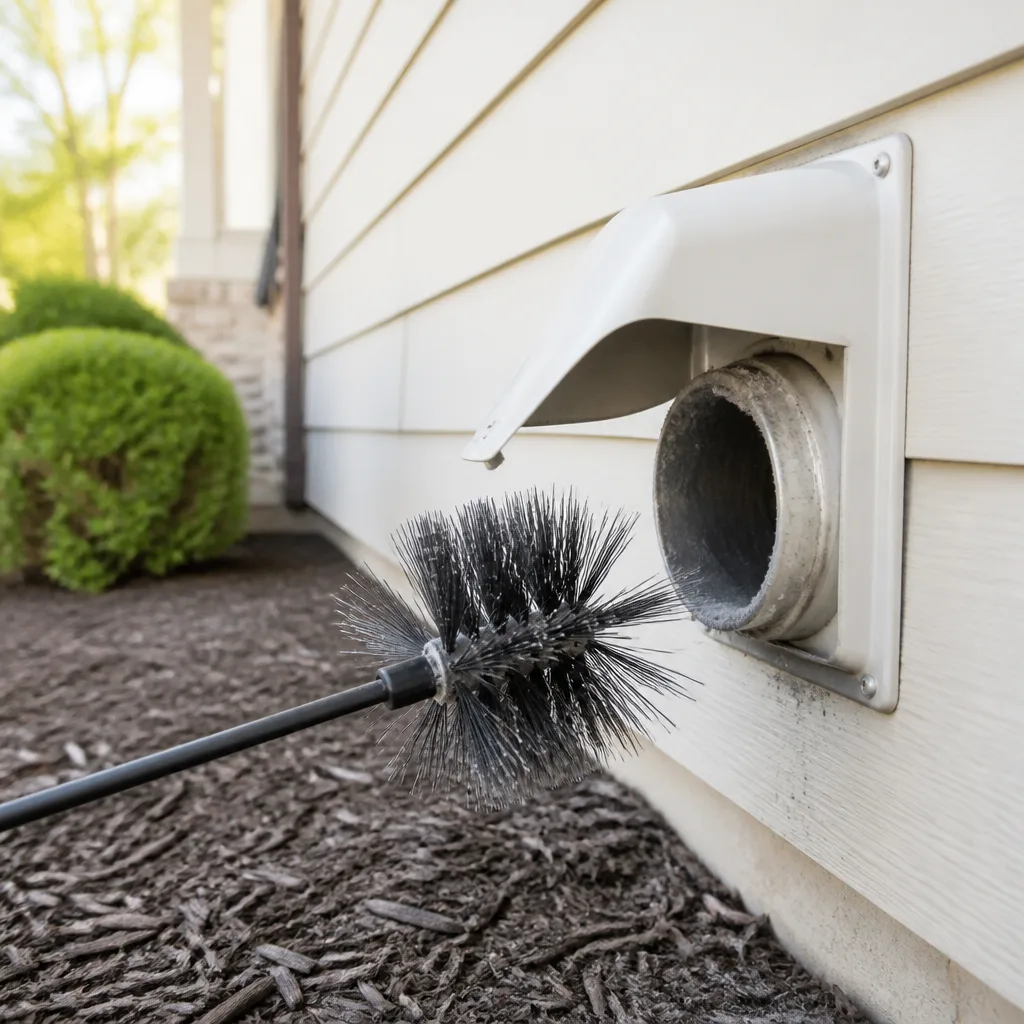
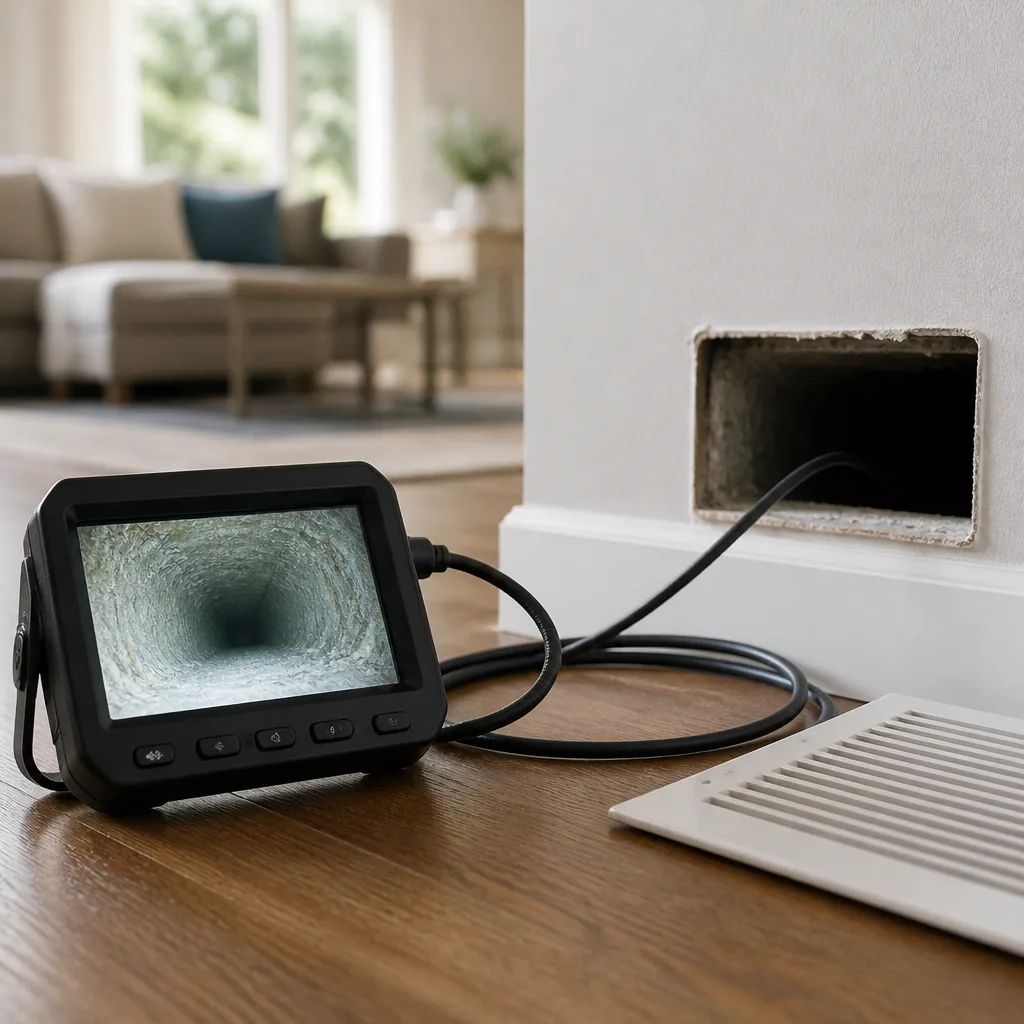 Camera inspection
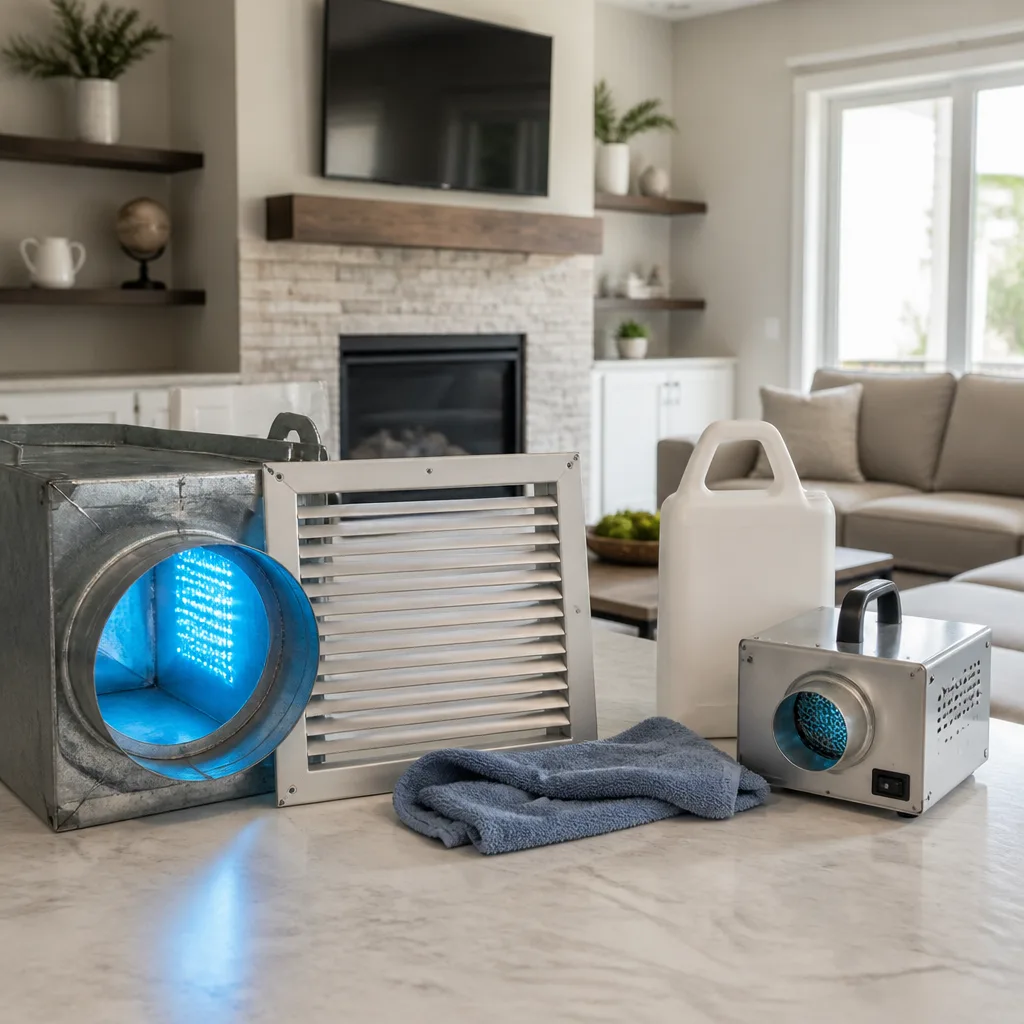 Sanitizing & deodorizing
Whole-system duct and dryer vent check with before-and-after photos - you see exactly what came out of your vents
That "$99 whole-house special" is a bait ad - the real number appears once they are in your hallway, or the "clean" is a shop-vac at the register. We photograph the inside of your ducts before and after instead.
Air Duct Cleaning Warning Signs: A Rialto Homeowner’s Reference Guide
Visible dust blowing from your registers is one of the last signs of a contaminated duct system. By the time you can see it, the problem has typically been building for one to three years. The earlier indicators are subtler and almost always misread as HVAC performance issues: a bedroom that never quite cools, a utility bill that creeps up each summer, a faint smell that only appears when the blower kicks on. This guide from Duct Cleaning Rialto home pairs each warning sign with the specific duct condition it indicates, so Rialto homeowners can triage accurately instead of either panicking or ignoring something serious.
Quick Answer
The most reliable early warning signs of dirty or failing air ducts in Rialto are uneven room temperatures, rising utility bills without a change in usage, a dusty smell when the system runs, and registers that show visible buildup on closer inspection. Late-stage confirmations include visible debris blowing from registers, musty odors that linger, mold at the register face, and rodent activity sounds inside duct runs. Any burning smell or active moisture requires immediate professional attention, not a scheduled inspection.
Styles & brands we work with
- Whole-home duct cleaning
- Dryer vent cleaning
- Camera inspection
- Sanitizing & deodorizing
Table of Contents
- Early-Stage vs. Late-Stage Warning Signs: The Difference Matters
- Duct Problems vs. HVAC Equipment Problems: How to Tell Them Apart
- Warning Signs Specific to Rialto Housing Stock
- What Different Duct Smells Actually Mean
- Urgent Action vs. Non-Urgent Inspection: A Triage Guide
- What Homeowners Can Check Themselves (Safely)
- Moisture in Ducts: The Warning Sign That Changes Everything
- Rising Utility Bills as a Duct Diagnostic Signal
Early-Stage vs. Late-Stage Warning Signs: The Difference Matters
Most warning sign guides fail because they treat every symptom as equally urgent. That’s not how duct contamination works. Duct problems develop on a timeline, and understanding where you are on that timeline changes what you should do next.
In our experience working with Rialto homes, early-stage duct problems rarely announce themselves. They whisper. The signs are easy to dismiss because they look like normal house quirks. A master bedroom that’s always five degrees warmer than the hallway. A utility bill that’s $30 higher than last summer for no obvious reason. A faint puff of dust from a register when the AC first cycles on after a few days off.
Here’s the progression we typically see in Inland Empire homes:
- Months 1-6: Dust and debris begin accumulating inside supply ducts. No visible symptoms. The system runs normally. Nothing looks wrong.
- Months 6-18: Particulate buildup reaches a level where airflow restriction begins. Rooms at the end of the longest duct runs start running warmer. Utility usage ticks up as the blower works against restricted airflow.
- Months 18-36: The buildup becomes visible at supply registers. Dust clings to register louvers. A gray film appears. This is when most homeowners first notice something.
- 36+ months: Contamination is now severe. Debris may blow from registers when the system starts. Odors develop. In extreme cases, microbial growth takes hold in the dust layer if moisture has been present.
Understanding this timeline is why we emphasize early inspection. Scheduling our Air Duct Cleaning services in year one is far simpler than a system with years of layered contamination requiring containment equipment and multiple passes. The early signs are not false alarms. They’re the cheapest moment to act.
Duct Problems vs. HVAC Equipment Problems: How to Tell Them Apart
Uneven room temperatures, weak airflow, and rising bills can mean a failing blower motor, a low refrigerant charge, or a restricted coil. They can also mean dirty or leaking ducts. This overlap is the single biggest source of homeowner confusion we encounter in Rialto.
Here’s how we separate duct issues from equipment issues without opening anything up:
The register airflow comparison: Walk through your home and hold the back of your hand about four inches from each supply register while the system runs. Note the strength of airflow at each one. In a typical Rialto home with a properly designed duct system, airflow should feel roughly consistent from room to room, accounting for some normal variation based on distance from the unit. If you find one room that’s notably weaker than the rest, and that room happens to be at the end of the longest duct run, the odds strongly favor a duct restriction or leak somewhere in that branch, not a central equipment failure.
Why does this matter? Because a central blower problem affects every register roughly equally. A refrigerant problem affects the temperature of the air, not the volume. A duct restriction or leak affects specific branches. That asymmetry is diagnostic.
Three other distinguishing signals:
- Temperature vs. volume: If the air coming out is cold but weak, think ducts. If the air is warm but blowing strongly, think equipment.
- Sound changes: A whistling or hissing at a specific register can indicate a duct-to-plenum seal failure near that branch, not a system-wide issue.
- Dust pattern consistency: Equipment problems don’t produce dust. If you’re seeing dust at registers across multiple rooms, that’s a duct contamination issue, full stop.
When we perform Air Duct Cleaning in Rialto, we’re often called after a homeowner has already had an HVAC tech out who found the equipment fine but couldn’t explain the performance problem. The ducts were the unexamined variable all along.
Warning Signs Specific to Rialto Housing Stock
Rialto’s housing stock has specific characteristics that shape how duct problems present. Drive through neighborhoods like Las Colinas, Hunter’s Ridge, or the older tracts east of Riverside Avenue, and you’ll find homes built across several decades with different duct materials and installation practices. Each era has its own failure modes.
Flex duct deterioration (common in 1980s-2000s Rialto tract homes)
Many Rialto homes built during the Inland Empire’s rapid expansion decades used flexible duct extensively. Flex duct has an outer plastic vapor barrier, an inner liner, and a wire coil sandwiched between. When that outer barrier tears, degrades, or disconnects, conditioned air escapes into the attic or crawl space. Here’s what to look for from inside the home:
- Register airflow that’s weaker than neighboring rooms, particularly in second-story rooms where attic temperatures are brutal in summer
- A rising cooling bill while the system itself checks out fine
- Attic access points that are noticeably hotter than they should be during summer, suggesting conditioned air bleeding into the attic
Flex duct failure is a structural issue, not a cleanliness issue. That’s why we offer Air Duct Repair in Rialto as a standalone service. Cleaning can’t fix a disconnected or torn duct run. The repair has to come first.
Rodent intrusion (older Inland Empire tract homes)
Rialto’s older neighborhoods and any home near open fields, warehouses, or the foothills deal with rodent pressure. Attic spaces with accessible soffit gaps become highways for rats and mice, and flex duct is easy to chew through. Signs of rodent activity in ducts include:
- Scratching or skittering sounds from ceiling cavities that stop when the HVAC system cycles on
- Urine or nesting odor that intensifies when air is moving
- Small entry holes visible on flex duct runs when inspecting the attic
- Droppings near attic access panels or on top of return boxes
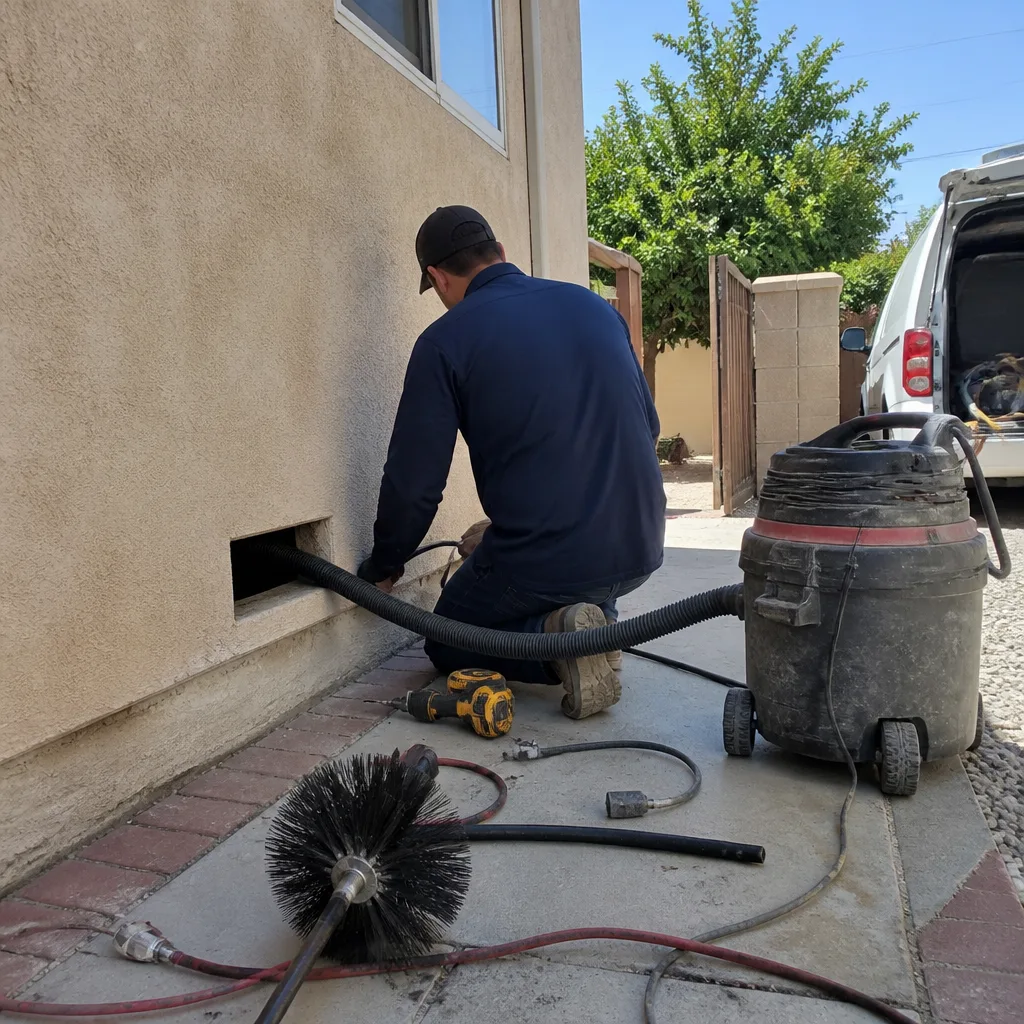
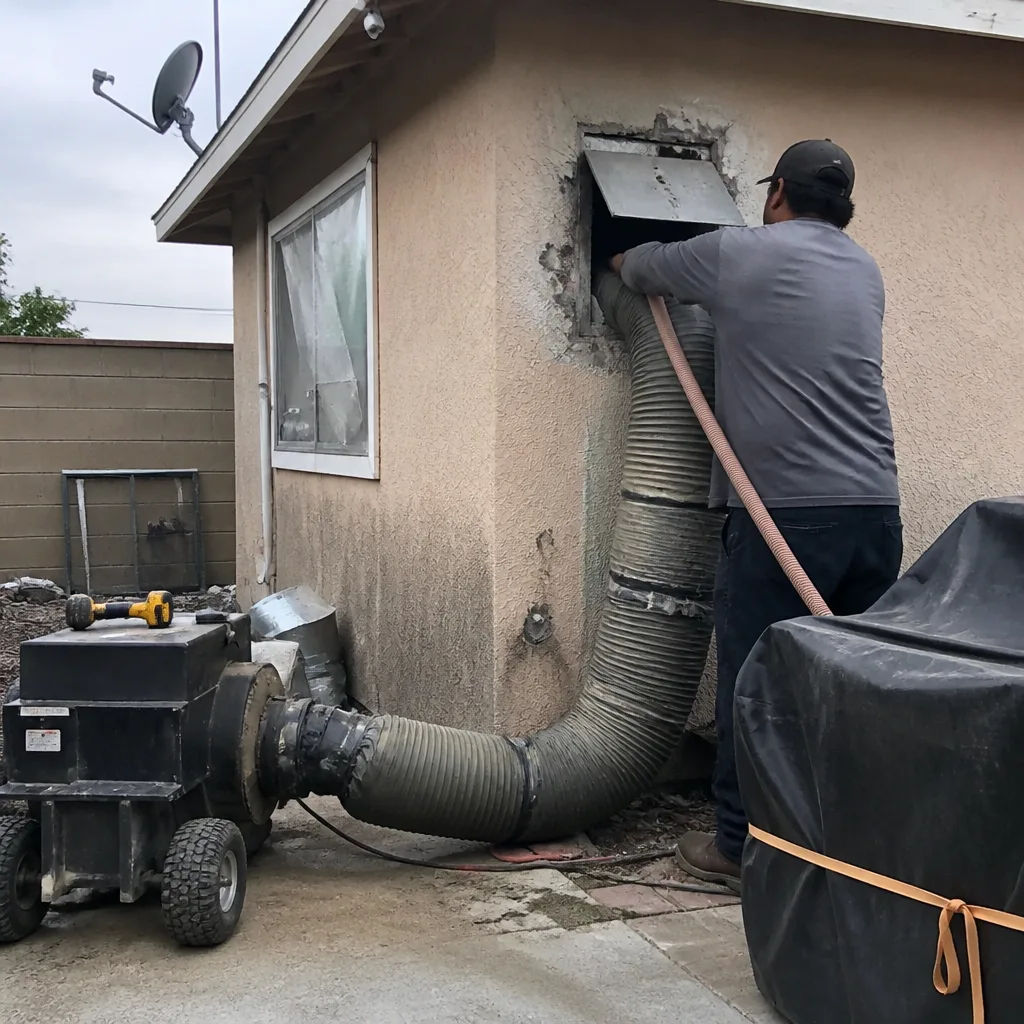
Rodent intrusion is never a clean-it-and-forget-it situation. The entry points must be sealed, the contaminated duct sections replaced or thoroughly cleaned with proper containment, and the attractants removed. This is one of the scenarios where contaminant capture matters most. A standard shop-vac approach would aerosolize rodent waste particles throughout the home. Our process uses Nikro HEPA-rated vacuum technology and Abatement Technologies containment to capture material at the source, not redistribute it into your living space.
Duct-to-plenum seal failure
The connection where ducts meet the main supply or return plenum is a common failure point in Rialto homes built in any decade. The sealant dries out, tape fails, or the mechanical connection works loose. Exterior air and attic dust get pulled into the return side; conditioned air gets pushed into the attic on the supply side.
From inside the home, signs include:
- A sudden change in dust accumulation in a single room
- Flapping or tapping sounds when the blower starts or stops
- A specific register that blows warmer air than the rest in summer
- Higher humidity inside the home than expected for Rialto’s climate
Seal failures also create negative or positive pressure imbalances that can pull in outside air from wall cavities or the attic. That’s unfiltered air – containing whatever’s in your attic – introduced directly into your breathing space.
What Different Duct Smells Actually Mean
Odor is the warning sign Rialto homeowners report to us most reluctantly. It feels subjective, hard to describe, and sometimes embarrassing to mention. A smell is only present when the system runs. It’s not in the room otherwise. Here’s what the different smells actually indicate.
Dusty smell (particulate buildup)
A dusty or “old heating element” smell when the system first starts is the most common odor complaint. It typically indicates significant particulate accumulation on the blower wheel, the evaporator coil, or the duct walls themselves. When the system kicks on, the first burst of air stirs settled dust that’s baked into a fine layer. This smell usually fades within the first minute or two of operation. That fading pattern is a diagnostic clue: it’s not microbial, it’s particulate. The fix is genuine source removal cleaning. Surface-level register wiping won’t touch it because the material is deep in the system.
Musty smell (microbial growth)
Musty or “wet sock” odor that persists the entire time the system runs is different. It signals microbial growth somewhere in the system, almost always requiring moisture. In Rialto, the most common source is condensation on a coil that isn’t draining properly, combined with dust in the ductwork that provides a food source. The musty smell doesn’t fade after startup; it’s continuous. That’s the distinguishing feature. This scenario requires finding and fixing the moisture source first, then addressing the contaminated surfaces. Cleaning without fixing the moisture is wasted effort.
Chemical or plastic smell (off-gassing)
A chemical, plastic, or “hot vinyl” smell points to off-gassing from materials inside the duct system or being pulled into it. New flex duct installations can off-gas for a period. Adhesives used in some retrofit jobs can produce odor. In some cases, deteriorating plastic-lined ducts or non-duct materials stored near the return air intake contribute the smell. This is the least common odor complaint but the one that typically requires actual material replacement rather than cleaning. If the smell appeared suddenly after a repair or renovation, the timeline of that work matters for diagnosis.
Urgent Action vs. Non-Urgent Inspection: A Triage Guide
Not every warning sign deserves the same response. Misclassifying urgent problems as routine causes real damage. Misclassifying routine problems as urgent causes unnecessary stress and hasty decisions. Here’s how we help Rialto homeowners sort it.
Requires immediate action (do not run the system)
- Burning or electrical smell during operation: This can indicate a blower motor failing, wiring overheating, or foreign material contacting a heat source. Shut the system off and call for an inspection before running it again.
- Active water or visible moisture at registers or on duct surfaces: Water in ductwork means a drainage failure, a roof or plumbing leak, or severe condensation. Left alone, it creates conditions for mold within a few days. This is an emergency.
- Visible mold growth at register faces or inside visible duct sections: Mold at the point of air discharge means spores are being distributed through the living space. The system should not run. Assessment of the full extent of contamination is the first step.
Warrants a scheduled, non-urgent inspection
- Dust accumulation visible at registers but not blowing: A cleaning is warranted but there’s no immediate hazard.
- Uneven room temperatures: This is a performance and comfort issue. A diagnostic visit can determine whether the cause is duct-related.
- Faint dusty smell at startup that fades quickly: Indicates buildup that should be addressed but doesn’t require shutting the system down.
- Rising utility bills without other symptoms: An efficiency signal. Worth investigating rather than ignoring.
- Rodent sounds or droppings without active water or burning smells: Serious contamination that needs professional handling, but not an emergency requiring system shutdown tonight.
The distinction between urgent and routine comes down to safety and compounding damage. Moisture compounds daily. Burning smells are unpredictable. Everything else can wait for a scheduled appointment while you continue using the system normally.
What Homeowners Can Check Themselves (Safely)
You don’t need to open ductwork to gather useful diagnostic information. In fact, we recommend against homeowners opening duct runs or removing register housings deeper than the visible face. The tools and approach below give you clear information without risking damage or releasing contaminants into the room.
- Register face inspection: Remove the register cover (the visible grille only, typically held by two screws) and look at the opening. Is there visible dust, debris, or discoloration inside the first few inches of the duct? Take a photo with your phone’s flash. This is your baseline.
- Airflow comparison walk: As described earlier, hold your hand at each register while the system runs. Note weak registers and whether they correspond to the farthest rooms from the HVAC unit.
- Filter check: Look at your current filter’s condition and its orientation. A filter that’s bowed, bypassed, or severely clogged tells you particles are reaching the system that shouldn’t be. Write down the filter size and MERV rating for reference when you call a professional.
- Return air inspection: Check your return air grille. Is it clogged with dust, pet hair, or household debris? Return-side contamination is a significant source of system-wide particulate distribution.
- Visible supply plenum check (attic access points): If you have safe, floored attic access, you may be able to visually inspect the supply plenum and first few feet of visible flex duct without touching anything. Look for sagging, visible tears, disconnected sections, or duct runs lying on attic insulation. Photograph anything suspicious from a safe position.
These observations help a professional narrow down the likely source before they arrive. They also give you a way to evaluate whether the service you receive actually addressed the issues you identified.
Moisture in Ducts: The Warning Sign That Changes Everything
If there’s one variable that transforms a routine duct cleaning into a more complex remediation, it’s moisture. Rialto’s climate is generally dry, but the temperature differentials that matter inside ductwork aren’t climate-dependent. When hot, humid air meets cold duct surfaces inside an unconditioned attic or crawl space, condensation forms. During our summers, that differential between attic air and the conditioned air inside supply ducts can exceed 60 degrees.
Moisture inside ducts changes the risk profile in three ways:
- Microbial growth potential: The dust layer already present inside many ducts becomes a food source. Add moisture, and dormant spores germinate within days.
- Particulate adhesion: Dry dust is relatively easy to remove with agitated brushing and negative-pressure vacuuming. Moist dust becomes a slurry that adheres to duct walls and requires more thorough, slower cleaning.
- Material degradation: Repeated condensation cycles weaken adhesives, promote rust on metal duct components, and accelerate flex duct liner breakdown.
In our experience, moisture problems in Inland Empire ducts usually trace to one of three causes: a condensate drain line that’s clogged or improperly sloped, return air leaks pulling humid outside air into the system, or a bathroom or kitchen exhaust vent that’s improperly connected to the return side. Each requires a different fix, and none of them is solved by cleaning alone. Identifying moisture before it becomes visible is the strongest argument for a professional inspection when you notice musty smells, register dampness, or condensation around supply vents.
Rising Utility Bills as a Duct Diagnostic Signal
Utility bills that climb while usage stays flat are a frustration for every Rialto homeowner. What many don’t realize is that duct condition is often a contributor, and the mechanism is straightforward physics.
Here’s the chain of causation: particulate buildup restricts the internal diameter of duct runs. Restricted ducts force the blower to work harder to move the same volume of air. A harder-working blower draws more power. Meanwhile, leaks in the duct system – whether from deteriorated seals, torn flex duct, or loose connections – mean a percentage of the conditioned air you’re paying to heat or cool never reaches your living space. It’s being pumped into the attic or crawl space.
Southern California Edison’s home energy data consistently shows HVAC operation as the single largest residential electricity consumer. In Rialto’s summer months, when cooling loads peak, even a 10-15% duct leakage rate translates directly into real dollars on every bill. And that’s before accounting for the restricted airflow that makes your AC run longer cycles to reach set temperature.
The diagnostic value of bill data is that it creates an objective baseline. If you compare your usage – not just cost, but actual kilowatt-hours or therms – against the same month in a prior year, adjusted for any significant weather difference, you can identify whether efficiency has genuinely declined. A 15-20% usage increase without a corresponding increase in cooling degree days is a mechanical clue. It’s not proof of duct problems, but combined with uneven temperatures or visible register dust, it completes a picture that increasingly points toward the ducts.
This is one reason we recommend homeowners bring their bill history to a duct inspection. The data helps us prioritize where to look. A home with a sudden usage spike and no visible dust or odor may have a serious duct leak. A home with dust and odor but stable bills may have contamination without significant airflow restriction. Each scenario calls for a different service priority.
Common Mistakes to Avoid
- Wiping visible dust from registers and considering the problem solved. Register-face dust is a symptom of buildup deeper in the system. Cleaning the surface prevents you from monitoring the problem while the accumulation continues.
- Assuming uneven temperatures are just a quirk of an older Rialto home. Age of construction does not explain a specific room being 10 degrees off. Duct branch failures and restrictions do.
- Replacing the HVAC filter more frequently instead of addressing duct contamination. A heavily soiled filter indicates particles moving through the system. A better filter may capture more, but it doesn’t remove existing contamination from the ducts.
- Disturbing visible mold by wiping it with household cleaners. Disturbing mold at a register releases spores into the room air. The right response is shutting the system off and calling for assessment.
- Using a standard vacuum to clean visible duct openings. Standard vacuums without HEPA filtration aerosolize the particles they’re trying to collect. You make the problem airborne and breathe it.
- Ignoring a burning smell because it goes away. Burning smells that appear during operation and then fade when the system cycles are frequently thermal-related. They don’t self-resolve.
- Deferring an inspection because the symptoms seem manageable. Duct contamination compounds. The cost and complexity of remediation increase with time, especially if moisture becomes involved.
See the difference
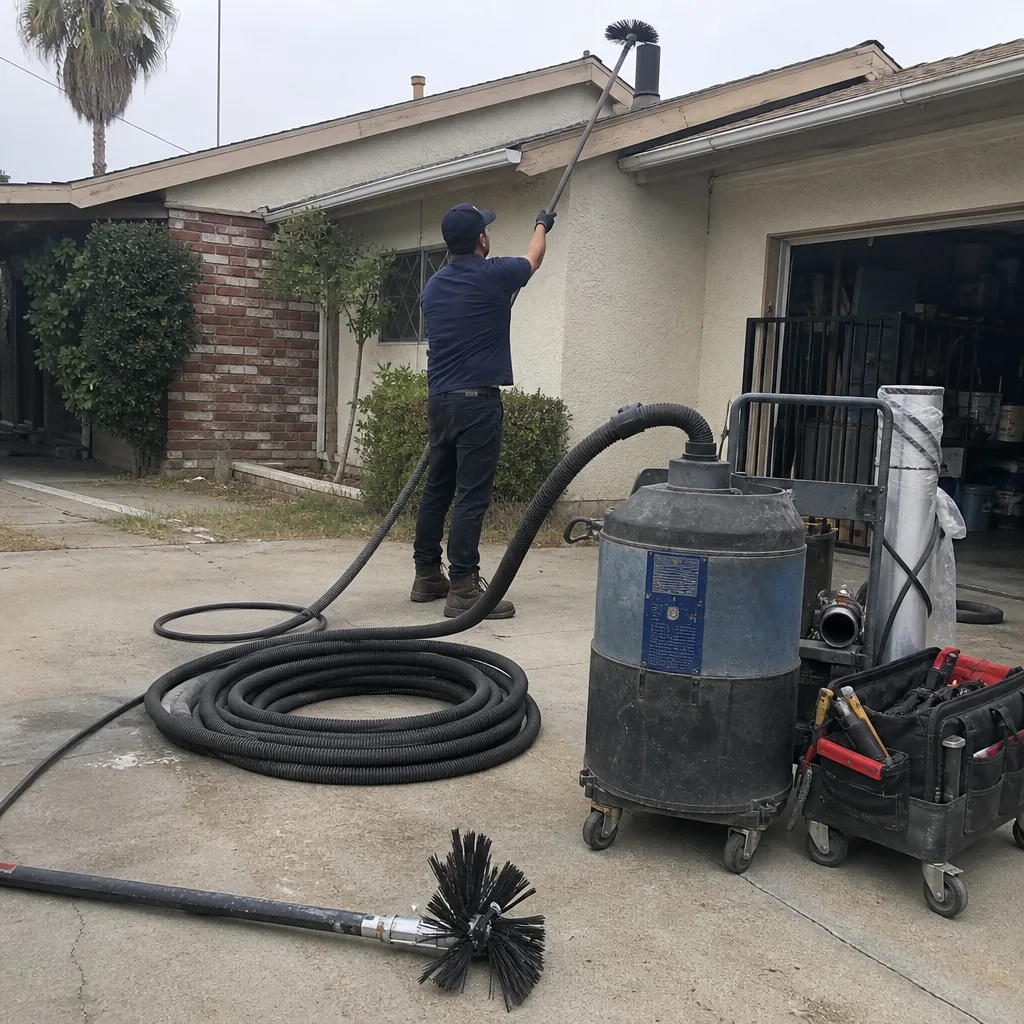 Before
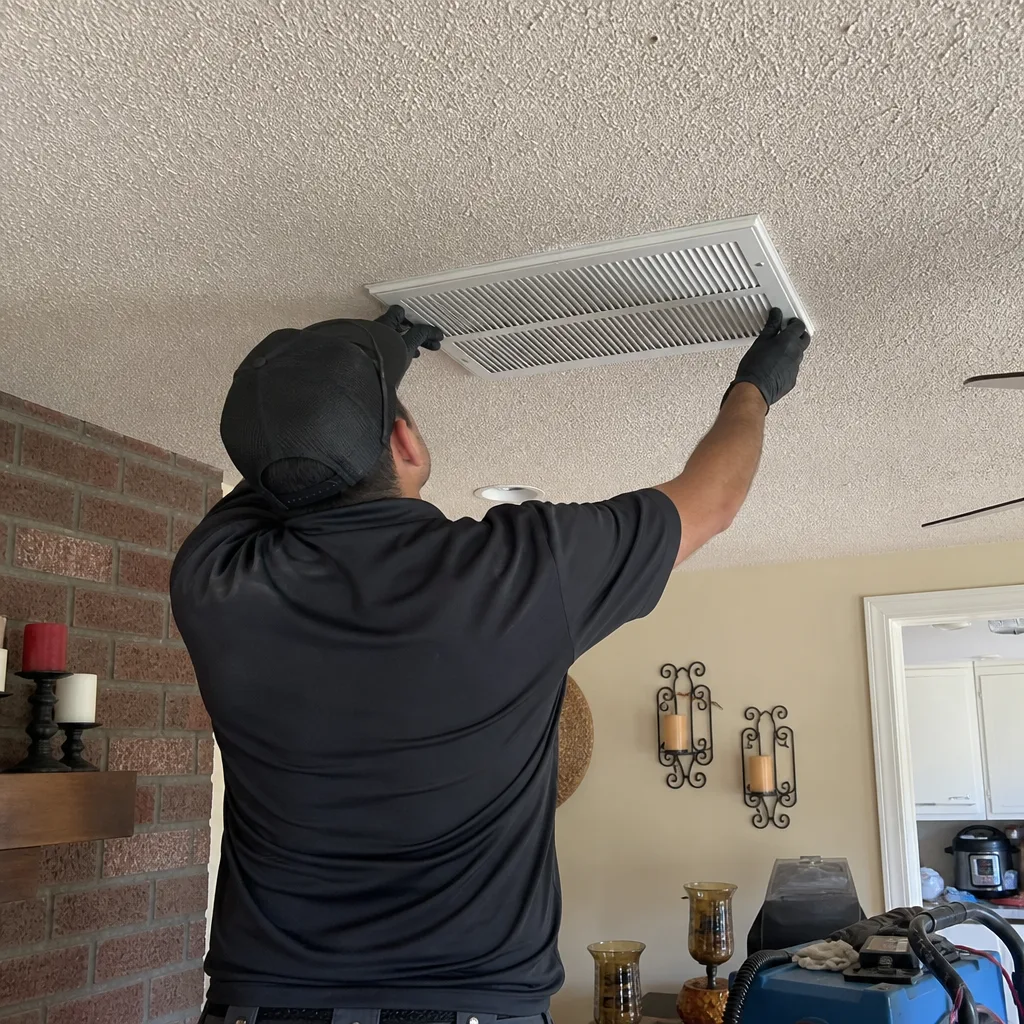 After
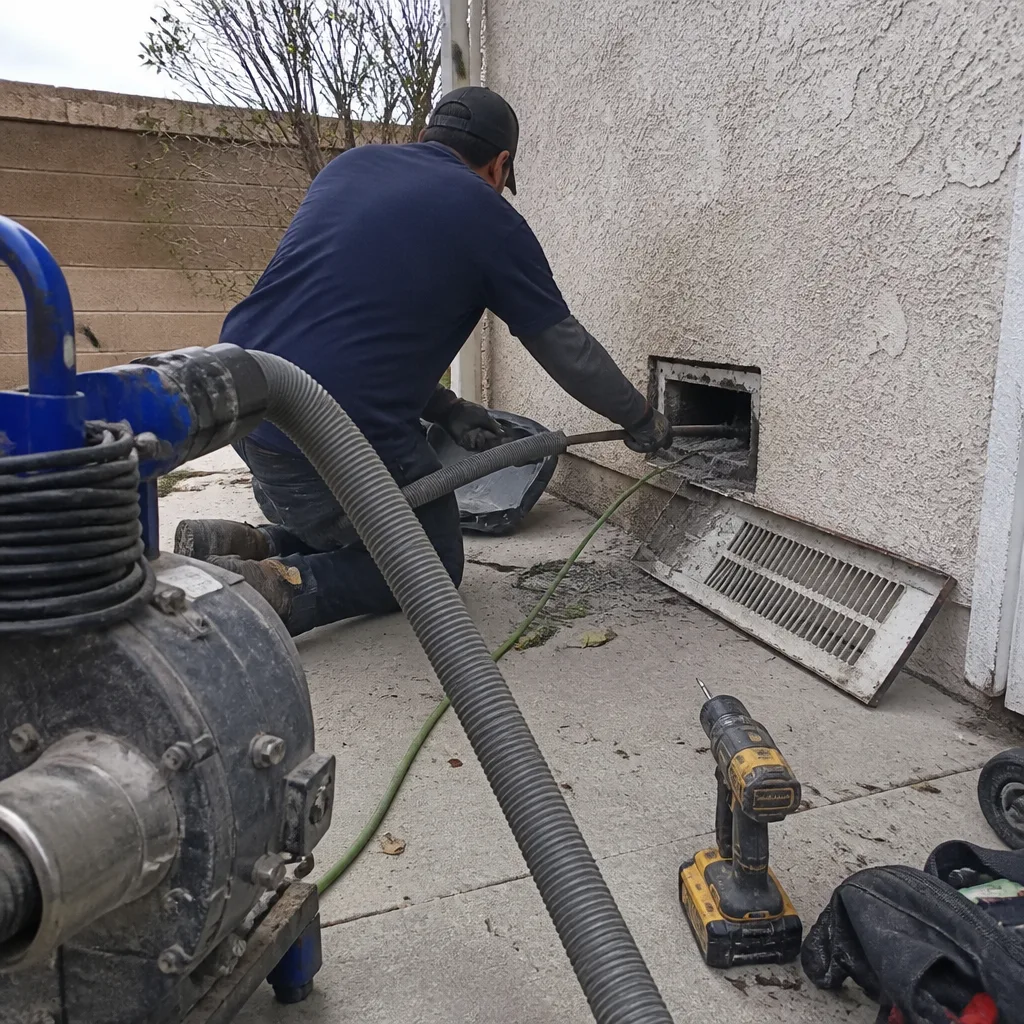 Before
 After
 Before
 After
When to Call a Professional
Call for a professional inspection when you’ve identified multiple warning signs from this guide, when any urgent signal appears, or when you’ve been chasing mystery HVAC symptoms with no equipment diagnosis to show for it. A trained eye can identify specific duct failure modes in under an hour that might take a homeowner months of guessing. Specific scenarios that warrant a call: rodent evidence in attic spaces near ductwork, register dust visible in more than two rooms, a musty odor that persists while the system runs, or airflow so imbalanced between rooms that comfort is compromised regardless of thermostat setting. Dryer Vent Cleaning in Rialto also matters here, since a clogged dryer vent presents its own set of warning signs that often overlap with general ventilation concerns. Duct Cleaning Rialto offers free estimates in Rialto – call (833) 630-3666 to schedule an inspection.
Frequently Asked Questions
You’ll typically notice a combination of these signs: visible dust accumulation at multiple register faces, a dusty smell when the HVAC system starts that fades after a minute or two, uneven room temperatures that don’t match thermostat settings, and rising utility bills without changes in usage patterns. Any one of these warrants closer inspection. Two or more together make a professional duct assessment the right next step.
Whole-system air duct cleaning in Rialto typically ranges from $300 to $600 for a standard single-family home, depending on square footage, number of systems, degree of contamination, and whether repair work is needed alongside cleaning. Homes with severe contamination, rodent intrusion, or failed duct seals may require additional remediation work beyond standard cleaning. For an exact quote tailored to your home, call (833) 630-3666 – estimates are free.
Lower-priced duct cleaning quotes typically reflect a different method: a vacuum only, without brush agitation, which leaves the compacted dust layer on duct surfaces. They may also skip containment, meaning loosened particles can redistribute into living areas during the job. Professional-grade equipment – rotary brush agitation paired with HEPA-rated negative-pressure collection – costs more to operate, and that’s reflected honestly in the price. A $99 whole-home duct cleaning is not the same service as a professional cleaning; the price difference tracks a real difference in what’s removed.
Ask for before-and-after photos of your actual ductwork from inside the supply and return runs. A professional using appropriate equipment can capture clear images showing the condition of the duct surfaces at the start and end of the job. Reputable companies also provide detailed documentation of what was found and what was done in each section of the system, not just a one-line invoice.
Duct cleaning removes accumulated particulate that gets redistributed through your living space every time the system cycles. For allergy sufferers, reducing that reservoir of dust, pollen, and other irritants can meaningfully reduce daily exposure inside the home. Results vary based on the individual’s sensitivities and the level of contamination removed, but removing particulate at the source is a logical first step. Upgrading filtration with systems like Honeywell or Aprilaire media filters complements cleaning by capturing new particles before they enter the ductwork.
For most Rialto homes, a professional air duct cleaning every 3 to 5 years is a reasonable interval. Homes with pets, recent renovations, smokers, or occupants with significant allergies may benefit from cleaning every 2 to 3 years. Homes near open fields or unpaved areas that generate more atmospheric dust may also fall on the shorter end of that range. The honest answer is that the interval depends on how quickly your specific system accumulates material, which is something a professional inspection can assess.
The Bottom Line
The warning signs covered in this guide form a diagnostic picture that’s far more useful than any single symptom alone, and if you’re evaluating providers, see Choosing the Right Air Duct Cleaning Brand: A Buyer’s Guide for Rialto. Uneven temperatures plus register dust plus a faint startup smell point toward duct contamination even when each factor seems minor by itself. The goal is not to alarm Rialto homeowners into unnecessary service, but to give you the framework to distinguish real duct problems from normal house quirks, and urgent situations from routine ones. When the signs align, a professional assessment with equipment that can genuinely inspect and clean the full system is the most direct path to resolving what you’re noticing.
Written by the team at Duct Cleaning Rialto, serving Rialto since 2015. Explore more guides & resources.