
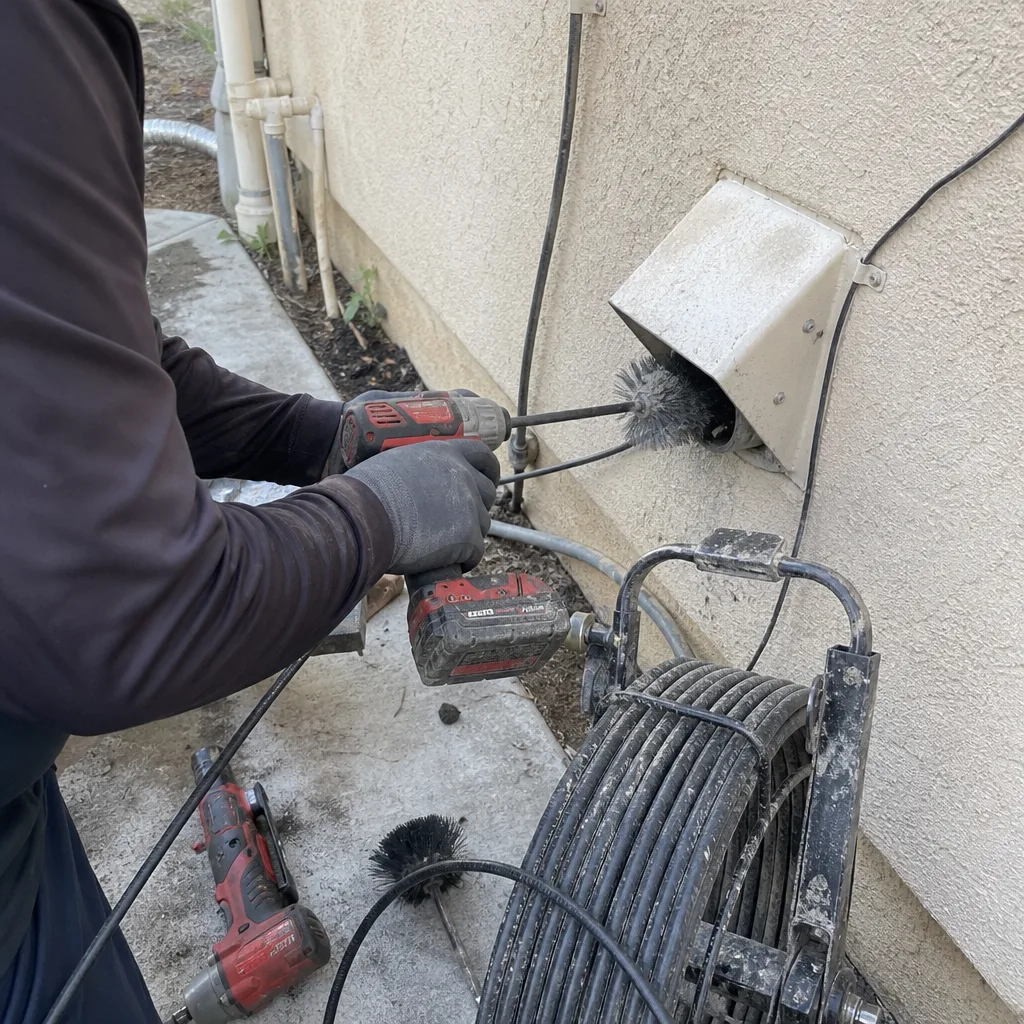
Last updated November 2, 2026
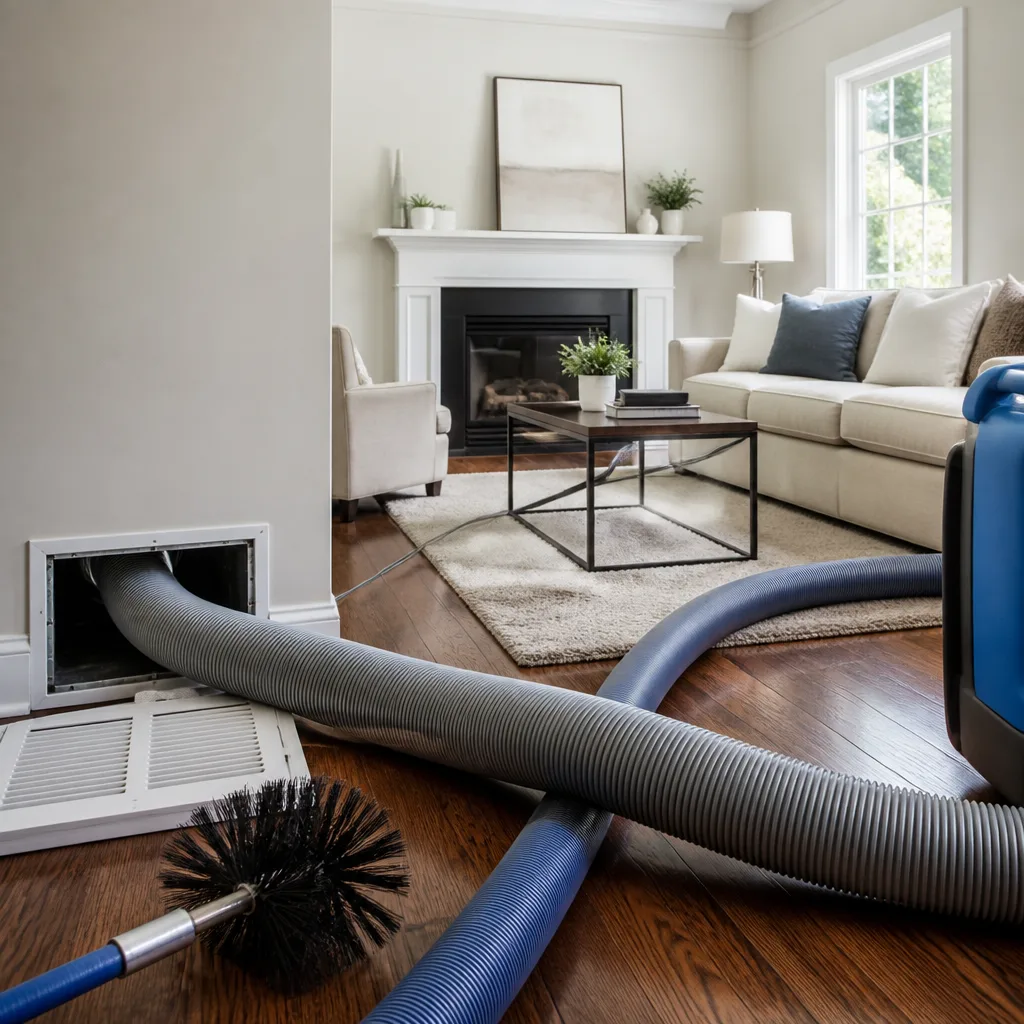 Whole-home duct cleaning
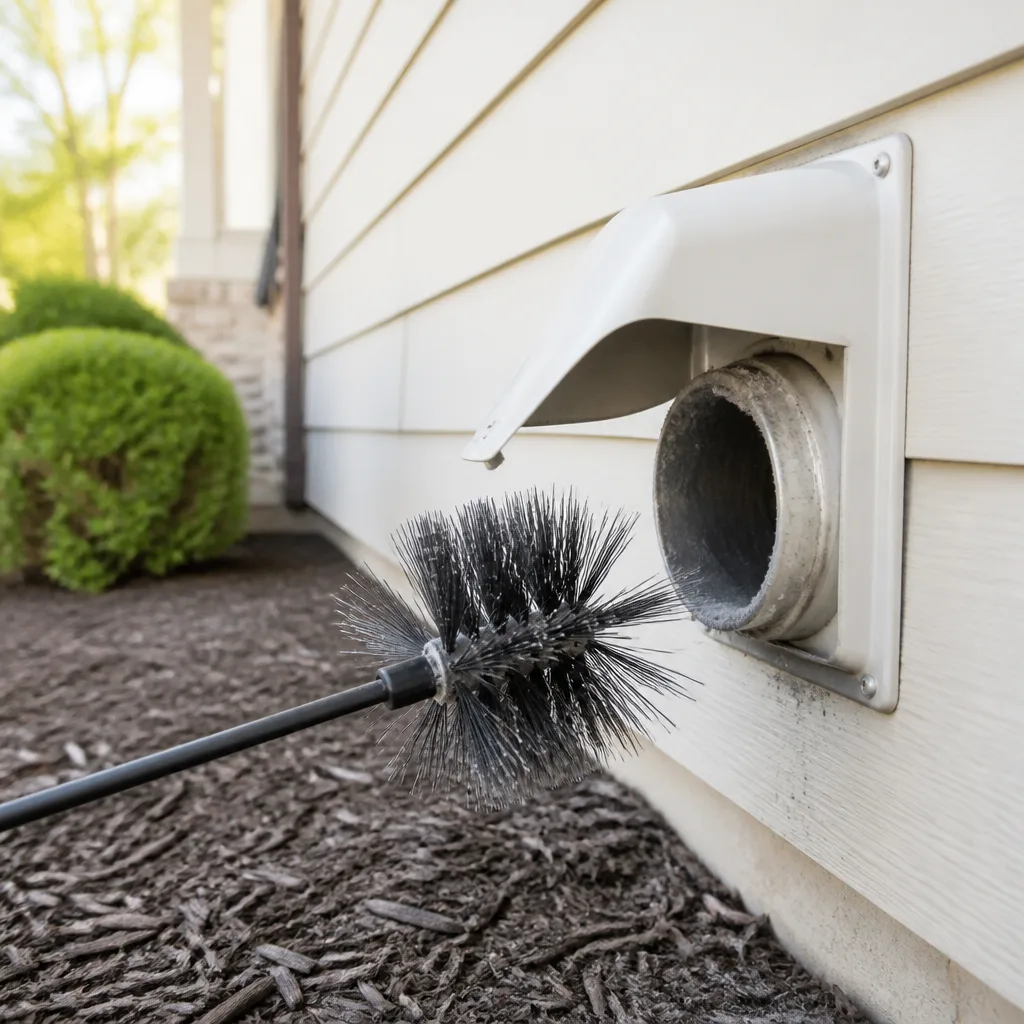 Dryer vent cleaning
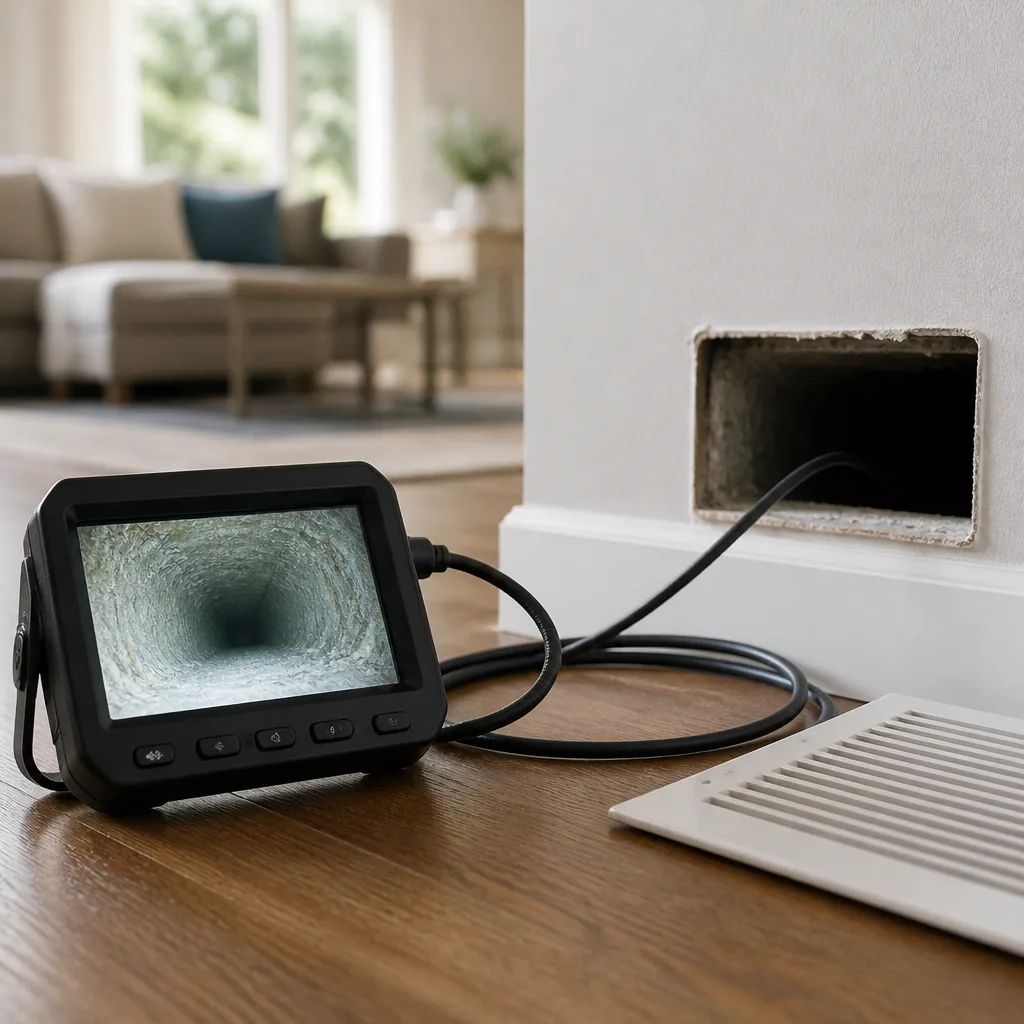 Camera inspection
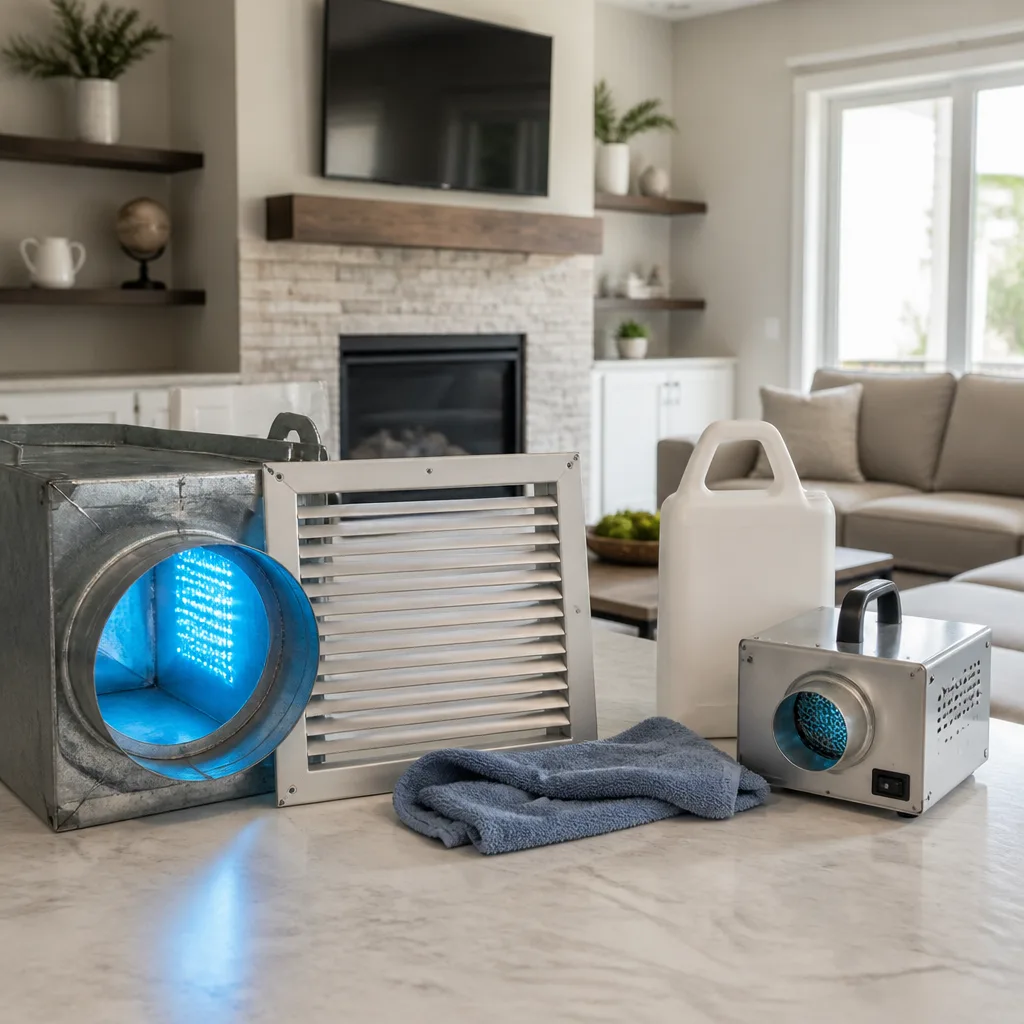 Sanitizing & deodorizing
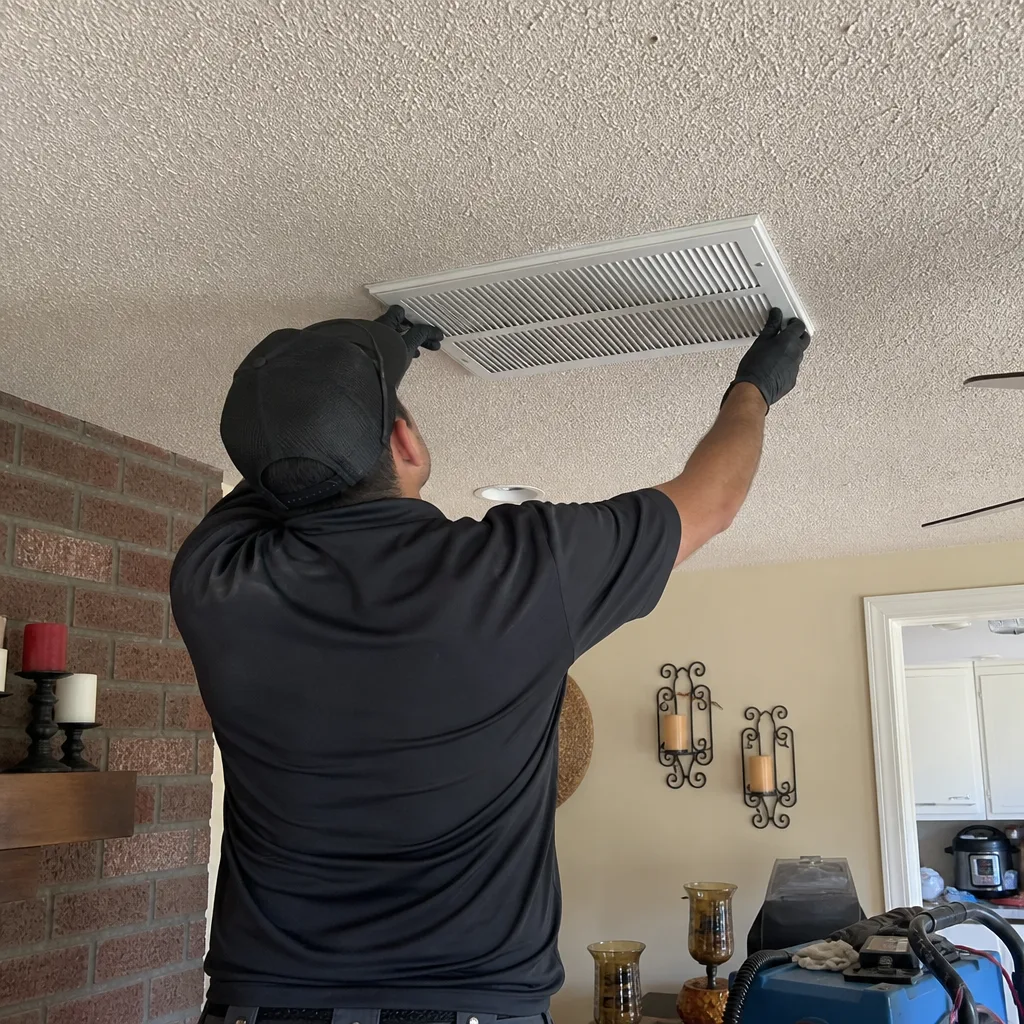
Whole-system duct and dryer vent check with before-and-after photos - you see exactly what came out of your vents
That "$99 whole-house special" is a bait ad - the real number appears once they are in your hallway, or the "clean" is a shop-vac at the register. We photograph the inside of your ducts before and after instead.
Seasonal Air Duct Cleaning Care for Rialto: Year-Round Homeowner’s Guide
In Rialto, the most damaging thing that happens to your duct system probably isn’t gradual dust buildup. It’s the two or three high-particulate events per year that each deposit more contamination than six months of normal operation. A major Santa Ana wind event can force fine grit past your weather stripping and into return ducts. A regional wildfire smoke day can saturate your filter and leave residue throughout the supply side. A summer ozone spike cooks whatever organic material is already sitting in the plenum. This guide maps those actual events, month by month, so you can inspect, maintain, and schedule cleaning around reality instead of generic seasonal advice.
Styles & brands we work with
- Whole-home duct cleaning
- Dryer vent cleaning
- Camera inspection
- Sanitizing & deodorizing
Quick Answer
Seasonal air duct cleaning care in Rialto means timing inspections and maintenance around the region’s actual particulate events: Santa Ana wind season (October through January), wildfire smoke season (May through November, peaking July – September), and summer ozone/inversion periods (June – September). Most Rialto homes benefit from a duct inspection each fall after smoke season ends, filter changes every 60 – 90 days during high-particulate months, and a full cleaning every 3 – 5 years unless a significant smoke or dust event shortens that interval.
Table of Contents
- Rialto’s Real Seasons: An Air Quality Event Calendar
- Filter Strategy for Rialto’s Particulate Load
- Santa Ana Wind Season: October Through January
- Wildfire Smoke Infiltration: May Through November
- Summer Ozone, Inversion Layers, and Condensate: June Through September
- Pre-Season vs. Post-Season Cleaning: What Delivers Better Value
- Using SCAQMD Data to Time Your Maintenance
- Common Mistakes to Avoid
- When to Call a Professional
- Frequently Asked Questions
- The Bottom Line
Rialto’s Real Seasons: An Air Quality Event Calendar
Rialto doesn’t have four traditional seasons. It has air quality events. If you’ve lived here for any length of time, you already know the pattern even if you’ve never named it: the dry, gusty stretch in fall that coats window sills with grit; the smoke that drifts over the Cajon Pass from fires in the San Bernardino National Forest or points east; the still, hazy afternoons in August when the mountains across the valley look like a watercolor that’s been left in the sun.
Each of these events loads your duct system differently.
Wind events don’t just affect the outside of your home. Santa Ana conditions generate sustained gusts that push fine dust, pollen, and road grit through weather seals, weep holes, and any gap around exterior doors. Once that dust is inside the building envelope, your HVAC system pulls it into return ducts and distributes it through the entire supply network. We have opened return plenums in Rialto homes after a single strong Santa Ana weekend and found a quarter inch of fine tan sediment sitting on the bottom of the duct.
Smoke events are qualitatively different. Wildfire smoke particles are much finer than wind-borne dust, often in the 0.4 to 0.7 micron range. They pass through most standard fiberglass filters without slowing down. What settles inside ducts after a heavy smoke period is not visible gritty dust but a fine, sticky residue. That residue coats duct walls, clings to fan blades, and gets baked onto heat exchangers during the winter heating cycle. The smell can linger for months.
Ozone and inversion periods create a slower, subtler stress. When an inversion layer traps pollutants close to the ground in the Inland Empire, the concentration of ozone and secondary particulates inside your home rises because you’re pulling outdoor air through the HVAC system. Ozone reacts with organic materials inside ducts, producing aldehydes and other compounds that give that characteristic stale smell on hot afternoons.
This is why a calendar in Rialto should be built around events, not dates.
Here’s the event map we use when advising homeowners:
- October through January: Santa Ana wind season. Expect episodic dust loading events, each lasting two to four days. Visibility drops, air quality indices spike, and ducts take on fine sediment.
- May through November: Fire season. Smoke can arrive from the San Bernardino Mountains, the Angeles National Forest, or as far as the Sierra foothills. The worst weeks in Rialto are typically July through September when east winds carry smoke from desert and mountain fires into the valley.
- June through September: Summer ozone season. High temperatures combine with stagnant air to create elevated ground-level ozone. Your AC runs hardest exactly when outdoor air quality is worst.
- November through February: Temperature inversions. Cool nights and warm days trap fine particulates near the ground. This is when wood-burning fireplace restrictions are most common in the region, and when combustion particulates from outside can be pulled into homes.
- March through May: Variable transition. These months bring occasional wind events and the start of pollen season for grass and certain trees. Spring in Rialto is generally the lowest-stress period for duct systems, which makes it a good window for scheduling maintenance before the smoke season begins.
The pattern matters because each event type leaves a different contaminant profile, and inspection after an event is more useful than inspection after a quiet month. If you want to see this same logic applied to the full cleaning process, see our guide on Air Duct Cleaning in Rialto.
Filter Strategy for Rialto’s Particulate Load
Your filter is the first line of defense, and in Rialto it works harder than in most climates. The question isn’t whether to run a filter. It’s what efficiency level your system can handle and how often to change it.
MERV ratings matter more here than in coastal climates. A MERV 8 filter captures roughly 70% of particles in the 3 to 10 micron range but catches very little of the sub-micron smoke particulate that defines Rialto’s worst air quality days. A MERV 13 filter captures 90% or more of particles down to 1 micron and a significant share of PM2.5, which is the size range that dominates wildfire smoke and inversion haze.
But there is a tradeoff. Higher MERV filters create more static pressure drop. On an older HVAC system with a standard PSC blower motor, a MERV 13 filter can reduce airflow enough to shorten blower life and reduce cooling efficiency on 100-degree days. Before upgrading filtration, verify that your system can handle it. Modern ECM blower systems generally tolerate MERV 13 without issue. Older systems may need to stay at MERV 11 or use a media cabinet with a larger surface area to offset the pressure drop.
A practical filter schedule for Rialto:
- Standard 1-inch filter, MERV 8: Change every 30 – 45 days during fire season and Santa Ana months. Change every 60 days during spring and quiet summer stretches.
- 1-inch filter, MERV 11 – 13: Change every 45 – 60 days during fire season. Inspect monthly during Santa Ana events and heavy smoke periods, and change early if the filter is visibly loaded.
- 4-inch media filter, MERV 11 – 13: Change every 6 months in normal conditions, but inspect monthly during fire season. In heavy smoke years, a 4-inch filter can load in 90 days or less.
One common mistake is changing filters on a fixed quarterly schedule. In Rialto, a filter changed on January 1 may be fine through March, but a filter changed on July 1 can be completely loaded by August 15 when a smoke event settles over the valley. Check the filter visually at least once a month during the fire season. Hold it up to a light. If you can’t see light through the media, change it regardless of how long it’s been installed.
Santa Ana Wind Season: October Through January
Santa Ana winds are the defining meteorological feature of fall in Rialto. When high pressure builds over the Great Basin and air pushes toward the coast, it descends through the Cajon Pass, compresses, warms, and accelerates. By the time it reaches Rialto, it’s hot, dry, and carrying whatever’s loose from the high desert and the foothills.
These winds are not a single event. They’re a series of events, each lasting two to four days, scattered between October and January. Each event has a slightly different character depending on the antecedent conditions: an early-season Santa Ana after a dry summer will carry more fine dust, while a December event can drag combustion particulates from inland sources.
What this means for your ducts:
- Dust loading is rapid and episodic. A wind event that lasts 72 hours can deposit more sediment in your return ducts than the two months that preceded it. The dust is fine, mineral-based, and tends to settle in horizontal runs and plenums.
- Exterior penetrations become pathways. During sustained gusts, the pressure differential between inside and outside increases. Air is pushed in through any small gap: duct penetrations in the attic, fresh air intakes, and even the gap between the HVAC cabinet and the platform it sits on.
- Filters can load completely within one event. We have seen 1-inch filters in Rialto homes go from clean to opaque in four days during a strong Santa Ana. The dust is so fine that it covers the entire filter face evenly, reducing airflow before the filter looks dramatically dirty at a glance.
Post-Santa Ana checklist:
- Inspect the filter. If it’s visibly loaded, replace it. This is the cheapest intervention you can make.
- Walk the exterior of the home and look for obvious dust entry points. Check window tracks, door thresholds, and any exterior vents. If a particular window consistently shows dust on the inside sill, that’s a clue about where the dust is entering.
- Check return registers. Use a flashlight and look into the register cavity. If you see visible dust accumulation on the register grille or just inside the cavity, the duct system is pulling in sediment.
- Listen to the system. If the HVAC fan sounds different after a heavy dust event, or if airflow at registers feels weaker, the filter may be loaded or dust may be accumulating on the blower wheel.
- Schedule an inspection if the event was severe. After sustained high winds with visible dust haze, a professional inspection with a camera can confirm whether the sediment made it past the filter and into the supply ducts.
For homes that sit on the northern edge of Rialto near the foothills, the Santa Ana loading is typically worse. The winds channel through the pass and deliver a higher concentration of mineral dust. Homes in the southern parts of the city are not immune, but the intensity drops as the winds spread out across the valley floor.
Wildfire Smoke Infiltration: May Through November
Wildfire smoke is the most insidious contaminant Rialto homes face. It doesn’t leave visible grit. It doesn’t make a sound. It works its way into every surface, including duct interiors, and then releases odor compounds for months afterward.
Rialto sits in a smoke corridor. Fires in the San Bernardino National Forest, the Angeles National Forest, the San Gabriel Mountains, and the high desert to the east all have pathways into the Inland Empire. Depending on wind direction, smoke from any of these sources can settle over Rialto and persist for days or even weeks.
How smoke enters your duct system:
- Outdoor air intakes. Any HVAC system that brings in outdoor air for ventilation – including some newer homes with dedicated fresh-air intakes – is direct conduit for smoke particulate.
- Envelope leakage. Smoke particles follow the same pressure pathways as wind-borne dust. During smoke events, the air outside is contaminated, and every small gap becomes an entry point.
- Occupant activity. Every time a door opens, smoke-laden air enters. It’s unavoidable and not something to blame yourself for. The question is what happens to that air after it enters.
- Filter bypass. If the filter doesn’t seal properly in its slot, or if there are gaps around the filter frame, smoke-laden air bypasses the filter entirely and moves directly into the supply side of the system. This is a common issue with older filter slots that were never sealed or that have warped over time.
After a heavy smoke event in Rialto, here’s what to do:
- Replace the filter even if it doesn’t look loaded. Smoke particulate is too fine to be visible at standard filter loading levels. A filter that was in place during a smoke event is carrying combustion particles regardless of how it looks.
- Inspect the blower compartment. On many systems, the blower housing and wheel are upstream of the filter, which means they were exposed to whatever the filter didn’t catch. If smoke was heavy, the blower wheel may have a film of fine gray residue.
- Check the evaporator coil. During cooling season, the coil is wet when the AC runs. A wet coil is a particulate magnet. Smoke residue that reaches the coil is captured by condensation and left behind when the water evaporates. Over time, this builds into a layer that reduces efficiency and can support biological growth.
- Consider a filter upgrade before the next smoke season. If you ran a MERV 8 filter through a smoke event, that filter captured very little. A MERV 13 filter, or a media cabinet with MERV 13 media, will capture a meaningful share of smoke particulate before it reaches the coil and supply ducts. Brands like Aprilaire make media cabinets that accommodate deeper, higher-efficiency filters without the pressure drop penalty of a 1-inch MERV 13.
- If the smoke odor persists for more than a few weeks after the event, it’s probably in the duct surfaces. Smoke residue on duct walls, plenums, and especially on any insulation inside the ducts will outgas for months. This is a cue to schedule a professional cleaning that includes surface agitation, not just vacuuming.
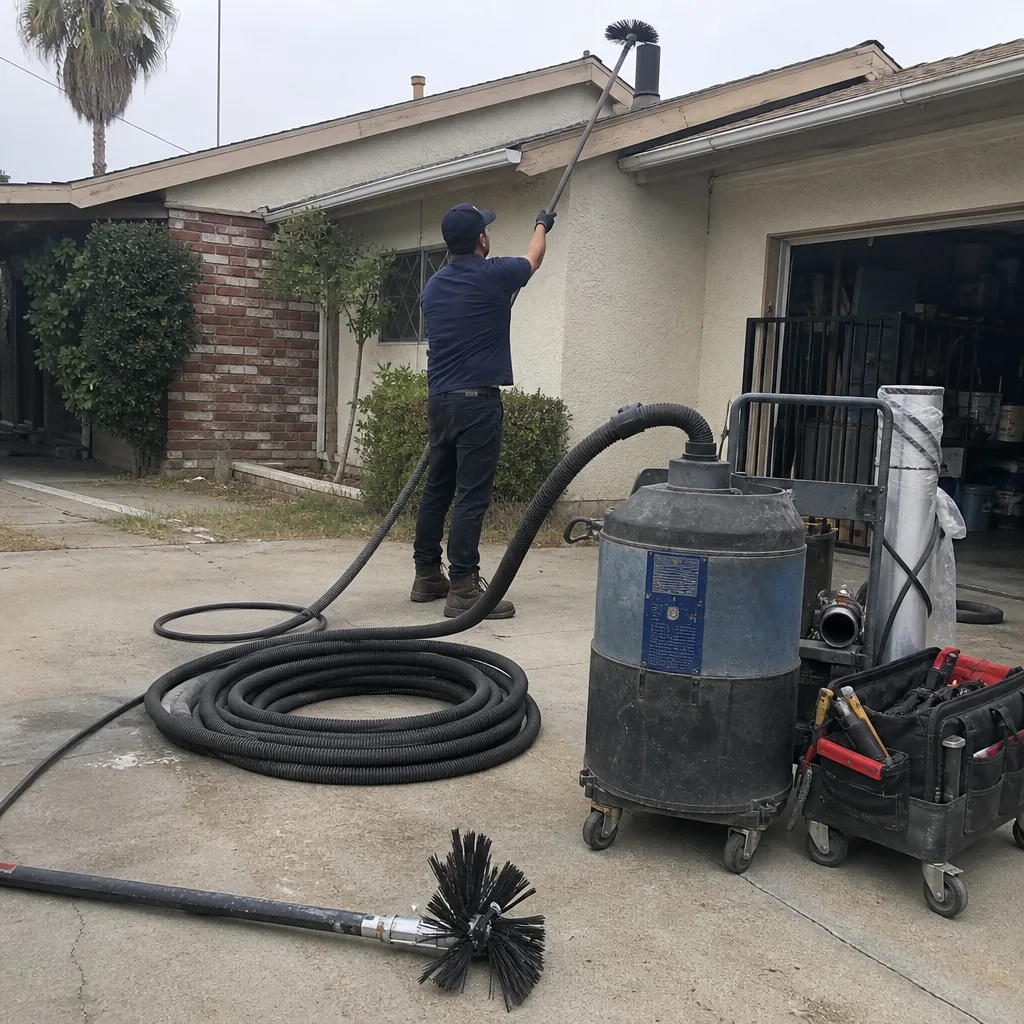
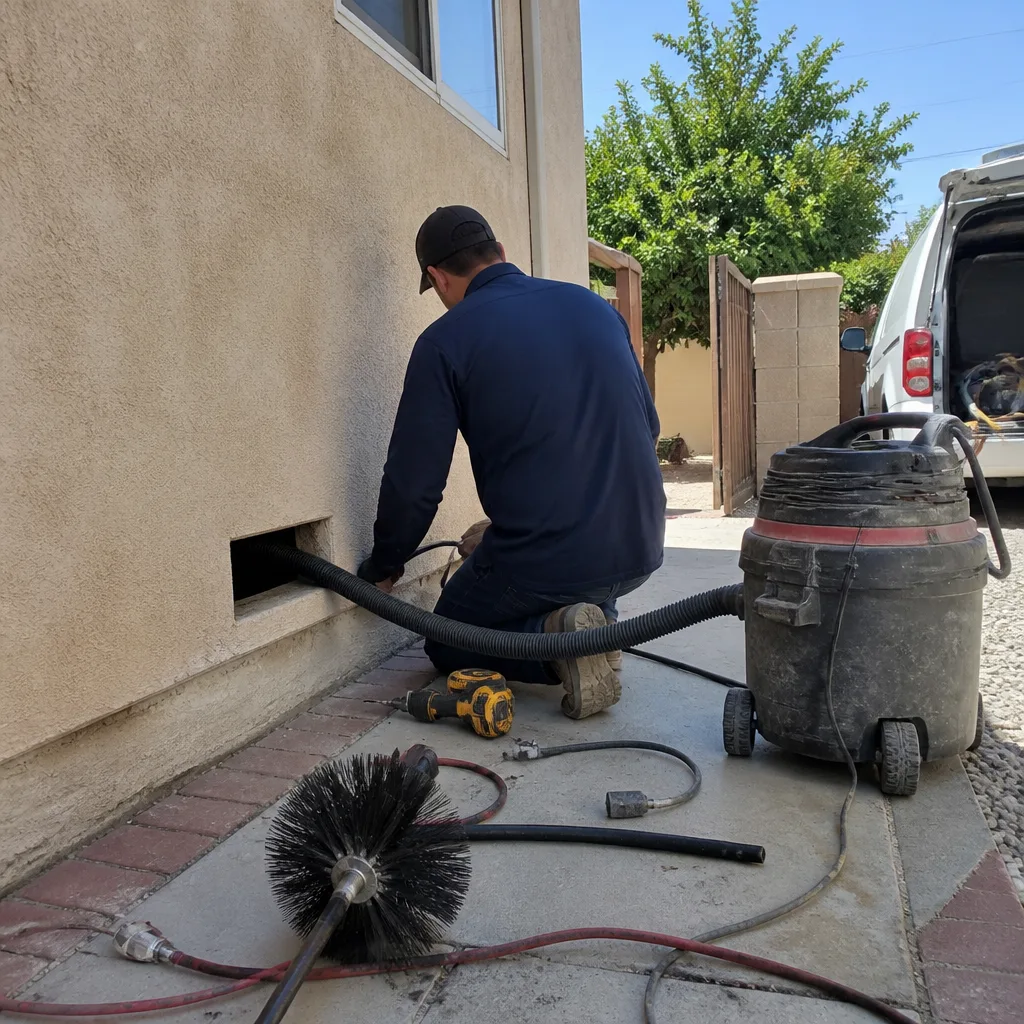
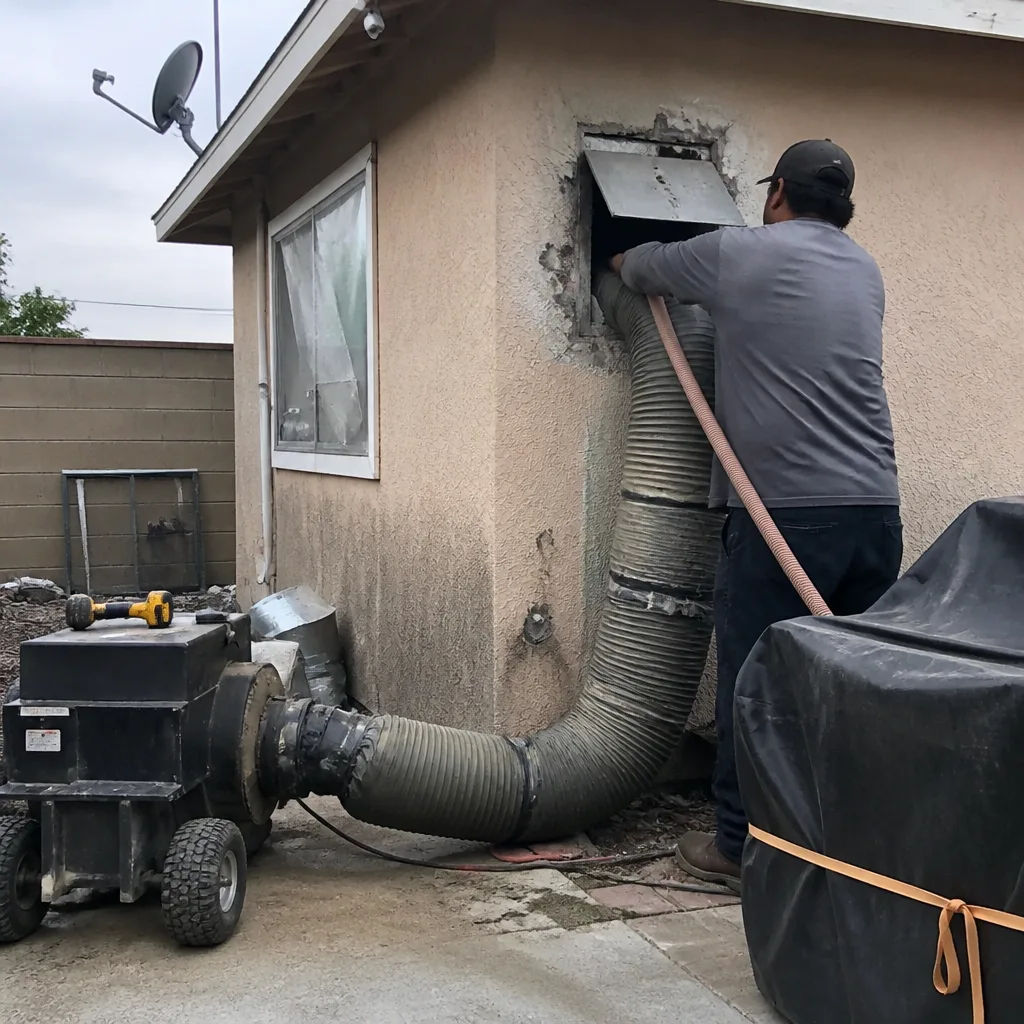
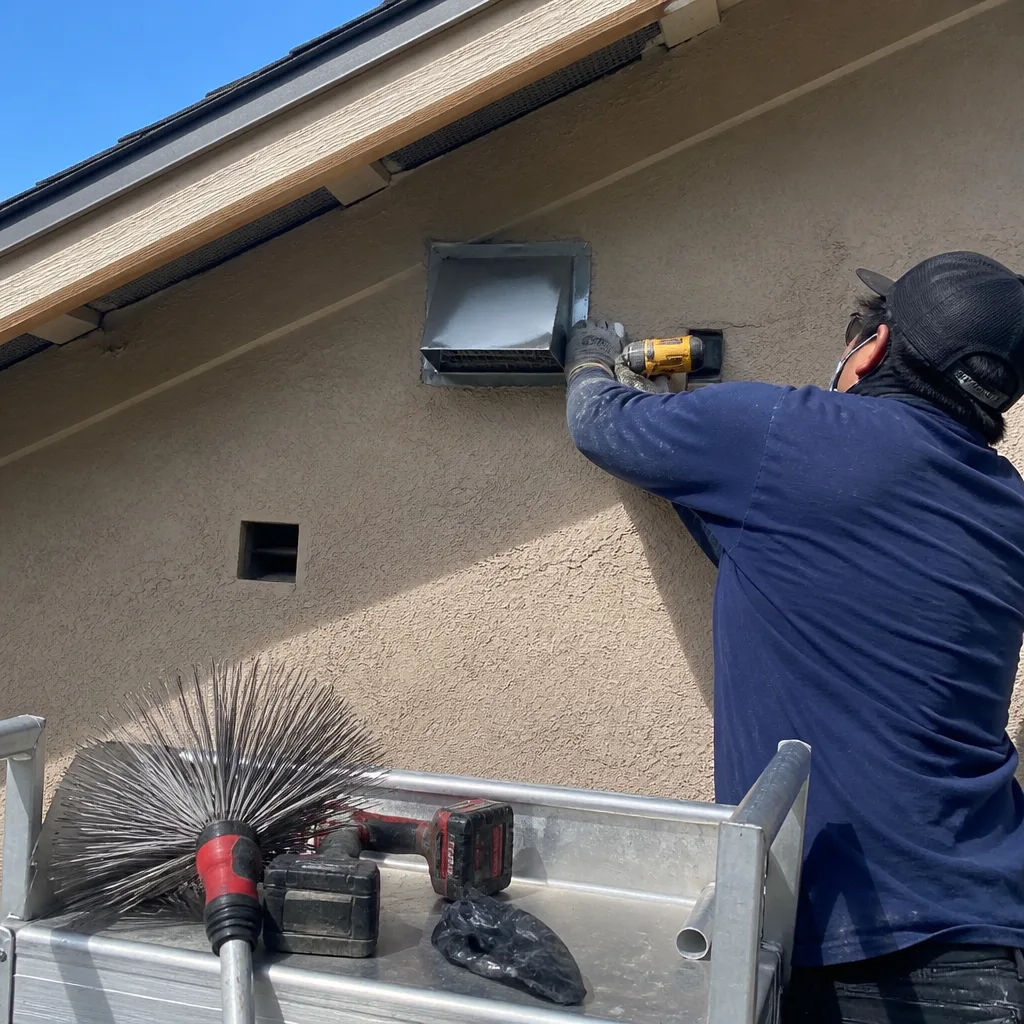
Our professional cleaning service is designed around this exact failure mode. When we clean ducts after a significant smoke event, the process uses Rotobrush rotary-brush agitation to dislodge the film that adheres to duct walls, paired with Nikro HEPA vacuuming to capture it at the source. Without agitation, a vacuum alone won’t remove the residue. It just fluffs it.
Summer Ozone, Inversion Layers, and Condensate: June Through September
Rialto summers are not just hot. They’re chemically active. The combination of high temperatures, vehicle emissions, and atmospheric stagnation creates elevated ground-level ozone across the Inland Empire on most summer afternoons. Ozone is a reactive gas, and it finds plenty of material to react with inside your home and inside your ducts.
What ozone does to your duct system:
Ozone reacts with organic compounds including dust mite debris, skin flakes, pollen fragments, cooking aerosols, and any VOCs that have settled on surfaces. The reaction products are aldehydes and ketones, which are heavier and stickier than the original compounds, and which contribute to that stale, flat smell that develops in some homes by late summer. These reaction products settle on surfaces, including the interior walls of supply ducts.
Condensate and moisture:
The second summer stressor is condensate. When your AC runs continuously in 100-degree weather, the evaporator coil condenses gallons of water per day. Most of it drains, but some evaporates back into the air stream and some wicks into surrounding materials. This creates a microclimate inside the air handler: warm when the system is off, cool and wet when it’s running. Repeated cycling creates conditions favorable for biological growth on the coil, the drain pan, and the first few feet of supply ductwork.
In our experience in Rialto homes, it’s the combination of high organic loading and moisture cycling that leads to the worst coil and duct contamination. A clean coil stays cleaner longer. A coil that went into the summer with a film of dust and skin flakes has the substrate microbial growth needs.
Summer inspection checklist:
- Check the condensate drain. If the drain is slow or blocked, water backs up in the pan and the air stream becomes humid. This is a direct precursor to mold in ducts.
- Look at supply registers in rooms you use less frequently. If a register shows dark spotting or a musty smell when the system starts, that’s a sign of biological activity downstream.
- Consider your afternoon ozone exposure. If you open windows on summer evenings to cool the house down, you’re bringing in ozone-laden air which then circulates through the system. The filter won’t catch ozone – it’s a gas. Activated carbon filtration helps, but the most effective intervention for most Rialto homes is simply keeping windows closed on high-ozone days, which SCAQMD forecasts daily during summer.
Pre-Season vs. Post-Season Cleaning: What Delivers Better Value
Most duct cleaning companies tell you to clean before the season begins. For Rialto, we advise the opposite in most cases.
Here’s the logic. If you clean your ducts in April, before the smoke season, you’ll have clean ducts from May through October. During those months, the system is running hard and pulling in whatever is outside. By November, the ducts have had six months of exposure to smoke, ozone, wind dust, and condensate cycling. The clean start is gone.
If you clean in October or November, after the worst of the smoke season and before the Santa Ana dust loading peaks, the system is clean for the months when the house is closed up. Fall and winter is when you spend the most time inside, breathing whatever the system circulates. It’s also when the heater runs and the system has less condensation to flush any residual contamination.
Exception: if your ducts have never been cleaned, or if you just moved into a home in Rialto and don’t know the maintenance history, clean them now regardless of the calendar. The first cleaning establishes a known baseline. Future cleanings can be scheduled around event seasons.
Bottom line for Rialto: a fall cleaning after smoke season delivers better value than a spring cleaning before it. The one exception to this is if your summer condensate cycle has created biological growth issues. In that case, clean after the summer regardless of the date.
If your inspection turns up structural issues rather than just accumulated contamination, that’s a different service. See Air Duct Repair in Rialto for how we identify and seal compromised ductwork that cleaning alone can’t fix.
Using SCAQMD Data to Time Your Maintenance
You don’t need to guess when particulate events are happening. The South Coast Air Quality Management District publishes real-time and forecast air quality data for the Inland Empire. The data is freely available and updated hourly.
How to use it practically:
- Check the AQI forecast each evening during fire season. If the forecast shows elevated PM2.5 or PM10 for the next two days, close the windows and consider changing the filter before the event instead of after. Filter changes are cheap; running a smoke event through a saturated filter isn’t.
- Set a threshold for action. When the local AQI exceeds 100 on the PM2.5 metric due to smoke or dust, treat it as a filter inspection trigger. After the event passes and the AQI drops below 50 for two consecutive days, treat it as a post-event inspection trigger.
- Use ozone advisories as a window-management tool. On days when ozone is forecast to exceed 0.070 ppm, keep exterior doors and windows closed from early afternoon through evening. This reduces the amount of reactive gas entering the building envelope and keeps your duct system from circulating ozone reaction products.
- Track event frequency as a scheduling input. If you notice a pattern where your area experiences eight to ten high-particulate days each fire season, then your ducts are taking on measurable contaminant load annually regardless of how clean the previous year ended. That’s your cue to schedule professional cleaning on a three-year cycle rather than waiting five years.
For homeowners who want to be deliberate about this, a simple notebook entry or phone note after each major event takes three seconds and creates a real maintenance record. Write down the date, the event type, and the filter condition when you checked it. Six months of records will tell you more about your home’s actual particulate loading than any generic schedule.
Common Mistakes to Avoid
- Assuming a clean filter means clean ducts. The filter protects the equipment, not the ducts. Whatever was already inside the ducts before the filter was installed stays there. A clean filter only means clean air was entering the system, not that the duct walls were clean.
- Running through a heavy smoke event with a MERV 8 filter. A MERV 8 filter is nearly transparent to smoke particulate. By the time the smoke clears, you’ve distributed fine combustion particles through the entire supply network. In Rialto’s fire season, upgrade to at least MERV 11, ideally MERV 13.
- Assuming a Santa Ana event only affects outdoor dust. The driving force of sustained winds doesn’t stop at the stucco. It pushes through every gap and pulls dust into the return side of the HVAC system. The dust you see on window sills is also somewhere in your ducts.
- Ignoring the smell. If your supply registers smell musty when the fan starts on a hot day, that’s not normal summer HVAC behavior. It’s a signal that condensate and organic material are combining somewhere in the system. The longer it goes unaddressed, the more established the problem becomes.
- Buying a duct cleaning coupon without knowing what equipment will be used. In Rialto, as everywhere, there are companies that clean ducts with nothing more than a portable vacuum and a brush on a stick. That method removes some loose dust but leaves the adhered film that matters. Ask what agitation and containment equipment the company uses before you book. A Rotobrush and Nikro setup is the professional standard.
- Assuming a recent cleaning means the system is structurally sound. Cleaning removes contamination. It doesn’t identify or fix disconnected ducts, crushed flex runs, or gaps that let attic air in. If you want assurance that the system is both clean and intact, ask for an Air Duct Repair in Rialto inspection as part of the service.
When to Call a Professional
Call a professional if you see visible dust emitting from supply registers, smell a persistent musty or smoke odor that doesn’t resolve with filter changes, notice uneven airflow with some rooms consistently warmer than others, or know that the home went through a major smoke event without any post-event intervention. Also call if you’ve never had the ducts cleaned and the home is more than five years old, or if you moved into the home recently and have no maintenance records from the previous owner.
If any of this describes your situation, you don’t need to diagnose it yourself. Duct Cleaning Rialto offers free estimates in Rialto, and our technicians can perform a camera inspection and tell you exactly what’s going on inside the system before any work begins. Call (833) 630-3666 to schedule.
Frequently Asked Questions
Most homes in Rialto benefit from a professional air duct cleaning every three to five years, but the actual interval depends on exposure: homes that experience heavy Santa Ana dust loading or significant smoke exposure may need cleaning more frequently. If you run the AC hard through the summer, have pets, or live in the northern part of the city near the foothills, err toward the three-year mark. Call (833) 630-3666 for a free estimate and we’ll inspect before recommending any work.
Yes, wildfire smoke enters through fresh air intakes, envelope gaps, and open doors, and smoke particulate is fine enough to pass through low-efficiency filters and settle on duct surfaces throughout the system. The residue is sticky and can release odor for months after the event. If you’ve experienced a significant smoke event in Rialto, schedule an inspection even if you don’t see visible contamination.
MERV 11 to 13 is the sweet spot for Rialto’s particulate profile: high enough to capture a meaningful share of smoke and wind-borne dust, but still compatible with most residential blowers in a 4-inch media cabinet format. If your system uses 1-inch filters, stay at MERV 11 unless you’ve verified the blower can handle the higher pressure drop of MERV 13.
In Rialto, cleaning after fire season delivers better value because the system has just been through its heaviest exposure period and you’ll start the fall and winter with both clean ducts and a closed-up house. The exception is if there’s visible mold or persistent biological odor, in which case clean immediately regardless of the season.
Ask for before-and-after photos of the duct interiors for each main trunk line and any problem areas identified during inspection. A professional company will be glad to provide them. If a company won’t show you the inside of your ducts before and after the work, that’s a signal to look elsewhere. This is our standard practice at Duct Cleaning Rialto home.
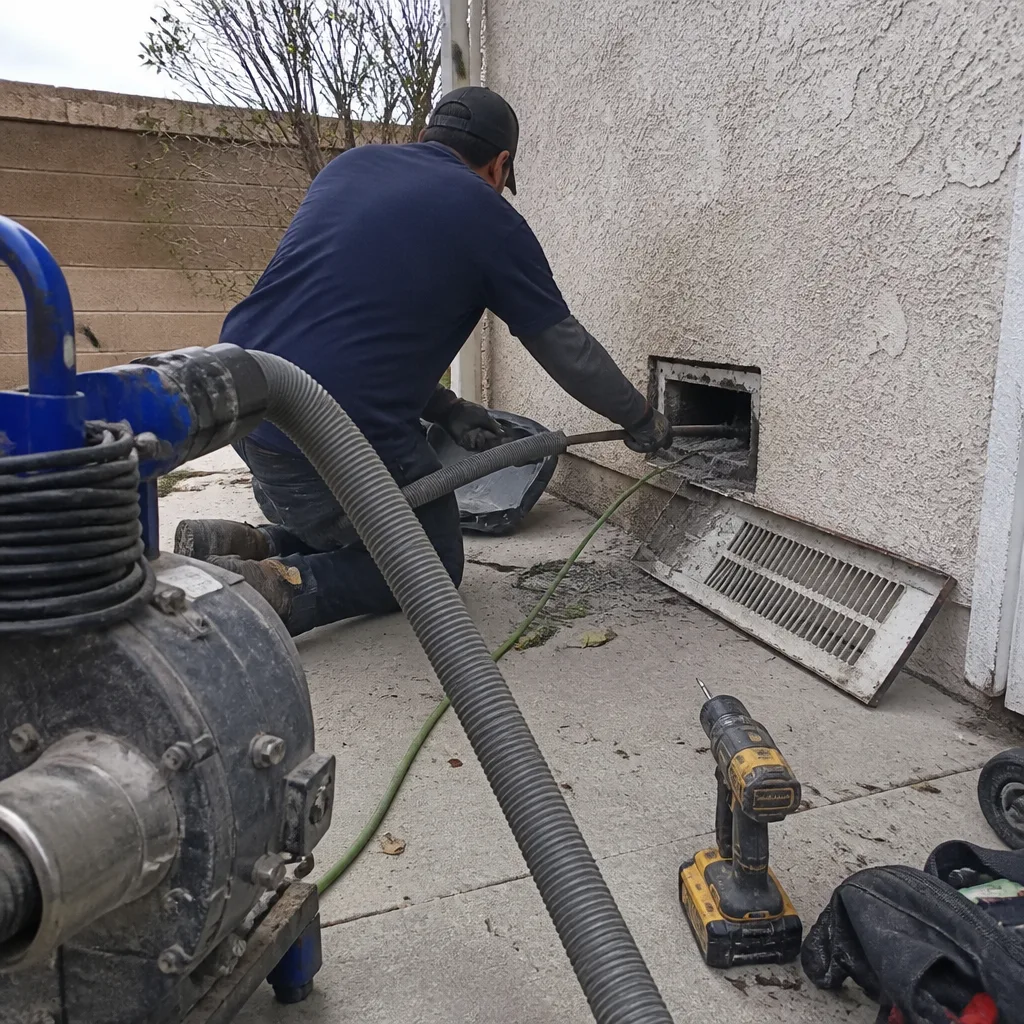
Yes, and in Rialto it matters separately from the HVAC system because dryer vents collect lint and combustible material on their own schedule. We perform Dryer Vent Cleaning in Rialto as a dedicated service with the same professional equipment standard we apply to air ducts. If you don’t remember the last time your dryer vent was cleaned, schedule it now.
The Bottom Line
Duct maintenance in Rialto should be driven by air quality events rather than a calendar. Santa Ana winds, wildfire smoke, and summer ozone each stress the system in different ways, and each calls for a specific response: filter changes during wind events, filter upgrades before smoke season, and post-summer inspection for condensate-related issues. A fall cleaning after the smoke season, not before it, delivers the best value for most homes. Track SCAQMD forecasts to know when the next event is coming, inspect the filter monthly during fire season, and call a professional when you smell something that doesn’t go away or see dust that shouldn’t be there.
If you’re a homeowner in Rialto and want a clear picture of what’s inside your ducts, schedule a professional inspection and get a straight answer about what needs to happen next. Call (833) 630-3666 for a free estimate today.
Written by the team at Duct Cleaning Rialto, serving Rialto since 2015.
See the difference
 Before
 After
 Before
 After
 Before
 After