
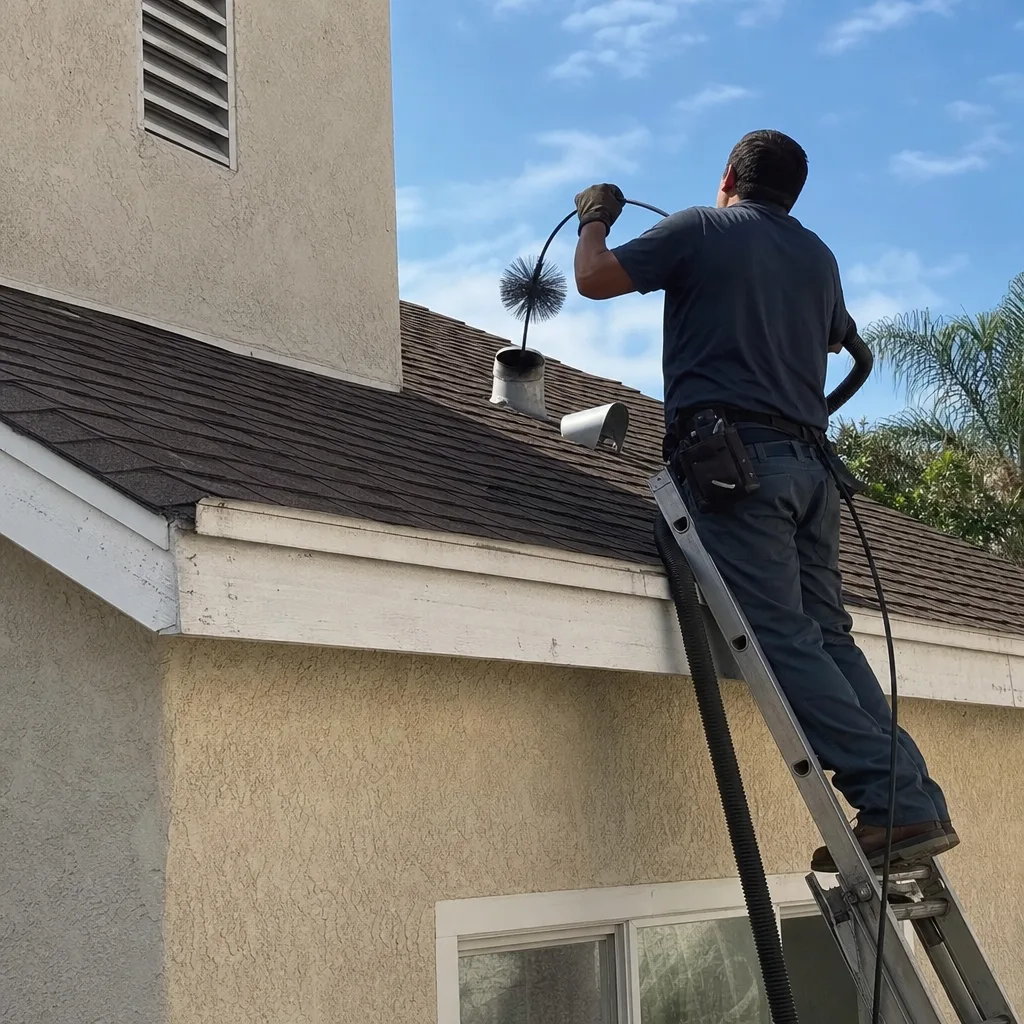
Last updated November 2, 2026
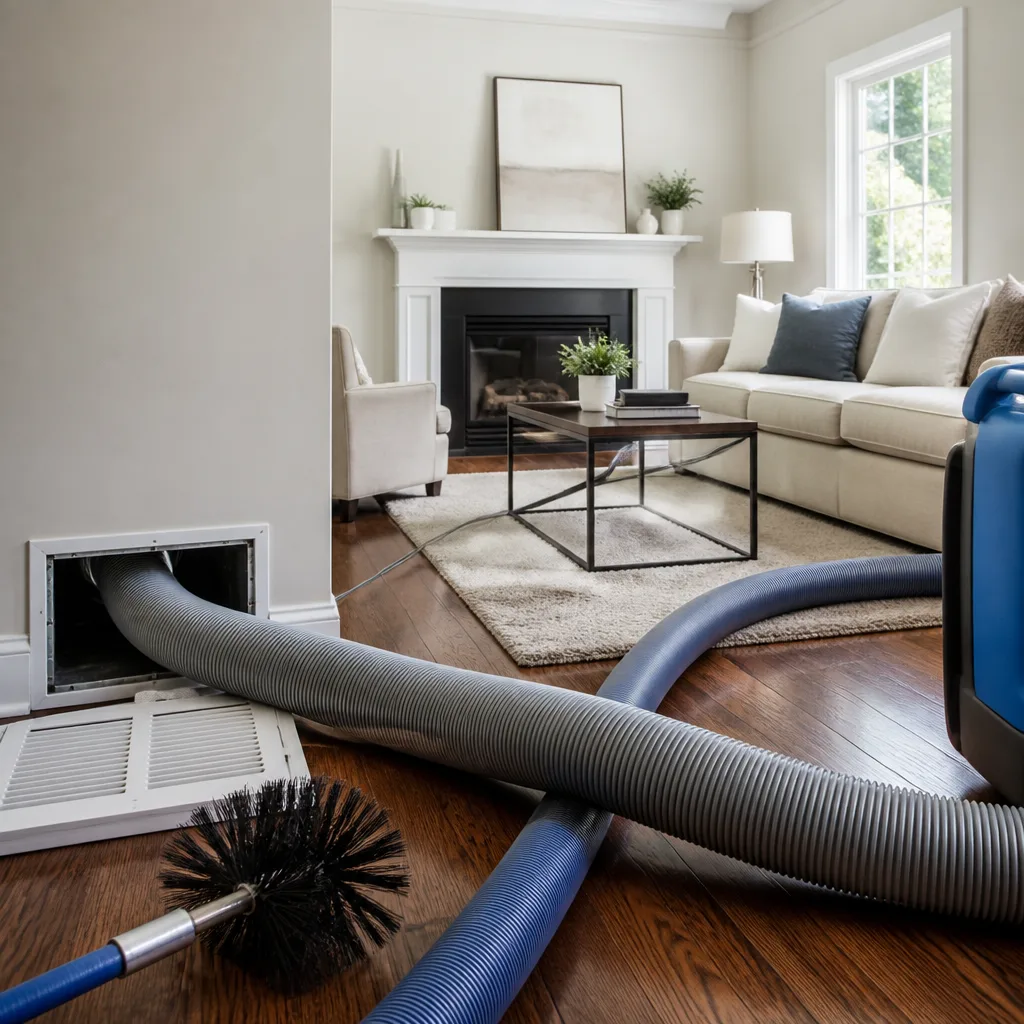 Whole-home duct cleaning
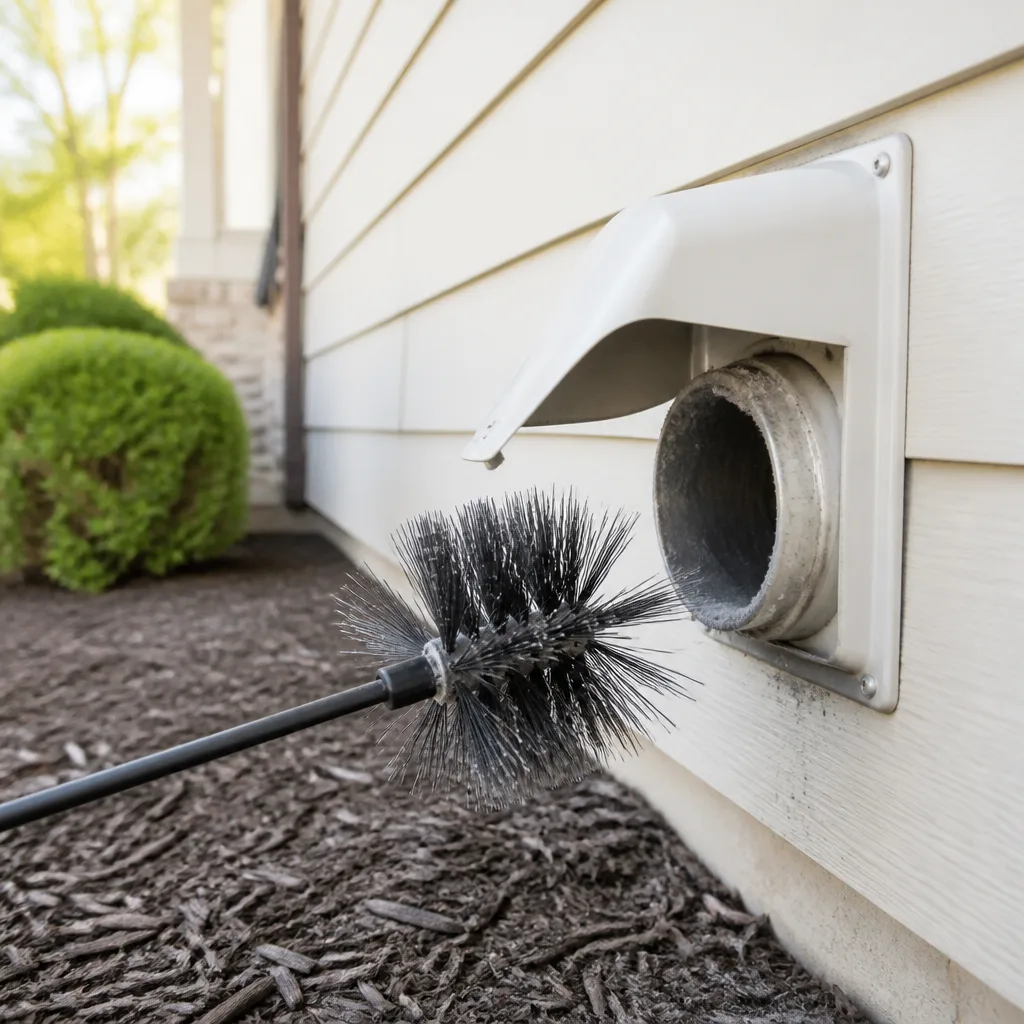 Dryer vent cleaning
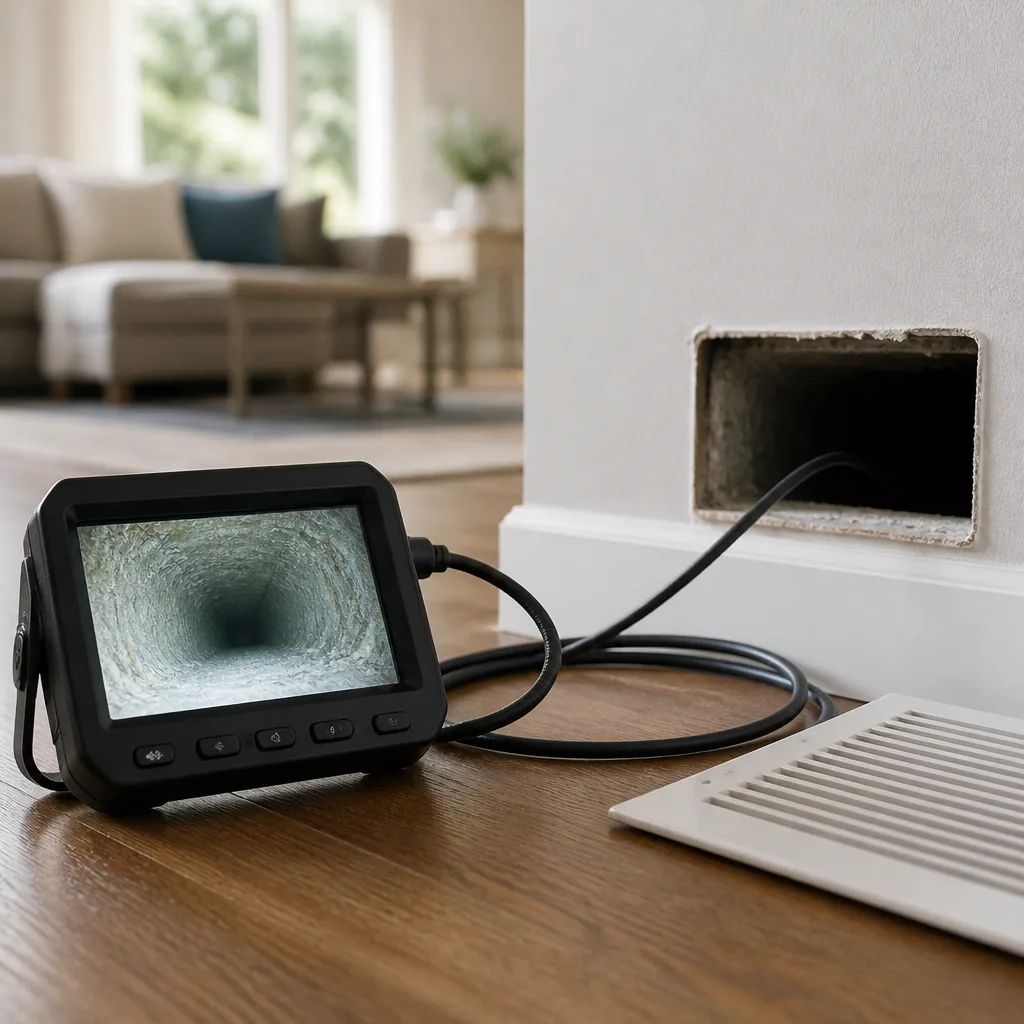 Camera inspection
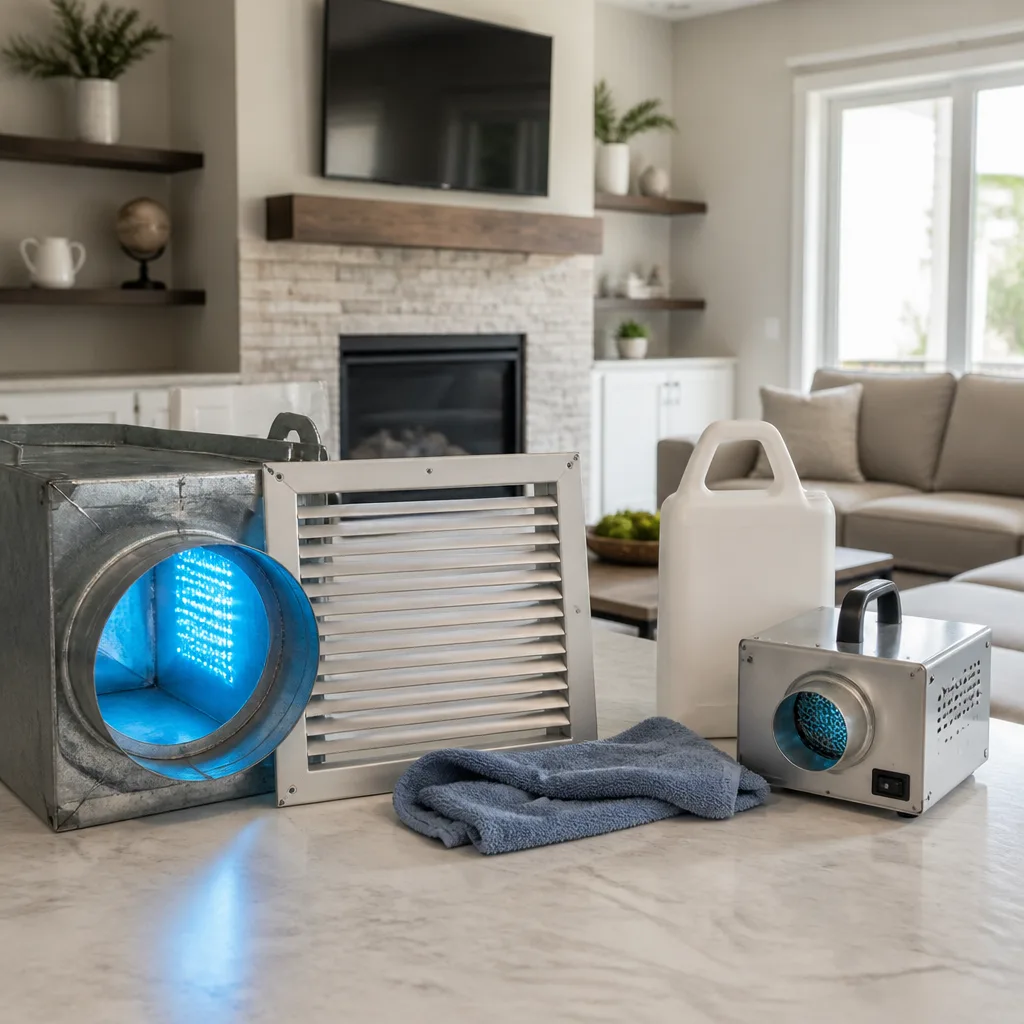 Sanitizing & deodorizing
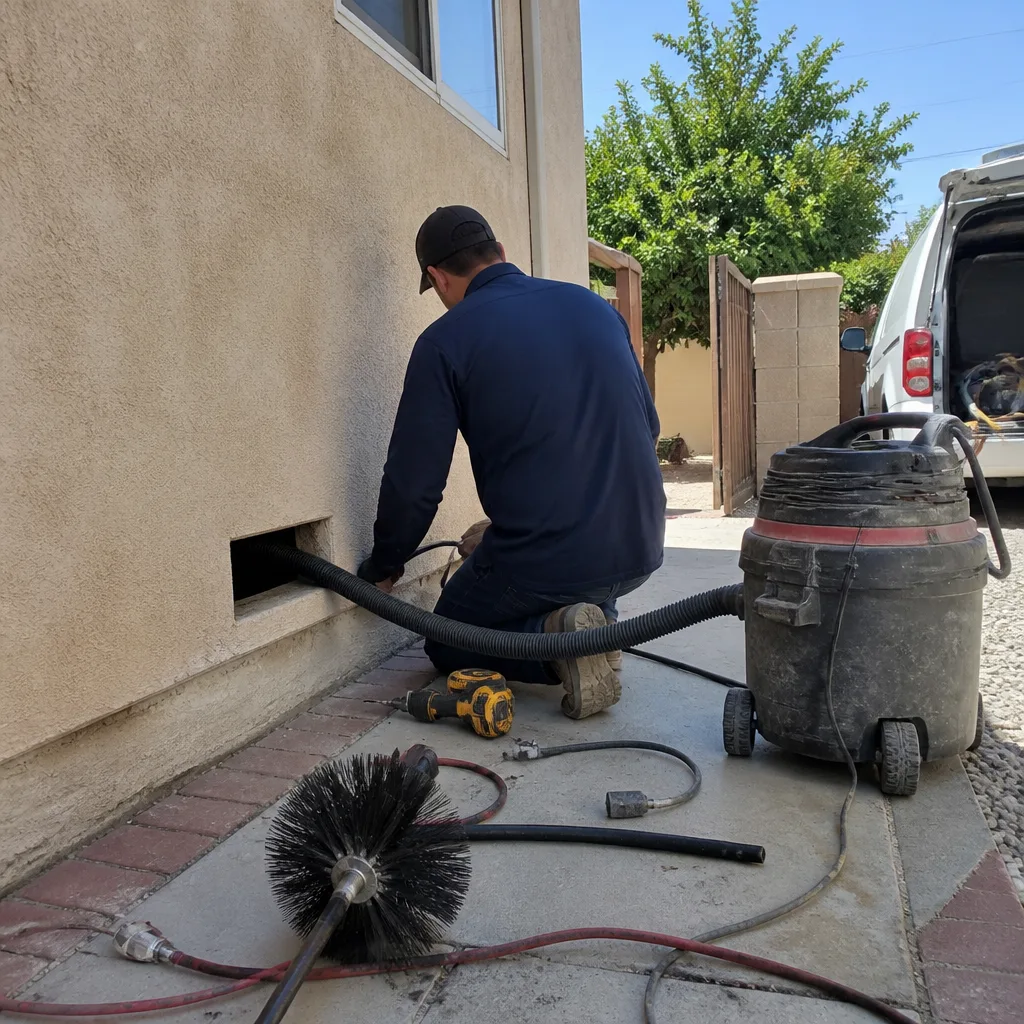
Whole-system duct and dryer vent check with before-and-after photos - you see exactly what came out of your vents
That "$99 whole-house special" is a bait ad - the real number appears once they are in your hallway, or the "clean" is a shop-vac at the register. We photograph the inside of your ducts before and after instead.
Air Duct Cleaning Maintenance Checklist for Rialto Homeowners
The single most useful maintenance task most Rialto homeowners skip isn’t changing the filter. It’s pulling one supply register and shining a flashlight inside. What you find in the first six inches of duct tells you more about air quality than any app or monitor. This guide gives you a condition-based checklist built around the specific failure modes we see in Inland Empire homes, from Santa Ana dust intrusion to post-summer AC condensation issues. You’ll learn what normal looks like, what problematic looks like, and exactly when a visual finding means it’s time to stop monitoring and start making phone calls.
Quick Answer
A proper air duct cleaning maintenance checklist for Rialto homeowners is a visual inspection protocol, not a reminder to change filters. Run it twice a year: pull each supply register, inspect the first six inches of duct with a flashlight, check your filter’s loading pattern, and flag any finding that matches the failure descriptions below. If you see matted gray debris, visible dust clumps on register vanes, or discoloration that looks like soot, that’s your threshold to call a specialist rather than monitor it further. Duct Cleaning Rialto at (833) 630-3666 provides free estimates when a checklist item fails.
Styles & brands we work with
- Whole-home duct cleaning
- Dryer vent cleaning
- Camera inspection
- Sanitizing & deodorizing
Table of Contents
- The Register-by-Register Visual Inspection Protocol
- How to Read Your Filter’s Loading Pattern
- Seasonal Checklist Triggers Specific to Rialto
- The Dryer Vent and Return Plenum Checks Most Checklists Omit
- When to Monitor vs. When to Call: Clear Thresholds
- What a Post-Cleaning Verification Checklist Looks Like
- The Twice-Yearly Rialto Maintenance Schedule
The Register-by-Register Visual Inspection Protocol
Every register in your Rialto home is a window into the duct run behind it. You don’t need specialized tools to run this protocol. You need a flashlight, your phone camera, and about twenty minutes. The goal is to establish a baseline of what “your normal” looks like so that changes become obvious. What you’re doing is documenting conditions at each supply and return point, then comparing them against the descriptions below.
Here’s the step-by-step protocol we recommend. Run it once to establish your baseline, then every six months after that.
- Turn off the HVAC system. You want settled debris visible, not moving air. Wait five minutes after shutdown.
- Remove one supply register at a time. Most Rialto homes use standard stamped-steel or aluminum registers held by two screws. A Phillips head is all you need.
- Shine the flashlight into the duct boot and the first six to twelve inches of visible duct. Angle the light low and across the surface. Overhead light makes dust look flat and hides texture.
- Photograph what you see. Use your phone’s flash. These photos become your comparison baseline for every future check.
- Wipe one finger along the inside wall of the duct boot. If you pick up a fine gray film, that’s normal. If you pick up a clump or a wad, that’s not.
- Repeat at every register. Pay closest attention to registers in rooms farthest from the air handler. The longest duct runs accumulate the most material because air velocity drops over distance.
Now let’s define what you’re looking at. Normal duct buildup in a Rialto home looks like a faint, uniform gray or tan dust film. It’s flat. It doesn’t clump. It doesn’t have texture. It matches what you’d see on a ceiling fan blade that hasn’t been wiped in a few months.
Problematic buildup has distinct characteristics. It’s matted, meaning it looks felted or tangled rather than dusty. It frequently contains visible fibers, hair, or what look like small gray cotton balls. In return ducts especially, you may see darker material that’s sticky or oily rather than dry, which often indicates cooking aerosol buildup or, in some older Rialto homes, decades of conditioned air passing through ducts that predate current filtration standards. If you see any dark discoloration that looks like soot or staining around the register opening itself, that’s a sign of air bypassing the register seal, pulling unfiltered attic or crawlspace air directly into the living space.
We’ve seen homes in Rialto where the supply registers in bedrooms looked spotless but the return in a hallway closet looked like the inside of a vacuum bag. That’s why the protocol is register-by-register, not a spot check. One clean register tells you nothing about the rest of the system. To learn more about what’s involved in a full system cleaning, see our Air Duct Cleaning in Rialto service page.
How to Read Your Filter’s Loading Pattern
Your filter is a diagnostic instrument, not just a consumable. The way it loads tells you where contamination is entering your system. Most homeowners pull a dirty filter, note that it’s dirty, and replace it. That’s leaving information on the table.
Here’s how to read the loading pattern:
- Uniform gray loading across the entire filter face. This is normal operation. The filter is doing its job, capturing the ambient dust load in your home. Nothing diagnostic here.
- Loading concentrated at the top edge only. This suggests return air is coming primarily from high in the home. In Rialto’s single-story and split-level homes, this often means return air is pulling from an attic or ceiling chase rather than through properly sealed return ducts.
- Loading concentrated at the bottom edge only. This points to floor-level returns doing heavy work, which is common in older Rialto homes with under-floor return plenums. If you see bottom-edge loading plus visible sand or grit, you likely have return duct leakage pulling from a crawlspace or from under the slab.
- Dark, oily residue rather than gray dust. This is aerosolized cooking grease and candle soot. Your filtration system is capturing it, which is good, but it’s a sign that return air is heavily loaded with sticky particulates that will also be coating your duct interior where the filter can’t reach.
- Filter collapsing or bowing inward under load. This means airflow resistance is high, which in a Rialto home often traces to a clogged coil, undersized return ducting, or a filter left too long. When a filter bows, unfiltered air bypasses around the edges. Everything downstream gets dusted.
- Clean in the middle, dirty at the edges. This can indicate the filter doesn’t fit the slot properly and air is bypassing around the frame. The filter is doing partial work. The ducts behind it are accumulating everything that slips past.
The filter-to-duct correlation is straightforward. Your filter captures what’s airborne before it reaches the coil and supply ducts. Whatever gets past the filter, or around it, ends up inside your ductwork. If you run a MERV 8 filter and you’re seeing filter loading that looks like what we’d expect from a MERV 4, you have a bypass problem. If you’re running a cheap fiberglass panel filter and wondering why your ducts look like they’re wearing a sweater, the answer is that a $3 filter catches maybe 20% of the particulate load, and the other 80% deposits where the air slows down, which is inside your ducts.
For homeowners in Rialto considering upgraded filtration, we work with Honeywell and Aprilaire product lines. A properly sized media cabinet or higher-MERV filter fitted correctly to the slot changes the filter-to-duct math significantly. But filtration only helps from the day it’s installed forward. It doesn’t undo existing duct loading. That’s a cleaning task. Our Duct Cleaning Rialto home page explains the full scope of what we handle.
Seasonal Checklist Triggers Specific to Rialto
Rialto’s climate isn’t a single season. It’s a cycle of environmental stressors that hit your ductwork at predictable times. A maintenance checklist tied to the calendar rather than to local conditions wastes half its value. Here are the specific triggers that matter for homeowners in the Inland Empire.
Post-Santa Ana Wind Season (October through December)
Santa Ana winds push fine desert dust and particulate across Rialto for weeks at a time. Your HVAC system doesn’t have to run to be affected. Negative pressure in attics and crawlspaces pulls wind-blown dust into any gap in the duct system, even when the fan is off. What you’ll see at registers in rooms on the windward side of the house is a fine, tan, almost powdery dust that’s different in color and texture from normal household gray dust. This is Mojave material. If your exterior doors or windows have visible dust tracking along weatherstripping after a Santa Ana event, your ductwork likely took on dust too. Run the full register protocol after the last major wind event of the season.
Post-Wildfire Smoke Events (August through November, Peak Risk)
Wildfire smoke isn’t just an outdoor air quality problem. Smoke particles enter structures and settle inside duct systems, where they persist long after the outside air clears. What makes smoke residue different from household dust is that it’s fine enough to pass through most residential filters, and it deposits as a grayish-brown film that’s tenacious. You’ll smell it when the furnace first kicks on in late fall, even if you never run the system during the smoke event itself. That first-heat smell of last season’s smoke is a signal that your ducts are carrying particulate load that the filter alone won’t remove. After a smoke season that affected Rialto air quality, run the register protocol and pay attention to any hint of smoke odor at startup.
Post-Summer Peak AC Months (September through October)
Inland Empire summers put sustained load on AC systems. Cool supply air moving through ducts in a hot attic creates condensation on the duct exterior if insulation is compromised, and interior condensation if humidity control is poor. What you’re checking for at the end of cooling season is water staining on duct surfaces, rust on register screws, or any musty smell when the fan first starts. Moisture in a duct system, even seasonal moisture, creates the conditions for microbial growth that dry desert months can’t fully remediate. Discoloration on duct walls that looks like faint gray or black staining, especially at joints or low points, is a post-summer flag worth a professional look.
The seasonal pattern in Rialto means one thing for maintenance scheduling: check after the environmental stressor passes, not before. Checking your ducts in May tells you what winter left behind. Checking in late October tells you what wind season, smoke season, and a full summer of AC operation all left behind. That’s the check that matters. If a seasonal check turns up findings you want verified, our Air Duct Cleaning in Rialto process starts with the same visual protocol, just with professional equipment behind it.
The Dryer Vent and Return Plenum Checks Most Checklists Omit
Generic duct cleaning checklists almost never include two items that matter as much as anything on the register list. The first is the dryer vent. The second is the return plenum. Both are part of your home’s air movement system. Both fail in predictable ways in Rialto homes. Both are routinely skipped.
The Dryer Vent Check
Your dryer vent is a duct. It moves hot, humid, lint-laden air from your laundry room to the exterior. It’s also the leading residential fire cause tied to a maintainable mechanical system, which means it belongs on the same maintenance checklist as everything else. Here’s the check:
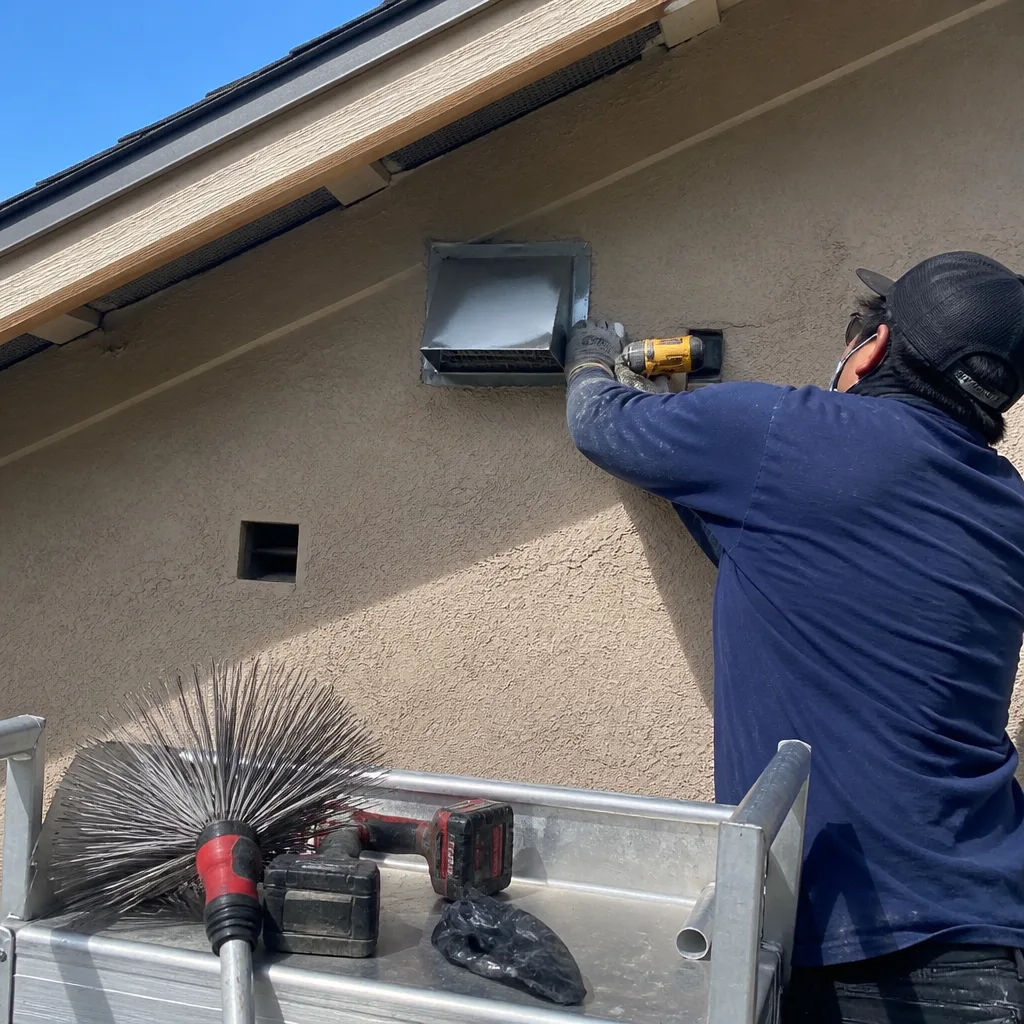
- Look at the exterior vent termination. With the dryer running, the flap should be fully open and air should be moving with noticeable force. A flap that barely opens or an airflow that feels weak compared to a few months ago is a loading signal.
- Check the visible lint buildup around the termination. A light dusting is fine. Visible lint clinging to the flap, the wall, or nearby plants is not. That’s lint that didn’t make it out of the system.
- Time a drying cycle. If a load of towels that took 45 minutes a year ago now takes 70, you have a restriction somewhere in the vent run. Dryers don’t get slower. Vents get more loaded.
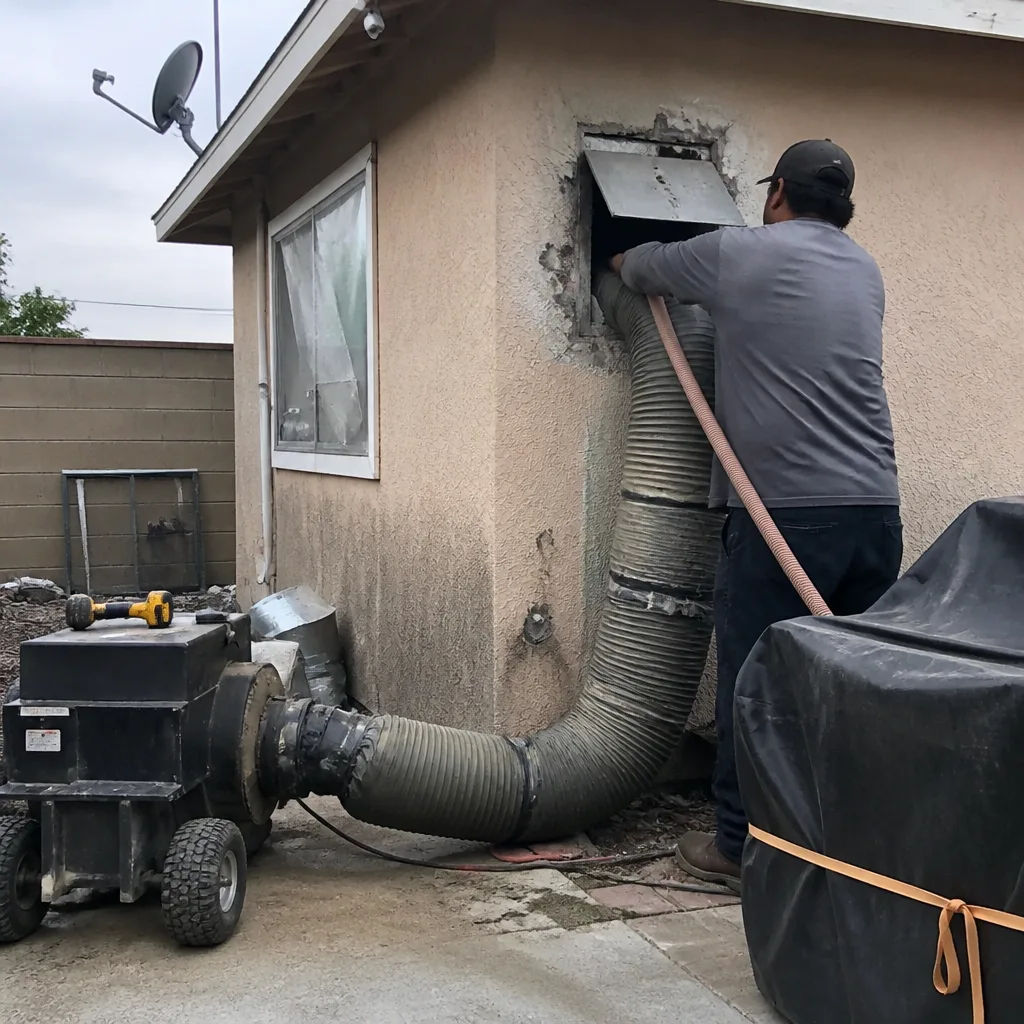
- Check the interior lint trap cavity. Even well-maintained lint traps let fine particles through. Those particles deposit in the vent run over years. This is a maintenance item with a fire-safety dimension, which is why our company runs Dryer Vent Cleaning in Rialto as a dedicated service with the same professional equipment standard as our duct work.
The Return Plenum Check
The return plenum is the box where return air gathers before passing through the filter and into the air handler. In many Rialto homes, this plenum lives in a garage, closet, or attic space where it’s been ignored since installation. Here’s what to check:
- Access panel seal. If the panel isn’t gasketed or taped, the plenum is pulling whatever air surrounds it. In a garage plenum, that’s car exhaust and chemical fumes. In an attic plenum, that’s fiberglass insulation particles and 130-degree air in summer.
- Visible dust accumulation on the plenum floor. A layer of fine dust at the bottom of the plenum is normal over years. A thick mat of dust, or visible debris like drywall chunks, insulation bits, or dead insects, means the return side is pulling from somewhere it shouldn’t.
- Filter slot fitment. If the filter slides in with play around the edges, unfiltered air is bypassing it. You’ll see dust streaks on the clean side of the plenum. That dust is going straight into the coil and supply ducts, no filter involved.
These two checks take fifteen minutes combined and they catch problems that register inspection alone never will. If you find the return plenum is pulling garage air or the dryer vent is restricted enough that a cycle time has doubled, you’ve found a real issue without spending a dollar on equipment. What you do next depends on the thresholds in the following section. If the return-side findings suggest compromised ducting rather than just accumulated dust, our Air Duct Repair in Rialto service exists specifically to seal and restore duct integrity, not just clean around it.
When to Monitor vs. When to Call: Clear Thresholds
Most checklists fail because they never tell you what to do with a finding. “Check your ducts annually” is advice with no decision rule attached. Here are the thresholds, stated as clearly as we can make them. Each item is either “monitor” or “call.” There’s no ambiguous middle ground.
Threshold to Monitor (Continue Semi-Annual Checks)
- Fine, flat, uniform dust film inside the first six inches of duct. Normal for any Rialto home.
- Light gray filter loading spread evenly across the surface. Normal operation.
- Occasional dust particles on register vanes that wipe away with a dry cloth. Within normal bounds.
- Faint dust on the return plenum floor but no visible debris or blotchy staining. Monitor at next scheduled check.
- Detached but fluffy lint at the dryer vent exterior, with strong airflow and stable cycle times. Continue monitoring.
Threshold to Call a Specialist
- Matted, felted, or clumped debris in any duct. This is not normal accumulation. It indicates moisture or long-term buildup that cleaning removes but monitoring won’t fix.
- Any visible staining or discoloration on duct interior walls, especially gray, black, or rust-colored. This carries implications for moisture history or smoke residue.
- Filter loading concentrated at edges with visible dust on the clean side of the filter slot. You have a bypass problem, and duct interior loading is ongoing.
- Smoke smell at system startup after a wildfire season. The ducts are carrying particulate load that no amount of runtime will fully clear.
- Dryer cycle times increased by 25% or more with no change in machine settings. The vent run is restricted. Continued use with a loaded vent is a fire hazard, not a laundry inconvenience.
- Return plenum showing signs of pulling garage, attic, or crawlspace air. This is a duct integrity problem, not a cleaning problem, and it needs repair assessment.
- Visible debris in ducts that resembles insulation fibers. Insulation in your ductwork means a duct breach somewhere, packing material degradation, or a disconnected joint. This is structural.
When an item hits the “call” threshold, the question is who to call. A specialist with professional-grade equipment beats a generalist with a shop vac. We use Rotobrush rotary-brush agitation systems and Nikro HEPA vacuum equipment on every duct cleaning job. The Rotobrush head physically dislodges material that a vacuum alone can’t move, while the Nikro unit captures particulate at the source rather than exhausting it into your living room. That combination is how you get from “checked and found wanting” to “verified clean.” For structural findings, our repair capability through Air Duct Repair means the compromised section gets sealed or replaced, not just cleaned around.
What a Post-Cleaning Verification Checklist Looks Like
If you’ve had your ducts cleaned, or you’re planning to, the maintenance checklist doesn’t stop at finding problems. You need a post-cleaning verification protocol to confirm the work actually changed conditions. Here’s what to check after any duct cleaning in Rialto:
- Run the same register protocol you ran before. Same flashlight angle, same photo positions. Compare before and after photos side by side. You should see duct surfaces, not dust film.
- Check register vanes and grilles. They should be clean. A professional cleaning includes register cleaning because a clean duct blowing across a dust-caked register recontaminates the air immediately.
- Smell the air at system startup. Should be neutral. No mustiness, no dust smell, no smoke residue.
- Inspect the area around the cleaning equipment access points. With professional Nikro HEPA vacuuming and Abatement Technologies containment equipment, the work area should be left as clean as it was found. Visible dust in the mechanical room after a cleaning is a red flag about capture method.
- Note airflow at registers. If a particularly dirty system was cleaned, airflow should feel stronger at the farthest registers because the restriction is reduced. Not dramatic, but noticeable if the loading was heavy.
- Ask for before-and-after photos of the duct interior. Any specialist using professional equipment can provide these. If a cleaner can’t show you what they cleaned, that’s an answer in itself.
The verification checklist is also how you hold any contractor accountable. Did they clean what they said they cleaned? The photos answer that. Did they clean effectively? The visual comparison answers that. Did they protect your home during the process? The post-job inspection answers that. Our process uses Abatement Technologies containment equipment precisely because debris control during service matters as much as debris removal. What gets loosened must get captured, and capture means HEPA filtration at the point of agitation, not a tarp on the floor and an open window. For an overview of how a professional cleaning in Rialto actually works from start to finish, see our Air Duct Cleaning in Rialto page.
The Twice-Yearly Rialto Maintenance Schedule
Here’s the schedule that ties everything in this guide together. It’s built around Rialto’s specific environmental stressors, not a generic spring/fall reminder. Run it twice a year. Each session takes under an hour.
Check 1: Late October to Mid-November
This is the post-stressor check. Santa Ana winds have typically begun, wildfire smoke season is winding down, and summer AC load is behind you. Run the full register protocol, check the filter loading pattern, inspect the return plenum, and time a dryer cycle. This is the most important check of the year because three environmental stressors have all just finished impacting the system.
Check 2: Mid-April to Early May
This is the pre-summer check. You’re confirming the system is clean before the AC runs daily for months. Run the register protocol, verify the filter is fresh and properly seated, check the return plenum seal, and inspect the exterior dryer vent flap for proper operation. This check catches anything winter heating season deposited and gives you a clean baseline before cooling season begins.
Between the two checks, the only active maintenance tasks are the ones normal operation requires: change the filter on schedule, keep registers unobstructed, and pay attention to any system smell or sound that changes. The checks are the diagnostic events. Everything between them is just observation.
What this schedule does is replace vague annual advice with condition-based monitoring tied to real Rialto conditions. You’re not checking because the calendar says so. You’re checking because the wind season just ended and you want to know what it left in your system. That’s the difference between maintaining a home and guessing at it.
Common Mistakes to Avoid
- Checking only one register and calling it done. Duct systems accumulate unevenly. The longest runs in the farthest rooms load heaviest. One clean bedroom register tells you nothing about the return side, the plenum, or the rest of the supply network.
- Using a dim flashlight or none at all. Duct inspection without proper light misses the texture differences that distinguish normal dust film from problematic matting. Use the brightest light you have and angle it low across surfaces.
- Assuming a dirty filter means the ducts are clean. The filter catches what reaches it. Everything that bypasses it, or was deposited before a better filter was installed, stays in the ducts. Filter loading is diagnostic information, not proof of duct condition.
- Skipping the dryer vent because it feels like a separate system. It’s a duct, it carries particulate, it has a fire-safety dimension, and it’s more likely to fail catastrophically than any supply duct in your home. It belongs on the same checklist.
- Running the checklist after the rain starts instead of after the wind season ends. In Rialto, the important check window is post-Santa Ana and post-smoke, which means October and November. Checking in spring is fine, checking in late fall is essential.
- Calling any generalist when a finding crosses the “call” threshold. Duct inspection that turns up matted debris, staining, or structural compromise needs a specialist with professional-grade agitation and HEPA capture equipment, not a shop vac and good intentions.
See the difference
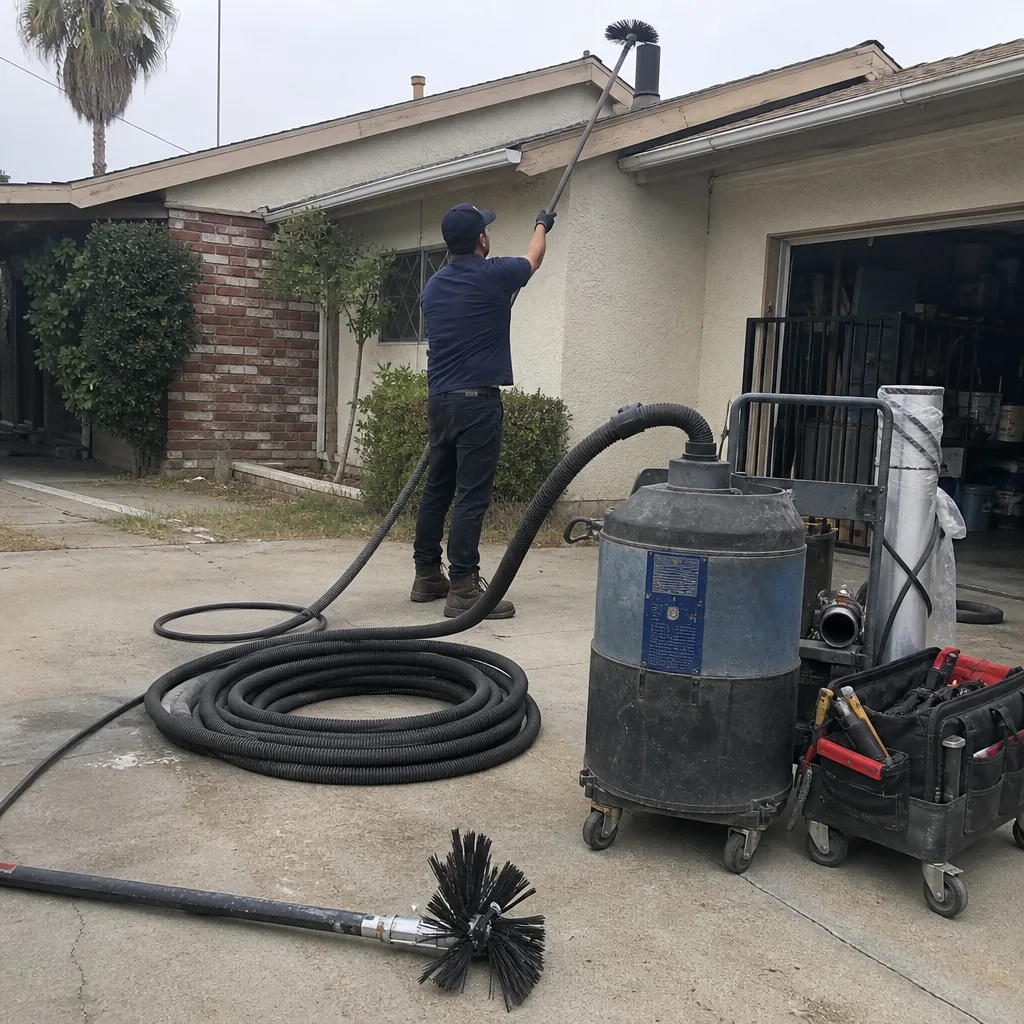 Before
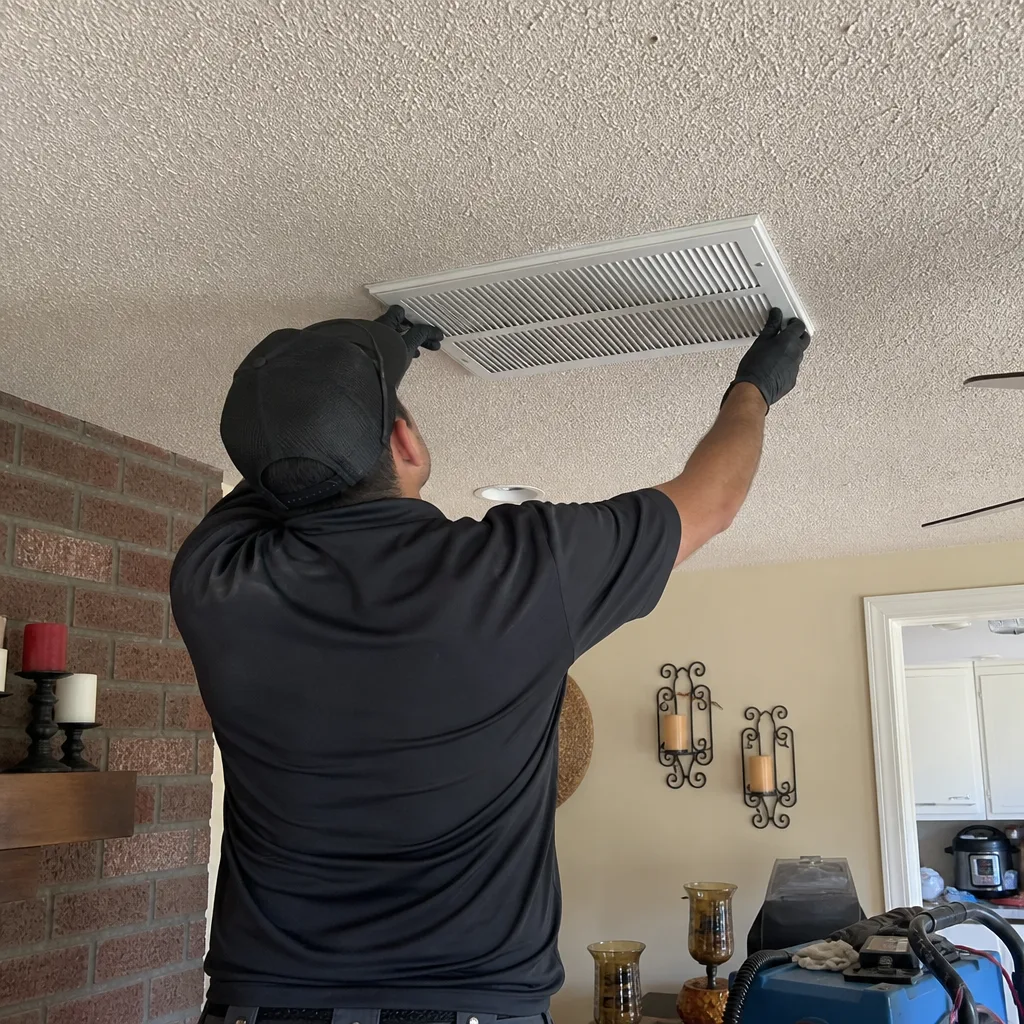 After
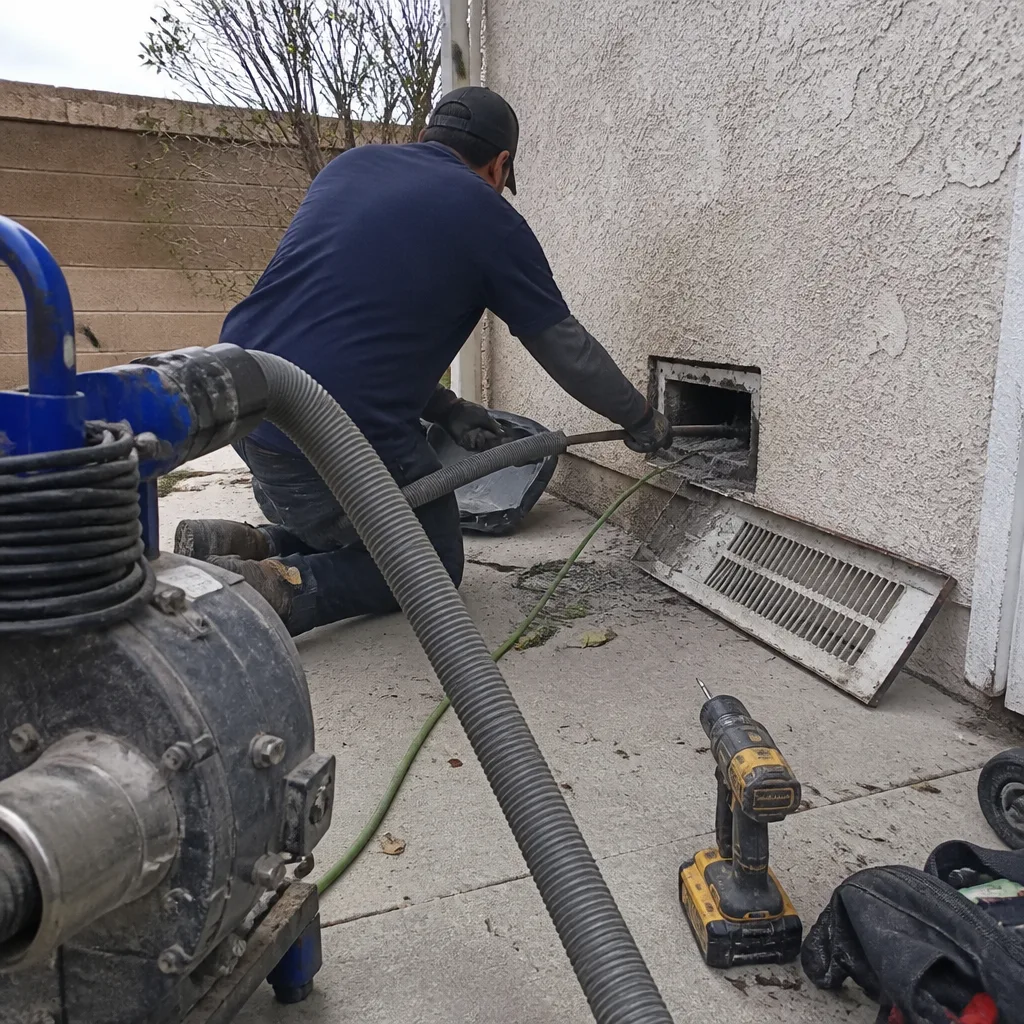 Before
 After
 Before
 After
When to Call a Professional
Call when a checklist item crosses the “call” threshold described above. Specifically: matted or clumped debris in any duct, visible staining or discoloration, edge-loaded filters with bypass evidence, persistent smoke odor at startup, dryer cycles that have lengthened by a quarter or more, or return plenum findings that suggest garage or attic air intrusion. These are not conditions that resolve with time or another round of monitoring. Duct Cleaning Rialto offers free estimates in Rialto. Call (833) 630-3666 and we’ll run the same visual protocol you’ve been running, then tell you honestly whether cleaning, repair, or both is the right next step.
Frequently Asked Questions
Run the register-by-register protocol in this guide and look for matted or clumped debris rather than a fine uniform dust film. If you find clumping, staining, visible fiber accumulation, or smoke odor at startup, your ducts have crossed the threshold where cleaning is warranted. A fine flat dust film is normal and doesn’t require action.
Most Rialto homes benefit from professional duct cleaning every three to five years, but the interval depends on what your semi-annual checks reveal. Homes with pets, smokers, recent renovation work, or heavy Santa Ana exposure may need more frequent cleaning. The checklist tells you when, not a calendar.
You can inspect them, which this guide is built for, but effective cleaning requires professional equipment that reaches the full duct run, physically agitates material loose, and captures it with HEPA filtration. A consumer vacuum at a register doesn’t do any of those three things beyond the first few inches. If your inspection finds matted debris or staining, that’s beyond DIY scope.
Rialto’s Santa Ana wind season drives fine desert particulate into homes, and that particulate loads filters quickly when winds are active. If you see rapid loading year-round, especially with edge concentration or bypass streaks, you may have return-side leakage pulling unfiltered air around the filter. The loading pattern on the filter is the diagnostic clue.
Yes. The dryer vent is a duct carrying hot, lint-laden air, and it’s the one maintainable duct in your home with direct fire-safety implications. A loaded dryer vent increases cycle times, wastes energy, and creates a real hazard. It belongs on the same semi-annual inspection schedule as everything else.
Compare before-and-after photos from the same registers using the same flashlight angle, check that register vanes are clean, confirm neutral air at system startup, and inspect the work area for any leftover dust that would indicate poor containment during the job. Any professional cleaning should be verifiable with documentation.
The Bottom Line
A duct maintenance checklist only works if it produces decisions, not vague reassurance. The condition-based protocol in this guide gives you specific visual criteria, clear thresholds between monitoring and calling, and a schedule tied to Rialto’s actual environmental stressors. Run it twice a year, document what you find, and act when findings cross the line into matting, staining, bypass, or restriction. Clean ducts and intact ducts are both checkable conditions. The checklist tells you which one you have. When you need a professional answer, call Duct Cleaning Rialto at (833) 630-3666 for a free estimate.
Written by the team at Duct Cleaning Rialto, serving Rialto since 2015.