
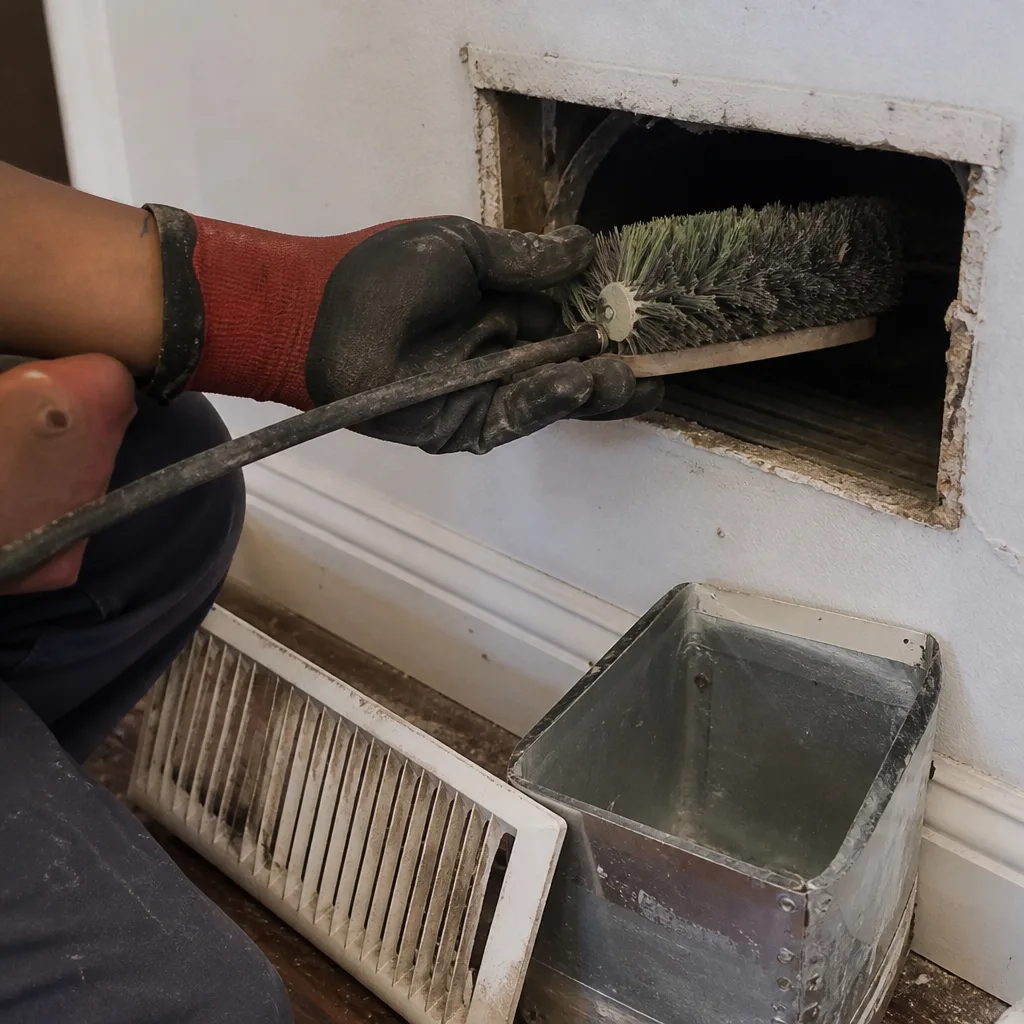
Last updated November 2, 2026
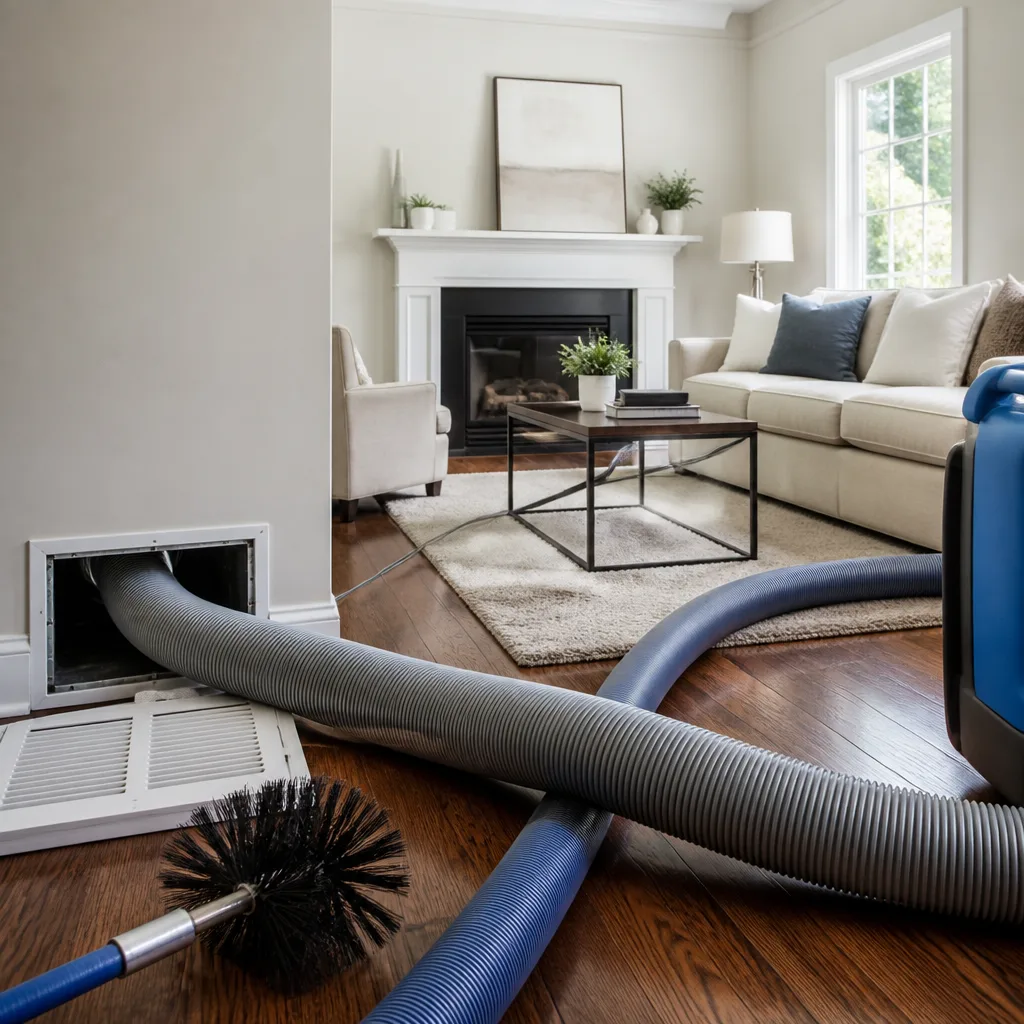 Whole-home duct cleaning
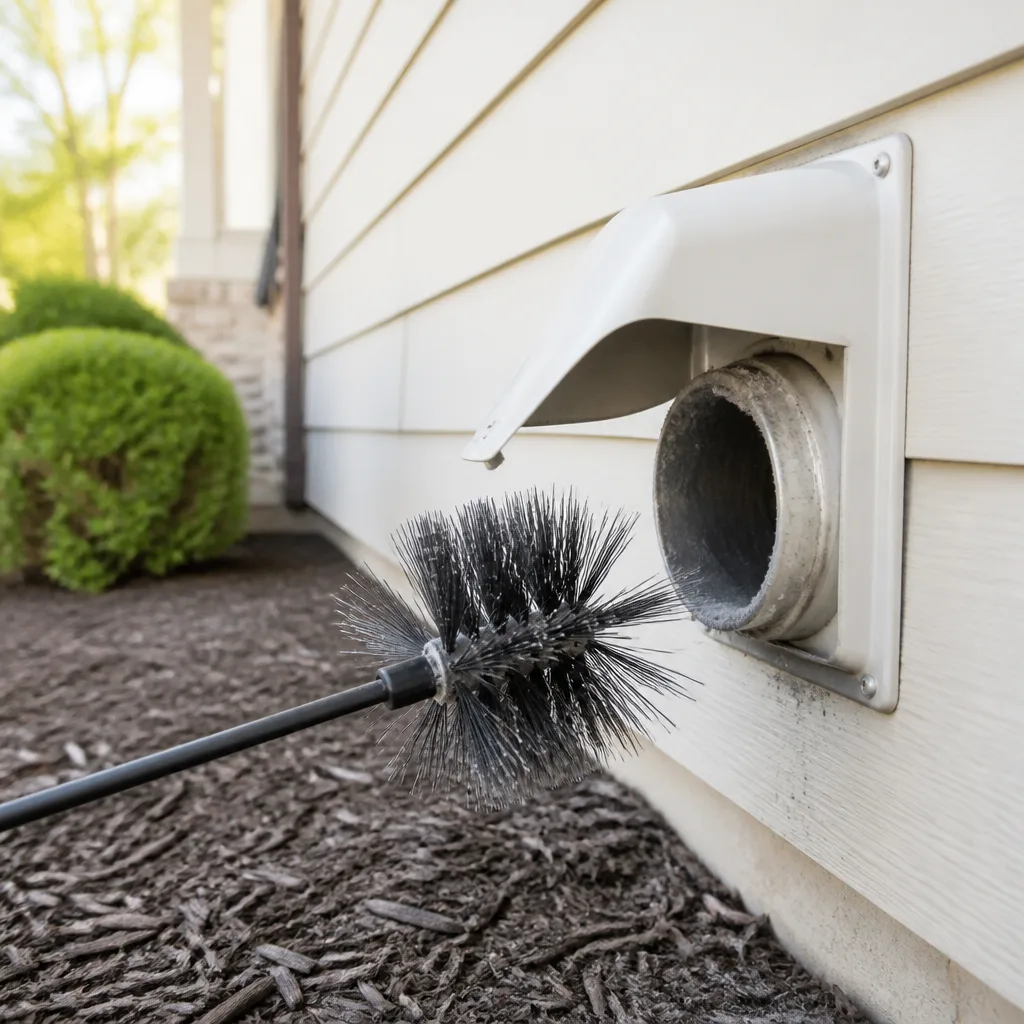 Dryer vent cleaning
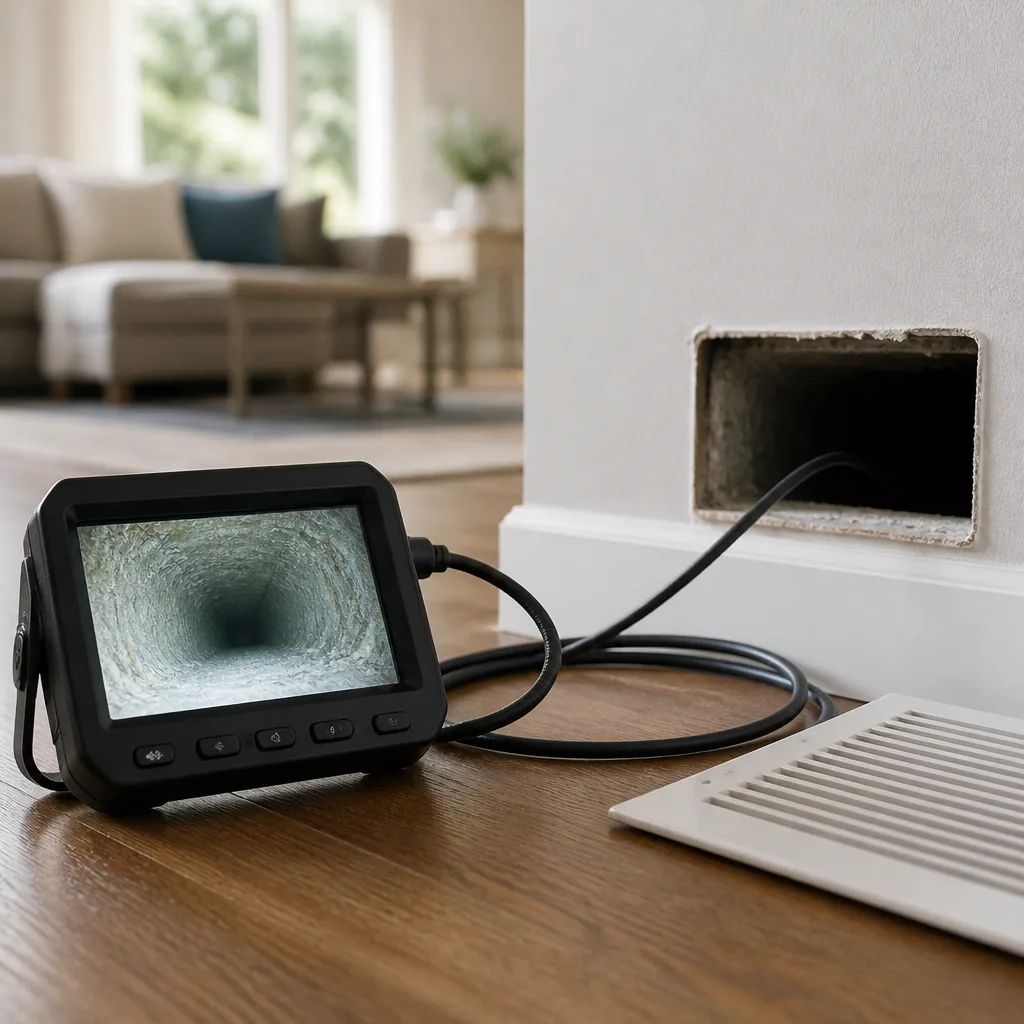 Camera inspection
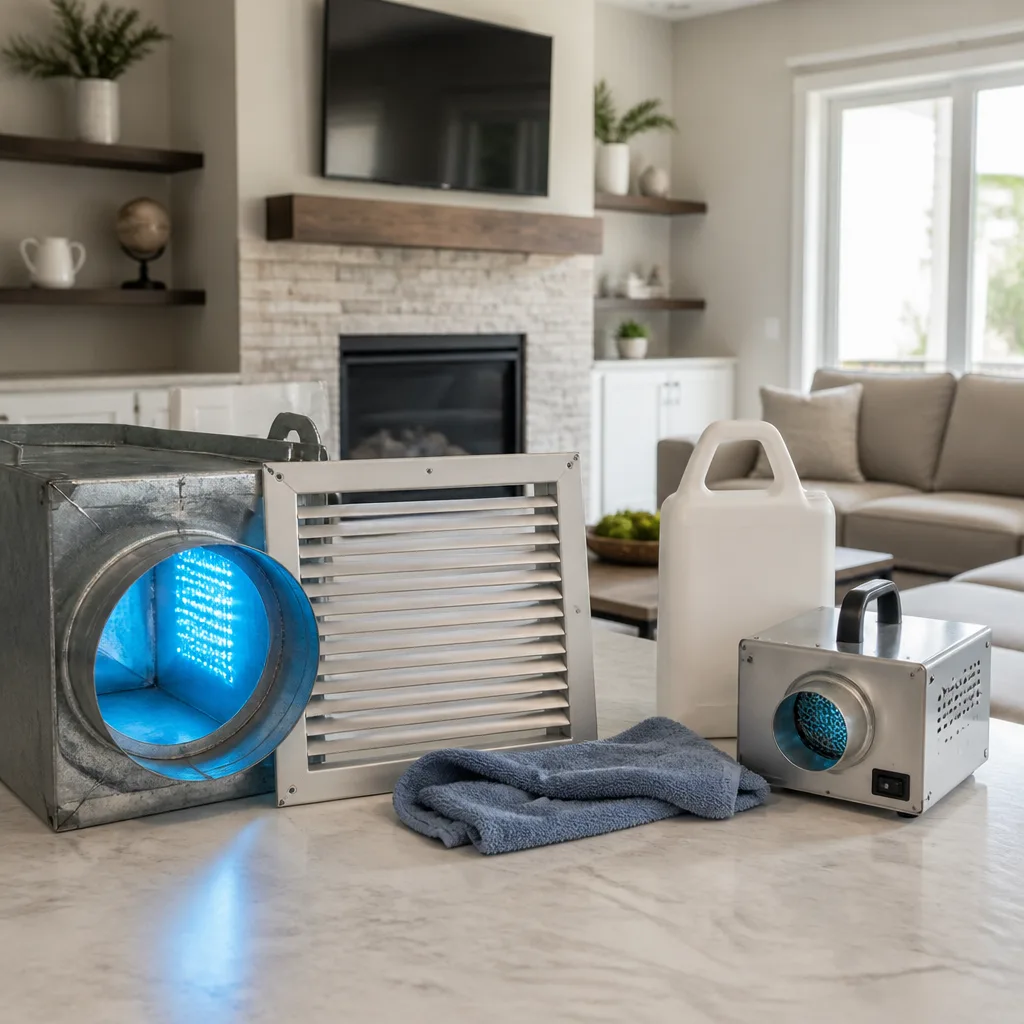 Sanitizing & deodorizing
Whole-system duct and dryer vent check with before-and-after photos - you see exactly what came out of your vents
That "$99 whole-house special" is a bait ad - the real number appears once they are in your hallway, or the "clean" is a shop-vac at the register. We photograph the inside of your ducts before and after instead.
Air Duct Cleaning Troubleshooting: Common Problems and How to Fix Them
Here’s a counterintuitive fact we’ve learned after years of working in Rialto homes: most homeowners who call us for duct cleaning are actually calling about a duct problem, not a dust problem. The rooms won’t heat evenly. The hallway smells faintly like a basement. The utility bill climbed 20% over two summers. Dust is the visible symptom, but the underlying cause is often mechanical. What follows is a practical guide to telling the difference between ducts that need cleaning, ducts that need repair, and ducts that need both. You’ll learn how to spot the signs yourself, what actually causes the problems you’re noticing, and when a professional diagnosis is the only sensible next step.
Styles & brands we work with
- Whole-home duct cleaning
- Dryer vent cleaning
- Camera inspection
- Sanitizing & deodorizing
Quick Answer
Most air duct problems fall into two categories: contamination (dust, mold, debris that needs cleaning) and mechanical failure (leaks, disconnected joints, crushed flex duct that needs repair). The fix depends entirely on which one you have. Cleaning a leaking duct system is like vacuuming a room with the window open: the dirt comes back within weeks, the bills stay high, and the actual problem gets worse while it waits.
Table of Contents
- Contamination Problems vs. Mechanical Problems: How to Tell Them Apart
- Why the Duct Cleaning Didn’t Fix the Problem
- Musty Odors After Duct Cleaning: It’s Almost Never the Cleaning
- Flex Duct Failures in Rialto Tract Homes: Kinking, Collapse, and Rodent Damage
- Post-Cleaning Airflow Imbalance: What It Tells You About Duct Sizing
- Containment During Diagnosis: Why It Matters When You’re Troubleshooting
- DIY Inspection Steps You Can Do This Weekend
- Common Mistakes to Avoid
- When to Call a Professional
- Frequently Asked Questions
- The Bottom Line
Contamination Problems vs. Mechanical Problems: How to Tell Them Apart
The single most useful skill in duct troubleshooting is learning to separate a dirt problem from a damage problem. They present differently, they respond differently to treatment, and confusing the two is how homeowners end up paying for a cleaning that does nothing.
A contamination problem means the ducts themselves are intact but dirty. Dust has accumulated inside the supply and return plenums. Debris from a renovation has settled into the branch lines. Pet dander and hair have built up on the return side. The fix is straightforward: professional cleaning with proper agitation and HEPA-grade negative-pressure containment removes the material and leaves the system operating as designed.
A mechanical problem means the duct structure itself has failed. A joint has separated. A section of flex duct has been crushed. A return chase has a hole in it. The air isn’t going where the system wants it to go, and no amount of cleaning will change that. In our experience in Rialto, mechanical failures often present with the same complaints people associate with dirty ducts: weak airflow from one register, a persistent smell that doesn’t go away, dust appearing quickly after cleaning, rooms that won’t hold temperature.
Here’s how to distinguish them before you spend money:
- Airflow test: Place a tissue or thin piece of paper against each register while the system is running. If airflow is consistently weak from one specific vent, that’s a mechanical problem. Dirt reduces airflow gradually across the whole system; it doesn’t single out one register.
- Visual inspection at the register: Remove two or three register covers (they usually lift right out, no tools needed). Shine a flashlight into the duct opening. If you see accumulated dust and debris, that’s contamination. If you see a separated joint, a collapsed liner, or evidence of moisture staining on the metal, that’s mechanical.
- Timing test: Clean the ducts, then monitor how quickly dust reappears on furniture. If it returns within 6 to 8 weeks, there’s almost certainly a leak pulling attic or crawlspace air into the system. Dirt is entering after the filter. That’s mechanical.
- Pressure test: A professional can run a static pressure test on the system using a digital manometer. Readings above 0.5 inches of water column typically indicate restricted ductwork, undersized returns, or a failing blower. None of those are solved by cleaning.
The reason we emphasize this distinction so strongly is simple: spending $400 on a duct cleaning when you have a $600 repair waiting will feel like wasted money. The cleaning will be done correctly. The equipment will work. And the problem will still be there a month later because the problem was never dirt. Ducts need to be repaired, not just cleaned around. Start with diagnosis.
For Rialto homeowners specifically, the climate adds a variable. Summer attic temperatures routinely exceed 140 degrees. That heat works on flex duct, tape, and mastic seals day after day, year after year. Aged duct systems in Rialto tract homes built in the 1970s and 1980s are at the end of their service life, and many of the symptoms people attribute to contamination are actually age-related mechanical failure.
Why the Duct Cleaning Didn’t Fix the Problem
We’ll be direct: if you paid for a professional duct cleaning and the symptoms returned within two months, the cleaning almost certainly worked. The problem is that the cleaning addressed contamination, and contamination wasn’t the root cause.
Here are the most common reasons a duct cleaning doesn’t resolve ongoing issues, ranked by how often we see them in Rialto:
- Duct leakage pulling attic air into the system. When return ducts have gaps, the negative pressure created by the blower pulls unconditioned, unfiltered air directly from the attic. That air carries insulation fibers, rodent droppings, dust, and heat. You can clean the ducts perfectly, and within weeks the attic is pumping new contaminants back in. This is the number one cause of “cleaning didn’t work” complaints.
- Dirty evaporator coil or blower wheel. If the coil is caked with dust and the blower wheel vanes are coated, the system redistributes particulates every time it runs. Duct cleaning addressed the pipes, not the source. The coil needs to be cleaned and the blower serviced.
- Oversized or undersized filtration. A 1-inch fiberglass filter catches large particles and nearly nothing else. If your ducts were cleaned but the filter allows fine particulates to pass, dust will reappear. Upgrading to a media cabinet filter from a brand like Aprilaire dramatically changes particle capture. The ducts stay cleaner longer because the air moving through them is cleaner.
- Moisture in the system. Cleaning does not solve condensation problems. If a section of duct is sweating, mold can return within weeks of a cleaning. The moisture source has to be addressed directly.
- Post-cleaning contamination from the cleaning process itself. This is real, and it’s the uncomfortable part of the industry. If the cleaning company did not use negative-pressure containment during the job, loosened debris can migrate into living spaces during the process. The ducts are clean, but the house is dirtier. Abatement Technologies containment equipment is designed specifically to prevent this. We use it on every job. Not every company does.
The takeaway: before paying for another cleaning, ask what changed since the last one. If the system is leaking, recleaning is treating a symptom. Find and fix the leak, then clean once more, and the results will hold. That’s the sequence we recommend to Rialto homeowners who’ve been through a disappointing cleaning cycle with another company.
Musty Odors After Duct Cleaning: It’s Almost Never the Cleaning
This is one of the most common calls we get. A homeowner had their ducts cleaned a month or two ago. The musty smell is back, maybe even stronger. The natural assumption is that the cleaning company did a bad job, left mold behind, or made things worse.
In nearly every case we’ve investigated, the cleaning was fine. The smell is coming from a moisture problem the cleaning exposed but did not create.
Musty odors are caused by microbial growth, and microbial growth requires moisture. The ducts were holding that odor before the cleaning; the old dust and debris absorbed some of it. Once the material was removed, the odor source became more noticeable. The cleaning didn’t fail. The cleaning revealed that something is wet.
Here’s where the moisture usually comes from in Rialto homes:
- Disconnected duct joints in the attic. Warm, humid outdoor air is being pulled into the system through a gap. When that air hits the cooler conditioned air inside the duct, moisture condenses and soaks into insulation and dust. This is the single most common source of persistent musty odors we find.
- Condensation on uninsulated metal ducts. Some older Rialto homes still have sections of bare or poorly insulated metal duct. Surface condensation forms when the temperature differential is high. That moisture drips, pools, and grows mold in the duct liner.
- A leaking evaporator coil drain pan. Water pools in the air handler cabinet, keeping the area damp and creating a distinct, earthy smell that distributes throughout the house.
- High crawlspace humidity with return leaks. If the return pulls air from a musty crawlspace, that odor becomes house-wide. The crawlspace is the problem; the ducts are just delivering the smell.
- One room gets noticeably less airflow than before
- One register whistles or produces more noise than the others
- The system runs longer to reach the same temperature
- Some rooms overshoot the thermostat setting while others lag
- Register check. Walk the house and remove each register cover. Take a photo of what you see. If the visible duct interior looks like a fuzzy gray carpet, you have contamination. If the register itself is clean but the room still gets dusty, you have a leak somewhere after the filter.
- Filter inspection. Pull the filter and hold it up to a light. If light passes through easily, the filter is low-efficiency and fine particulates are passing into the system. Consider an upgrade to a media filter. Aprilaire media cabinets are a common upgrade we discuss with Rialto homeowners. If the filter is collapsed, bowed, or wet, that’s a separate problem: airflow restriction or moisture.
- Temperature check. With the system running, use an inexpensive infrared thermometer to measure air temperature at several registers. Differences of more than 3-4 degrees between rooms suggest airflow imbalance. A room that’s consistently warmer in summer or cooler in winter is a duct delivery problem.
- Attic walk (if accessible). If you can safely access your attic, look at the flex duct runs. Are any of them kinked, crushed under boxes, or hanging with sagging straps? Is there visible rodent damage? Are any joints separated and exposing the inner liner? These are all mechanical failures visible without special tools. Wear a mask and be careful: attic conditions in Rialto can be extreme.
- Coil and blower observation. If you can access the air handler, have the system off and inspect the coil if possible. A coil caked in gray or brown material means the system’s internal components need cleaning, not just the ducts. This is outside most DIY comfort zones, which is exactly why it gets skipped, but it’s a primary cause of recurring dust.
- The smell test. Run the system and note when odors appear. If a musty smell is present only when the blower runs, it’s in the ducts or air handler. If the smell is constant, it may be a structural moisture issue in the house. If it appears when the system cycles off, it could be a drain pan issue.
- Paying for cleaning before diagnosing a leak. If your ducts are pulling attic air through a failed joint, cleaning them just creates a clean surface for new contamination. Diagnose first, repair second, clean third. We see this mistake on a weekly basis in Rialto homes.
- Assuming a second cleaning will fix what the first one didn’t. If a professional cleaning failed to resolve your symptoms, the problem was never dirt. A second pass with the same equipment will produce the same result. Something else is wrong.
- Ignoring the dryer vent because “it’s separate.” A clogged dryer vent is a fire hazard that operates independently of your heating and cooling ducts. It needs dedicated attention with equipment suited for lint extraction. It’s not a quick secondary task at the end of a duct cleaning.
- Using duct tape on duct joints. Despite the name, duct tape is the wrong product for sealing air ducts. It dries out, loses adhesion, and fails in attic heat. Use foil tape or mastic. This mistake is so common it’s practically a Rialto tradition.
- Closing registers in unused rooms to save energy. This increases static pressure on the system and can worsen existing duct leaks. It’s a false economy. Balance the system properly instead of choking it.
- Relying on visual inspection alone. You can’t see most of your duct system. The interior of a flex duct run is invisible without a camera. If you’re guessing, you’re guessing. A professional diagnostic pass with a camera and manometer gives you data, not hunches.
- Choosing a duct cleaner based on price alone. A low-cost cleaning that doesn’t use containment equipment can make your indoor air quality worse by redistributing what it disturbs. The equipment matters. HEPA collection is not a luxury feature; it’s the difference between cleaning and moving dirt around.
If you have a musty odor after cleaning, the next step is not another cleaning. It’s a moisture investigation. Look for water stains on the ceiling near the air handler. Check the drain pan. Inspect visible duct sections for condensation. In many cases, the fix is a duct repair: reconnecting a joint, replacing a section of wet insulation, sealing a return leak. Cleaning again would be wasted money.
We use a moisture meter and visual inspection as part of our diagnostic process before recommending any further service. If the system is wet, we’ll tell you. If it’s dry and the smell persists, then we look at other sources like the carpet, the walls, or a plumbing leak. But in a Rialto attic in August, condensation on a disconnected duct joint is where our bet goes every time.
Flex Duct Failures in Rialto Tract Homes: Kinking, Collapse, and Rodent Damage
Rialto has thousands of tract homes built between the 1960s and the early 2000s. The overwhelming majority use flexible ductwork for the branch lines running from the main trunk to individual rooms. Flex duct is inexpensive, easy to install, and functional when it’s in good condition. But it has specific, predictable failure modes, and every one of them mimics the symptoms of dirty ducts.
Kinking. Flex duct is a wire coil wrapped in insulation and an outer vapor barrier. If it’s pulled too tight around a bend or improperly supported with sagging straps, the inner liner can kink like a garden hose. Airflow through that run drops dramatically. The room at the end of the run gets weak airflow, takes longer to heat or cool, and accumulates less dust than the rest of the house because less air is moving through it. A homeowner notices the weak airflow and assumes the duct is clogged with debris. A cleaning won’t fix a kink. Straightening the run and adding proper support will.
Liner collapse. Over time, the inner plastic liner of flex duct can separate from the insulation and partially collapse inward, especially in Rialto’s attic heat. The duct looks fine from the outside. Inside, the airflow path is squeezed shut like a straw with a kink in it. This is harder to spot from a register, but it produces the same symptoms: persistent weak airflow, a room that never quite reaches the thermostat setting, and increased static pressure on the system.
Rodent puncture. Attics in Rialto attract rodents, especially in older neighborhoods with mature trees and open access points. Rats and squirrels chew through flex duct outer jackets with predictable results. The puncture creates a leak, the leak pulls attic air and rodent contaminants into the system, and the homeowner notices a new smell, more dust, and inconsistent temperatures. They call for a duct cleaning. The cleaning removes the contaminants. The next week, the rodents are still there, the hole is still open, and the problem returns.
The pattern to recognize here is that none of these three failure modes is a contamination issue. They are structural defects. Cleaning will not fix a kinked, collapsed, or chewed duct. What they need is Air Duct Repair in Rialto: a diagnostic pass to find the failed section, followed by replacement or reinforcement of that run. Our three-service model exists because we’ve learned that cleaning alone leaves too many Rialto homes half-fixed. The ducts need to be clean and intact, not one or the other.
Post-Cleaning Airflow Imbalance: What It Tells You About Duct Sizing
Here’s a scenario we’ve walked through many times. A homeowner gets a thorough duct cleaning. The technician does the job properly: agitation, negative-pressure containment, the works. The system is clean. Then the homeowner notices something new. The airflow to the back bedroom seems weaker than before. Or one room is suddenly louder. Or the system runs longer cycles. They wonder if the cleaning upset something.
What actually happened is that the cleaning removed enough restriction from the ducts to expose an imbalance that was always there. Before the cleaning, the entire system was somewhat restricted by accumulated debris. That restriction masked the fact that certain branch runs were undersized or too long. Once the restriction was removed, the system’s natural pressure distribution emerged, and the imbalance became noticeable.
This points to a fundamental issue: duct sizing. An HVAC system is designed around a specific external static pressure. Every foot of duct, every elbow, every register adds resistance. When the system was originally installed, sometimes the ducts were sized correctly and airflow was balanced. Sometimes they were not. Add 20 years of debris, settling, and amateur modifications, and the pressure balance shifts.
After a cleaning, if you notice:
…the ducts are likely undersized for the airflow the blower is trying to deliver. This is a static pressure problem, not a cleanliness problem. A professional can measure the static pressure at the return and supply plenums and identify whether the fix is duct modification, damper adjustment, or blower speed adjustment. Cleaning won’t resolve a fundamental sizing defect. This is one of the many reasons we start with diagnosis rather than assuming the service a homeowner asked for is the service they actually need. In some cases, what the system needs is a smaller technical fix. In others, it’s a repair scope that a general duct cleaner simply doesn’t offer.
Containment During Diagnosis: Why It Matters When You’re Troubleshooting
There’s a detail in professional duct work that most homeowners never think about until it causes a problem: containment. When a technician agitates the inside of a duct system, whether for cleaning or for diagnostic camera inspection, they disturb material. Dust, allergens, rodent droppings, insulation fibers. If that material is not captured at the source, it ends up in the living space.
This matters for troubleshooting because a proper diagnosis sometimes requires disturbing the very material you’re trying to assess. A camera inspection pushes through debris. A pressure test moves air differently than normal operation. Even removing a register and reaching in with an inspection mirror can dislodge particulates.
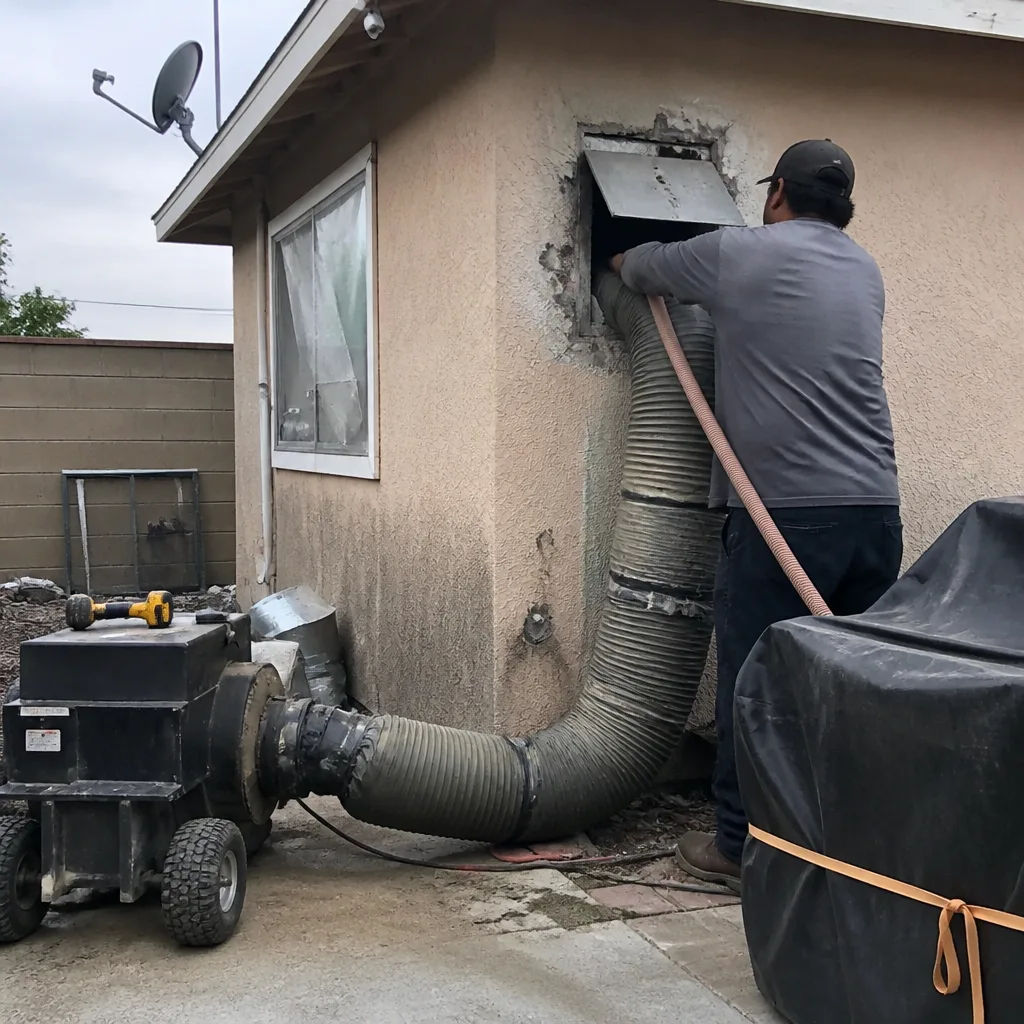
Abatement Technologies is a brand known in the professional remediation and mold abatement industry for containment equipment: HEPA-filtered negative air machines, containment barriers, and filtration systems designed to keep particulate from migrating. We use Abatement Technologies equipment in our process because the same principle applies to duct work as to mold remediation. If you’re going to disturb material inside an air delivery system, you contain it at the source. You don’t let it drift into the kitchen.
For homeowners troubleshooting on their own, this is a warning about methodology. Don’t go poking aggressively into duct runs with a shop vac, don’t blast air compressors into register openings, and don’t start ripping at insulation in the attic above the living space. You can absolutely make your indoor air quality worse by disturbing material without containment. If you’re going to loosen debris, use a HEPA-rated vacuum with suction at the register opening so that what you dislodge gets pulled into the filter rather than pushed into the house. This is the same principle behind the Nikro HEPA vacuum equipment we use on every cleaning job. Capture at the source.
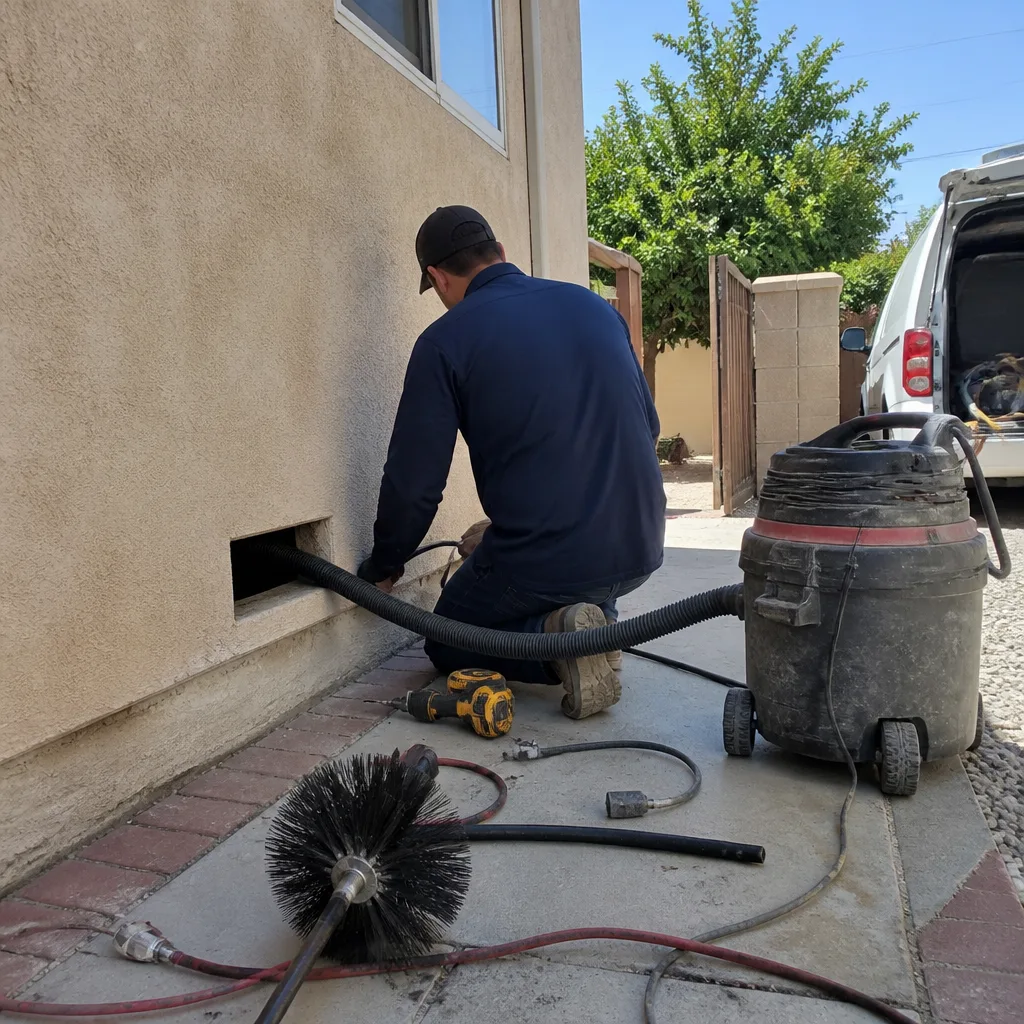
The brother concept to containment during diagnosis is containment during cleaning. If a company shows up with a shop vac and a brush, they’re going to circulate whatever they disturb back into the house. That’s why we position ourselves around specific equipment brands: Rotobrush for agitation, Nikro for HEPA vacuum collection, and Abatement Technologies for containment. It’s not about brand names for the sake of brand names. It’s about the fact that these are tools built for IAQ professionals, not general-purpose cleaning equipment.
DIY Inspection Steps You Can Do This Weekend
You don’t need a professional to gather useful information about your duct system. A few simple observations can tell you whether you’re looking at a contamination problem, a mechanical problem, or something else entirely. Here’s a structured inspection sequence we recommend to Rialto homeowners who want to understand their system before calling in a pro.
After this inspection, you’ll have a better picture. If the problem is mechanical (visible damage, imbalance, leaks), go directly to Air Duct Repair and have it addressed. If the problem is contamination (visible buildup, years since last service, no evidence of damage), schedule a professional Air Duct Cleaning in Rialto with a company that uses proper containment and HEPA filtration. If the problem is both, address the mechanical issues first, then clean. Cleaning a system you’re about to repair simply means cleaning it again after the repair.
Common Mistakes to Avoid
When to Call a Professional
Some duct problems are obvious and accessible. A loose register cover, a dirty filter, a clear kink in a visible flex run. Those are DIY fixes. But there are situations where continued self-diagnosis costs more than a professional visit, and in some cases it creates a safety hazard.
Call a professional if you see any of these: visible mold growth inside ducts or on register covers; water pooling in or around the air handler; rodent droppings inside the duct system; a burning smell when the system runs; unexplained respiratory symptoms that improve when you leave the house; or airflow problems that persist after you’ve replaced the filter and checked the registers. These are not cleaning issues. They are diagnostic issues with real consequences if ignored.
Duct Cleaning Rialto offers free estimates in Rialto. Call (833) 630-3666 for a diagnostic walkthrough. We’ll tell you whether the problem is contamination, mechanical, or both, and we’ll quote you a real number before any work is scheduled. No per-vent pricing, no bait-and-switch. One price per system, agreed before we start.
Frequently Asked Questions
Whole-system duct cleaning in Rialto typically falls in the $400 to $900 range for an average single-family home, depending on the number of systems, the amount of contamination, and whether dryer vent service is included. Duct Cleaning Rialto quotes one flat price per system before work begins. No per-vent pricing, no surprise add-ons at the door. Call (833) 630-3666 for a free estimate.
A $99 whole-house duct cleaning typically means the technician is using a shop vac and a brush, which can’t reach the full interior of branch runs, and which may redistribute disturbed debris into the living space instead of capturing it. Professional equipment like Rotobrush agitation systems and Nikro HEPA vacuums cost money to own and operate. The price difference reflects the difference in what’s actually being done. A cheap cleaning that doesn’t solve your problem is more expensive than a proper one that does.
Request before-and-after photos taken with an inspection camera inside the ducts. A professional company should be willing and able to provide visual documentation. Duct Cleaning Rialto provides photo evidence of the interior condition before and after service. If a company won’t show you what they did, assume they didn’t do much. Call (833) 630-3666 for a service that documents its work.
For most Rialto homes, every 3 to 5 years is appropriate. Homes with pets, smokers, recent renovation, or occupants with respiratory conditions may benefit from more frequent service. But if you’re noticing symptoms returning within months of a cleaning, the problem is not a schedule problem. It’s a mechanical problem. More frequent cleaning treats the symptom while the actual cause goes unaddressed.
Yes, but indirectly. Contamination itself adds only modest restriction. The bigger cost driver is typically leaks, gaps, and mechanical failures that let conditioned air escape into the attic. A well-sealed but dirty system is more efficient than a clean but leaking one. That said, a duct system is most efficient when it’s both clean and intact. If your bills are climbing, have the system checked for both contamination and leakage before spending on cleaning alone.
When done properly with HEPA filtration and containment, duct cleaning reduces the particle load in the air delivery system, which can benefit allergy and asthma sufferers. The critical factor is containment. If the process doesn’t capture what it dislodges, it can make the air worse temporarily. Ask any company you’re considering how they handle containment during service. If the answer is vague, choose someone else.
The Bottom Line
Duct problems in Rialto homes are rarely a single issue. They’re an interaction between what’s accumulated in the system and what’s failed in the structure. The homeowner who understands that distinction is the one who solves the problem once instead of paying for repeated cleanings that don’t hold. Contamination needs cleaning. Mechanical failure needs repair. Many systems need both, in the right order. Duct Cleaning Rialto takes the approach of a specialist: diagnose first, explain what we found, and quote one price for the actual scope of work. We work with professional-grade equipment because that’s what our job requires, and we offer repair because sometimes that’s what the job actually is. For a free estimate in Rialto, call (833) 630-3666. Your air system deserves to be fully serviced, not just cleaned. Consider scheduling a Dryer Vent Cleaning in Rialto as part of your next maintenance pass as well. Both systems move air. Both deserve the same standard of care.
Written by the team at Duct Cleaning Rialto, serving Rialto since 2015.
See the difference
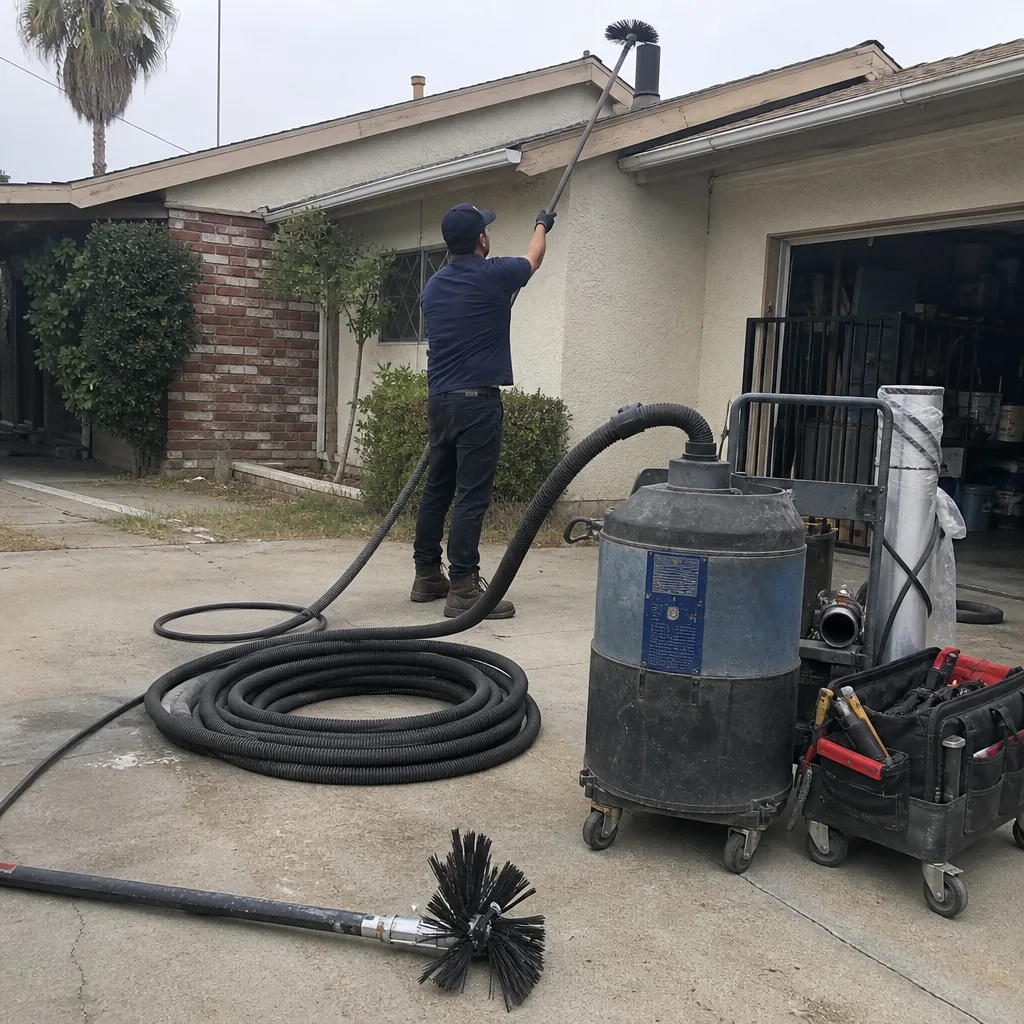 Before
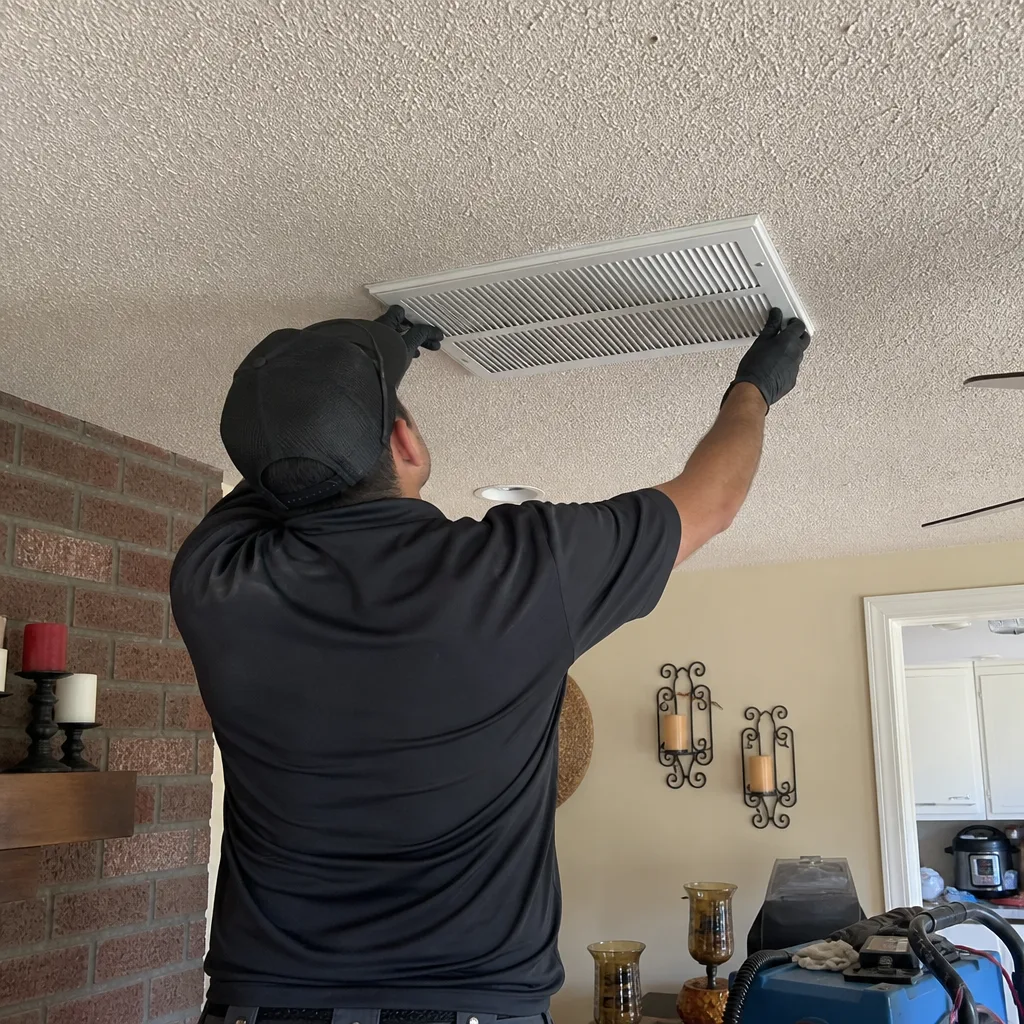 After
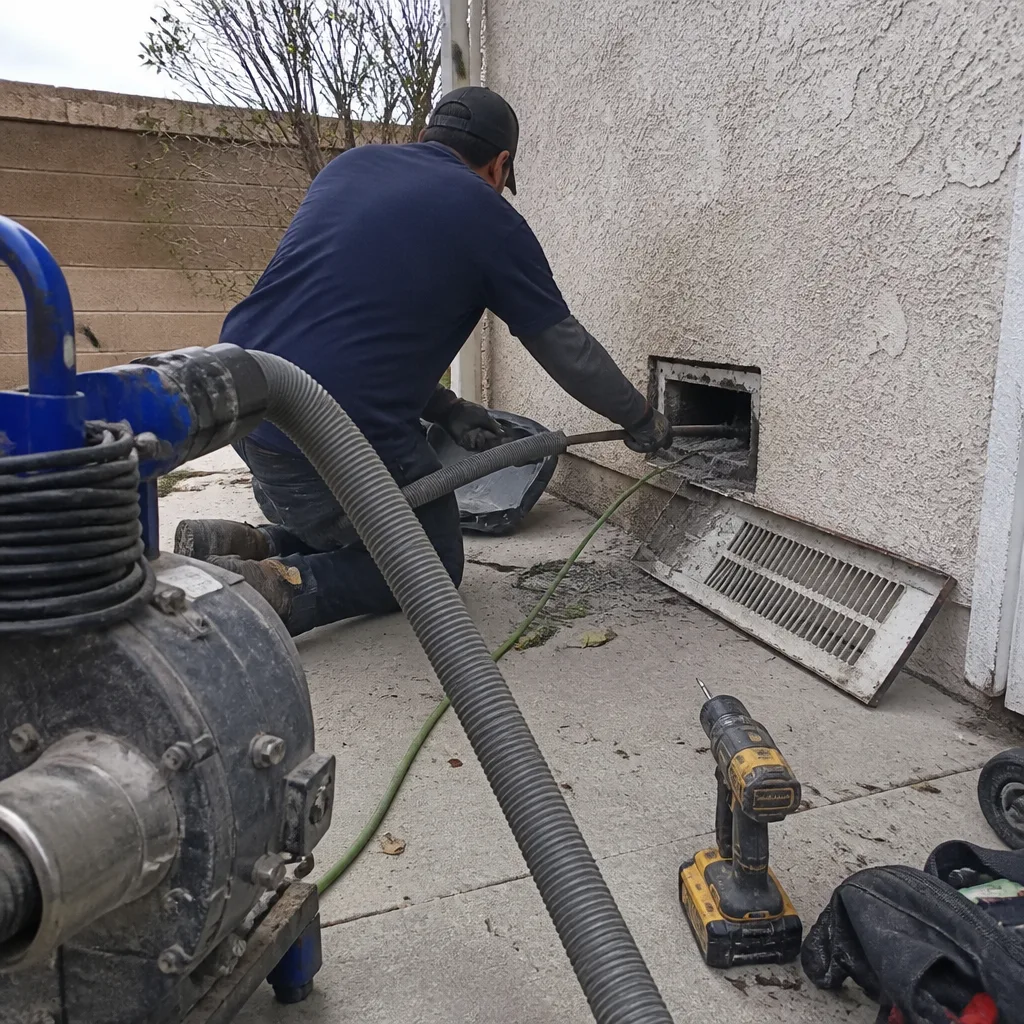 Before
 After
 Before
 After