
Last updated November 2, 2026
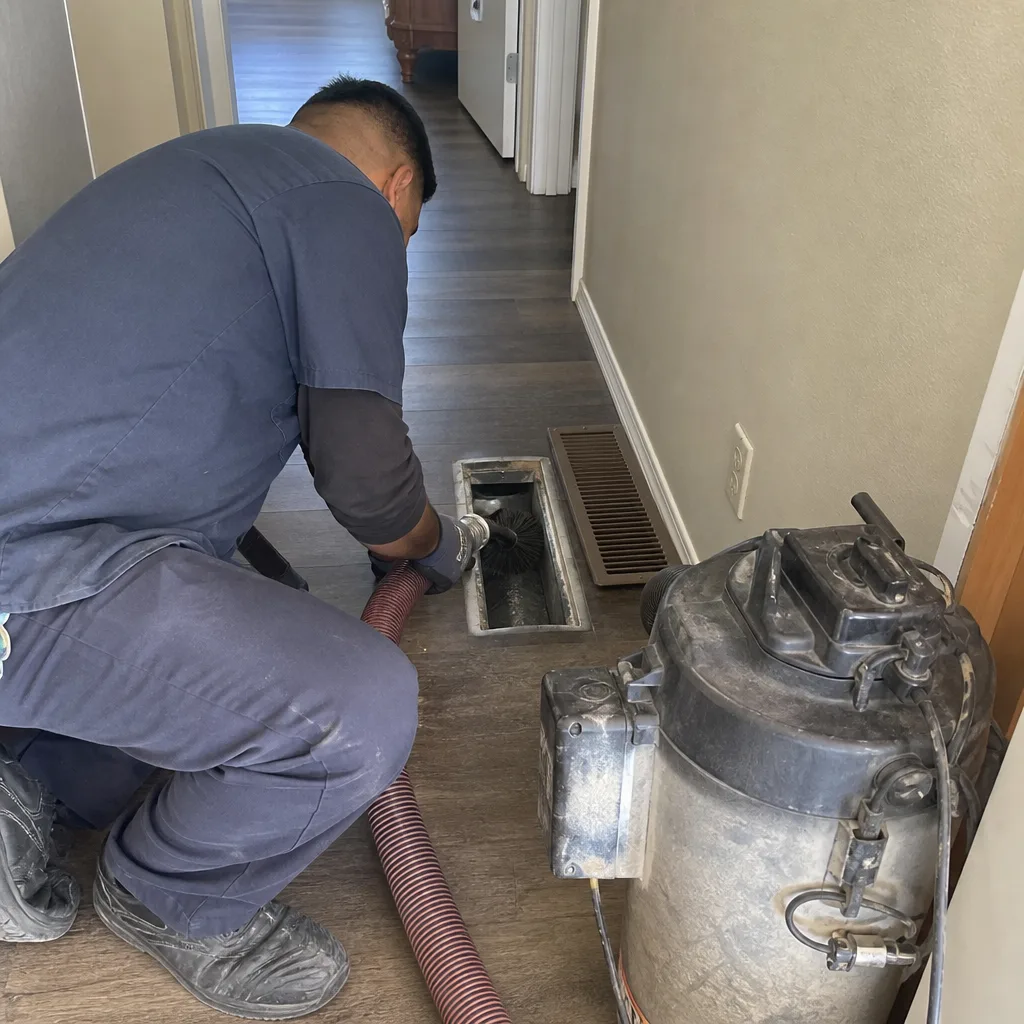
 Whole-home duct cleaning
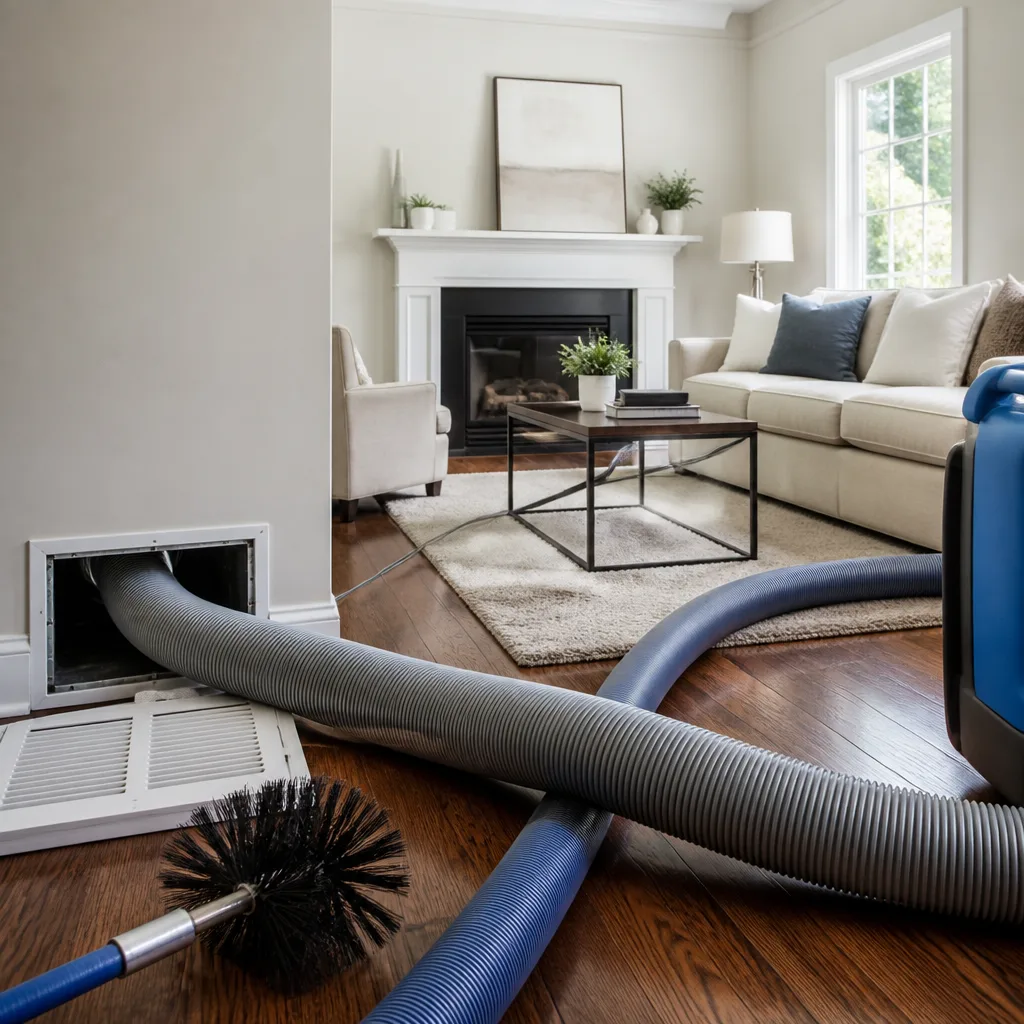
 Dryer vent cleaning
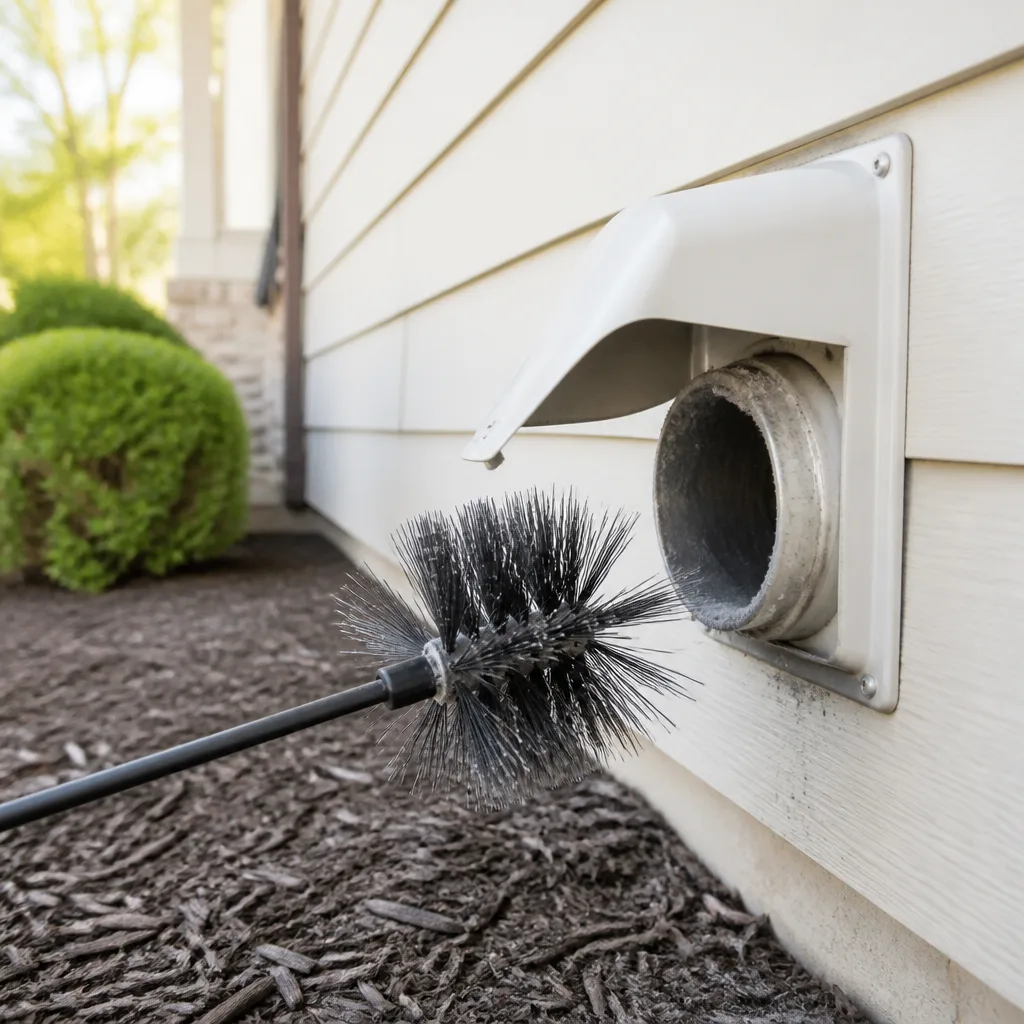
 Camera inspection
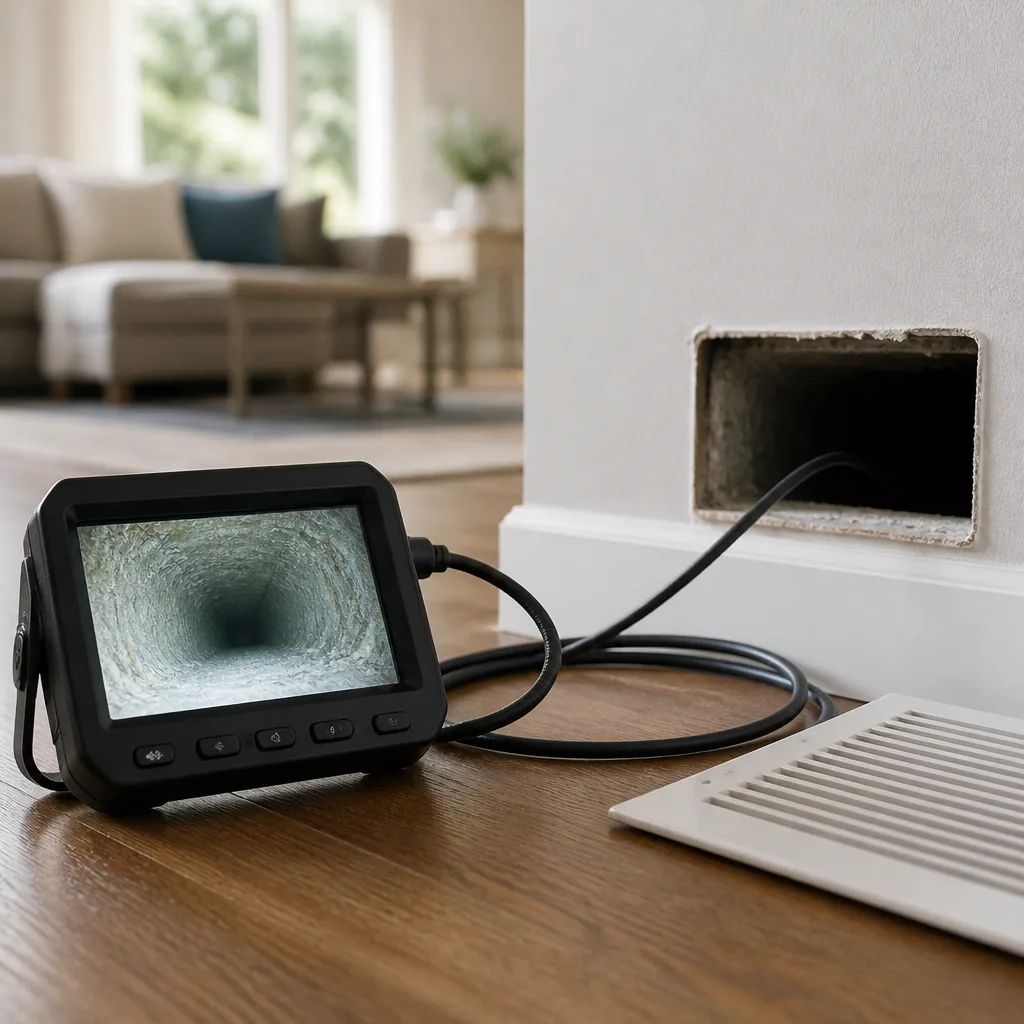
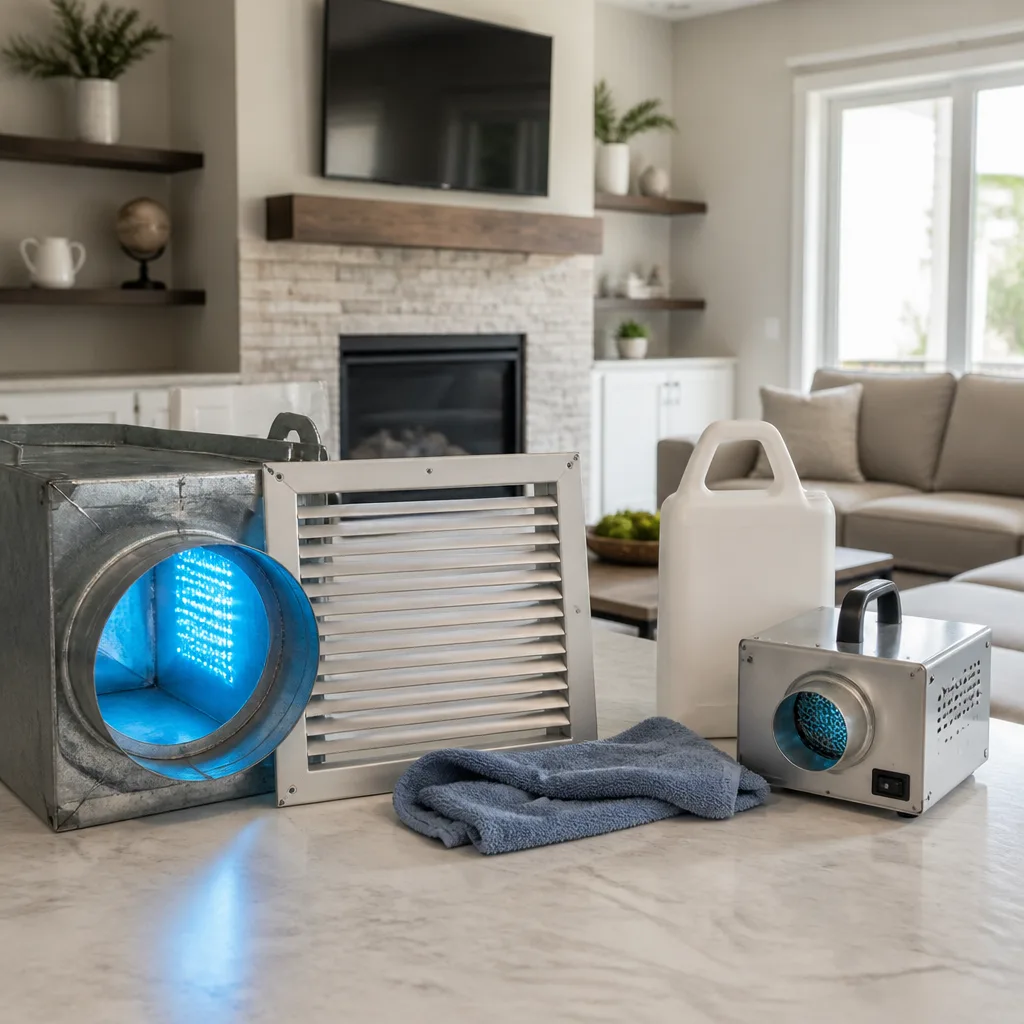 Sanitizing & deodorizing
Whole-system duct and dryer vent check with before-and-after photos - you see exactly what came out of your vents
That "$99 whole-house special" is a bait ad - the real number appears once they are in your hallway, or the "clean" is a shop-vac at the register. We photograph the inside of your ducts before and after instead.
Air Duct Cleaning Permits, Codes & Inspections in CA: What You Need to Know
Every week, a homeowner in Rialto calls us after a technician finds something during what was supposed to be a routine cleaning: a collapsed flex duct, a disconnected trunk line, a return plenum pulling apart at the seam. The first question is usually about price. The second, once the dust settles, is whether the fix needs a permit. Most people assume duct cleaning is maintenance, not construction. They’re right, until the repair crosses a line that California code draws very specifically. This guide explains exactly where that line sits, what the California Mechanical Code says about repair versus replacement, and what Rialto homeowners should demand in writing before anyone modifies their duct system. For related reading, see our Air Duct Cleaning Warning Signs: A Rialto Homeowner’s Reference Guide.
Quick Answer
Air Duct Cleaning services themselves do not require a building permit anywhere in California, including Rialto, because the work is classified as maintenance, not construction. However, duct repair work that involves replacing more than a small section of duct, reconfiguring duct runs, or altering the system’s design can require a mechanical permit under California Mechanical Code and Title 24. The trigger is usually the extent of the repair: if more than 40 linear feet of duct is being replaced, or if the work changes how the system operates, a permit and post-repair leakage testing are legally required.
Styles & brands we work with
- Whole-home duct cleaning
- Dryer vent cleaning
- Camera inspection
- Sanitizing & deodorizing
Table of Contents
- Air Duct Cleaning vs. Duct Repair: Where the Legal Line Sits
- What the California Mechanical Code Actually Says
- Title 24 and Duct Leakage Testing: What the 40-Foot Rule Means
- What Rialto’s Building Department Requires
- C-20 vs. General B License: Who Can Legally Pull the Permit
- How Unpermitted Duct Work Shows Up at Resale
- Insurance Claims and Unpermitted Duct Repairs
- What to Request in Writing Before Any Duct Repair
Air Duct Cleaning vs. Duct Repair: Where the Legal Line Sits
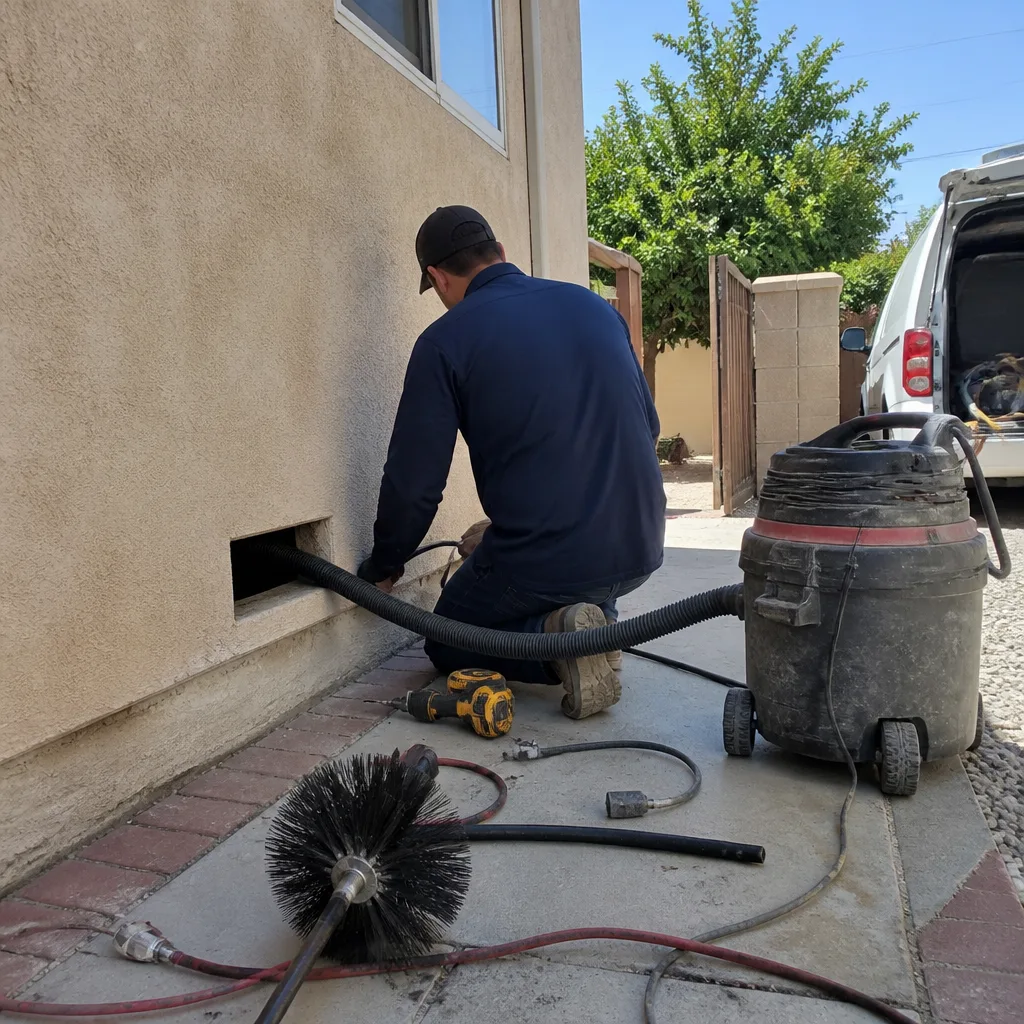
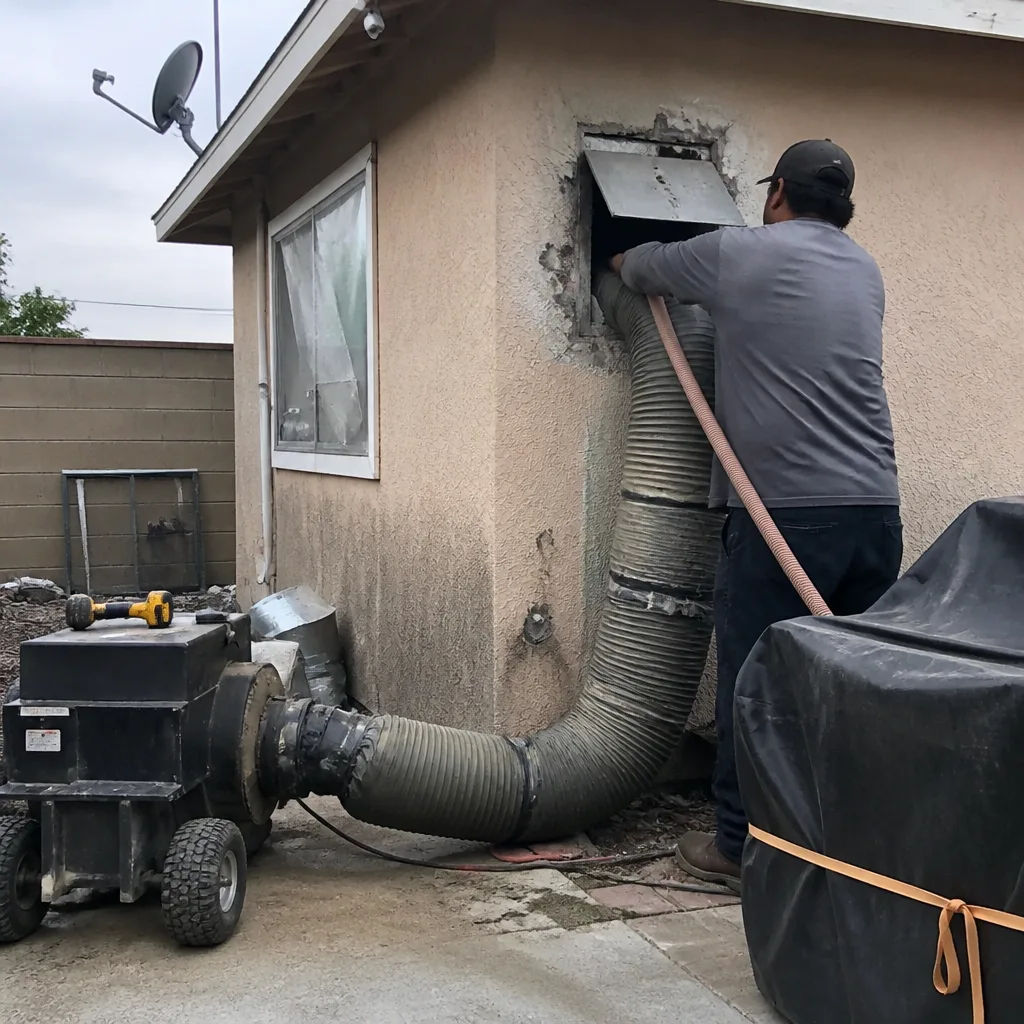
Duct cleaning in California is unpermitted work, full stop. The California Mechanical Code does not classify cleaning as construction, alteration, or repair. A technician can run a Rotary brush system through your supply and return runs, vacuum the plenums, and clean the registers without any interaction with the Rialto building department. The same applies to dryer vent cleaning. In our work across Rialto homes, the cleaning itself has never once required a permit, and no legitimate building official will tell you otherwise.
The line moves when the technician has to fix something. The code distinguishes between maintenance, repair, and replacement, and that distinction matters a great deal. Maintenance is cleaning, filter changes, tightening accessible connections. Repair is restoring a component to working condition without replacing it. Replacement is pulling out duct and putting in new material. The permit trigger is usually the third category, and partially the second when the repair is substantial enough to change system performance.
Here is the practical breakdown most Rialto homeowners need:
- Cleaning only: No permit. No inspection. This is maintenance.
- Sealing a small joint with mastic: Technically a repair, but falls under the code’s minor repair exemption. No permit typically required if the total affected area is small and no duct material is removed.
- Replacing one flex duct run under 25 feet: Usually treated as a repair in practice, though some California jurisdictions will ask for a permit if a building inspection is already open for other work. Rialto Building & Safety has discretion here.
- Replacing a trunk line section or more than 40 linear feet total: Permit required. Title 24 duct leakage testing applies.
- Reconfiguring duct runs or adding new supply registers: Permit required. This is alteration, not repair.
- Replacing the entire duct system: Permit required, no ambiguity. Full Title 24 compliance testing is mandatory.
We’ll get into why the 40-foot threshold exists later in this guide, but the principle is simple: cleaning is maintenance, and maintenance never needs a permit. For additional help, read our Air Duct Cleaning Troubleshooting: Common Problems and How to Fix Them. The moment material is removed and replaced at a scale that affects how the system moves air, California treats it as construction.
What the California Mechanical Code Actually Says
The California Mechanical Code (CMC) is Chapter 6 of the California Code of Regulations, Title 24, Part 4. It governs all HVAC work in the state. The relevant sections for duct work are CMC Chapter 6, covering duct systems, and CMC Chapter 3, covering general regulations for mechanical work. The permit requirement itself comes from the administrative sections at the front of the code, specifically Section 106.2, which requires a permit for any mechanical work that is not exempted.
The exemption that matters for duct work is Section 106.2.2, which allows certain work to proceed without a permit. The key language permits “minor repairs” that do not involve the replacement of any substantial portion of the system. The word “substantial” is not defined in the code itself, which is why local building officials have interpretive authority. That ambiguity is also why some contractors push the envelope, and why homeowners end up with unpermitted work they did not know was unpermitted.
Here is the specific language structure, translated into plain English:
- CMC Section 301.1: All mechanical systems must be installed in accordance with the code. This applies to repairs and replacements, not just new construction.
- CMC Section 601.2: Duct systems must be constructed of approved materials. This matters during repairs, because a contractor who uses the wrong material has created a code violation that an inspector will flag if it is ever discovered.
- CMC Section 603: Duct insulation and sealing requirements. California has strict rules about duct sealing due to the state’s energy code, and repair work must comply with the current standard, not the standard in place when the home was built.
For a Rialto homeowner, the practical takeaway is this: the CMC does not distinguish between a duct system installed in new construction and one repaired twenty years later. The same sealing, material, and sizing standards apply. That is why a repair that seems simple, like reconnecting a trunk line, can balloon into a permit-required job if the connection point requires new sheet metal transitions or re-sizing to current code.
In our experience, the most common code issue found during cleaning is not the duct itself, but the connections at the plenum. Older Rialto homes, particularly those built in the 1960s through 1980s, often have plenum connections sealed with aging tape, not mastic or UL 181-approved materials. If a technician has to cut away that material and re-seal, the work must meet current CMC standards. That is not a penalty, it is a protection, because the code standard reflects what actually prevents leaks and energy loss.
Title 24 and Duct Leakage Testing: What the 40-Foot Rule Means
California’s Title 24 energy standards, specifically Part 6, impose duct leakage testing requirements on new construction and on certain retrofit work. The trigger in the residential code is found in Section 150.0, which requires testing when more than 40 linear feet of duct is replaced or when a new duct system is installed. This is the source of the “40-foot rule” that some contractors quote and others conveniently forget to mention.
The test itself measures how much air escapes the duct system under pressure. A calibrated fan is attached to the system, and the leakage rate is calculated. For new duct systems in most California climate zones, including Rialto’s Inland Empire climate zone, the maximum allowable leakage is 6% of total system air flow. For existing systems that are being repaired, the standard applied depends on the scope of work and the local jurisdiction’s interpretation.
Why does this matter for a homeowner? Because a permit is not just a piece of paper. It triggers an inspection, and for duct replacement beyond 40 feet, that inspection includes leakage testing. If a contractor replaces a large section of duct without a permit, they have also bypassed the test. The homeowner is left with no documented proof that the repaired system actually seals properly.
Here is the step-by-step sequence when a permit is properly pulled in Rialto for duct replacement exceeding 40 feet:
- Contractor files a mechanical permit application with Rialto Building & Safety, including a scope of work description.
- Building department reviews the scope and may require a plan or a simple field inspection route, depending on complexity.
- Work is performed, with the contractor following CMC material and sealing standards.
- A HERS rater or approved third-party tester performs a duct leakage test.
- The building inspector reviews the work and the test results, then signs off if compliant.
- The homeowner receives a final inspection card and the permit is closed.
That final step, the closed permit, is the document that protects you at resale and with insurance. We will cover both of those scenarios shortly.
One nuance worth understanding: Title 24 testing is not cheap. A leakage test typically runs several hundred dollars in the Inland Empire. That cost is often the reason unlicensed or under-scoped contractors avoid the permit process entirely. They are not saving you money, they are shifting a liability onto you. If you sell your Rialto home five years later and a buyer’s inspector finds evidence of unpermitted duct replacement, the cost to resolve it is measured in thousands, not hundreds.
What Rialto’s Building Department Requires
Rialto Building & Safety operates under the California Building Standards Code, including the CMC, and issues mechanical permits for duct work that exceeds the repair exemption. The city does not have a separate duct cleaning permit or inspection requirement, which is consistent with state code. Cleaning crews can work across Rialto neighborhoods, from the residential streets near Wilmer Amina Carter High School to newer developments off the 210 corridor, without filing any paperwork.
The department does have local amendments that affect mechanical work, primarily around plan review thresholds and inspection scheduling. For duct replacement projects that require a permit, Rialto generally processes mechanical permits through its online portal, allowing contractors to submit scope-of-work descriptions and schedule inspections electronically. Homeowners can verify a permit was pulled by searching the city’s building permit records, either through the portal or by contacting the building counter directly.
What should you look for when you verify a permit? Here is a checklist:
- Permit number and status: The permit should show as “Issued” and the work type should be “Mechanical” or “HVAC.”
- Contractor name: The licensed contractor pulling the permit should match the company performing the work, not a third-party permit runner.
- Scope description: The description should mention duct work specifically. A vague description like “repairs” is a red flag.
- Inspection record: After the work is done, the permit should show a final inspection with a “Passed” or “Closed” status.
- Timeline: Permits expire if work is not started or inspection is not called. Make sure the permit is current.
In Rialto specifically, the building department has historically been strict about work discovered during resale inspections. The city’s housing stock includes a significant number of homes built between 1950 and 1985, many of which have had multiple generations of HVAC work performed. When buyers order a home inspection on one of these properties, unpermitted duct work is a common finding, and Rialto inspectors are familiar with which permits should exist and do not.
Our advice for Rialto homeowners is simple: if a contractor tells you a permit is not needed for duct replacement work, ask for that in writing with the specific code section cited. If they cannot provide it, the work likely needs a permit, and you should proceed accordingly.
C-20 vs. General B License: Who Can Legally Pull the Permit
California requires a contractor to hold a specific license classification to perform and permit mechanical work. The relevant classifications are the C-20 warm-air heating, ventilating, and air-conditioning contractor license, and the General B building contractor license. The distinction matters more than most homeowners realize.
A C-20 license holder is specifically authorized to perform HVAC work, including duct installation, repair, and replacement, and to pull mechanical permits for that work. A General B license holder can perform a broader range of building work, but the Contractors State License Board has consistently interpreted that HVAC work requiring a mechanical permit should be performed by a C-20 for the mechanical scope, unless the HVAC work is incidental to a larger construction project.
The practical issue for duct cleaning customers is this: many duct cleaning companies operate without any contractor license at all, because cleaning alone does not require one. That is legal for the cleaning itself. The moment the technician identifies a repair need, the company’s licensing status becomes critical. An unlicensed company cannot pull a mechanical permit, which means any repair work they perform is, by definition, unpermitted.
Here is how the licensing tiers apply to typical duct work scenarios:
- Duct cleaning only: No contractor license required by the CSLB. This is a service, not a construction contract.
- Minor duct sealing or reconnection work: Technically a repair. A C-20 or General B license is appropriate. The CSLB does not strictly enforce a class for small repairs, but a licensed contractor is still the safe choice.
- Duct replacement over 40 linear feet: Mechanical permit required. A C-20 should perform and permit this work. A General B attempting to permit mechanical work may face pushback from the building department.
- Duct reconfiguration or system redesign: Mechanical permit required. Same as above, C-20 is the correct classification.
What does this mean for a Rialto homeowner calling around for duct cleaning? Ask one question before booking: “If you find repair work during the cleaning, do you hold a C-20 license and will you pull a permit if needed?” A company that says no to either is not equipped to handle the full scope of what a duct system might need. Our company approaches every cleaning with the understanding that we may find repair work, which is why we offer air duct repair in Rialto as a standalone service rather than a surprise add-on.
How Unpermitted Duct Work Shows Up at Resale
The Inland Empire real estate market is competitive, and Rialto is no exception. When a home goes under contract, the buyer’s home inspection almost always includes a review of visible duct work in the attic or crawl space. Home inspectors are trained to look for signs of recent work: new duct strapping, sections of flex duct that do not match the rest of the system, fresh mastic at joints, and permit stickers that should exist but do not.
When an inspector flags suspected unpermitted work, the language in the report is often very specific. It typically reads something like: “Recent duct replacement observed in attic. No permit record found for this work. Recommend verification with the city and evaluation by a licensed HVAC contractor.” That single sentence triggers a renegotiation at escrow. Buyers’ agents use it to demand a price reduction, a credit for permit retrofitting, or both.
The cost cascade from unpermitted duct work at resale typically looks like this:
- Home inspection flags the work: Buyer asks for disclosure and permit records.
- Seller cannot produce permits: Buyer’s agent requests a retroactive building department review.
- Building department reviews: If the work does not meet current code, the department may require it to be opened up, corrected, and re-inspected.
- Corrective work cost: Depending on scope, this can run several thousand dollars. The seller typically pays, either through a price reduction or by fixing it before close.
- Deal delay: A retroactive permit process takes weeks, not days. In a competitive escrow, that delay can kill the deal.
We have seen this play out in Rialto specifically on homes in the older neighborhood grids north of the 10 freeway, where duct systems have been patched and repaired by multiple owners over decades. One homeowner replaced a large section of flex duct after a rat infestation, hired a handyman who did not pull a permit, and then faced a $6,000 escrow credit demand three years later when the next buyer’s inspector caught the work.
The lesson is straightforward: the permit is not a bureaucratic inconvenience. It is documentation. It is the paper trail that protects the next sale. For a cleaning-only company, permits do not apply. For any company performing repairs, the permit is part of the job, not an optional upgrade.
Insurance Claims and Unpermitted Duct Repairs
Homeowners insurance policies in California contain language that ties coverage to lawful work performed on the home. The standard HO-3 policy excludes coverage for damage caused by “faulty, inadequate, or defective” work, and many insurers interpret unpermitted work as a presumption of fault. The same applies to work performed by unlicensed contractors when a license is required.
Here is the scenario that catches Rialto homeowners off guard: a duct repair was performed without a permit. Two years later, a section of that ductwork separates, causing condensation damage to the ceiling below. The homeowner files an insurance claim for the water damage. The adjuster reviews the work history, finds no permit for the duct repair, and denies the claim on the grounds that unpermitted work contributed to the loss. The homeowner now faces the repair cost out of pocket, and the insurer has a record that could affect future premiums or coverage.
This is not a hypothetical construction. California insurance claims for water damage related to HVAC systems are common, and adjusters in the Inland Empire are experienced at checking permit records. The California Department of Insurance does not require insurers to cover losses caused by unlawful work, and unpermitted construction fits that definition.
What about the contractor’s insurance? If the contractor who performed the unpermitted work is still in business, a claim against their liability policy is possible, but the absence of a permit weakens the claim. The contractor’s insurer will argue that the work fell outside the insured scope because it was not performed lawfully. The result is the homeowner in the middle, paying for repairs twice: once for the original work, again for the damage it caused.
The protection is simple. Insist that any duct repair work that crosses the permit threshold be permitted and inspected. Keep the permit documents. They are insurance against claims, not just against code enforcement.
What to Request in Writing Before Any Duct Repair
Before any contractor in Rialto performs more than a basic cleaning, or repairs work that goes beyond sealing a small joint, there are documents you should request. These requests are standard practice for reputable contractors and should not be met with resistance. If a contractor hesitates, that is information.
Here is the written request list, in order of priority:
- License verification: Ask for the contractor’s CSLB license number and verify it on the CSLB website. Confirm the classification is appropriate for the work.
- Scope of work in writing: A detailed description of what will be done, including materials used, duct sections affected, and whether any replacement is planned.
- Permit determination in writing: Ask the contractor to state in writing whether the work requires a permit and, if not, to cite the specific code section exempting it.
- Insurance certificate: Request a certificate of insurance showing general liability coverage. This is standard for licensed contractors.
- Post-repair testing plan: If the work requires a permit, confirm that the contractor will schedule and pass the required inspections and Title 24 leakage testing, if applicable.
- Warranty terms: Ask for the warranty on the work in writing, including what is covered and for how long.
For Rialto homeowners, the building department’s online portal is the best place to verify a permit after it is issued. Search by the address, locate the permit number, and confirm the status. If the permit does not appear, call the building counter. You are not being difficult. You are protecting the largest investment you own.
Common Mistakes to Avoid
- Hiring an unlicensed company for cleaning and then accepting their repair quote: Unlicensed companies cannot legally perform repair work that requires a contractor license, and they cannot pull permits. The cleaning may be fine, but the repair puts you at risk.
- Accepting “no permit needed” without a written explanation: Some contractors claim this because the permit process costs them time and exposes their work to inspection. If the work is substantial, get the exemption in writing or call Rialto Building & Safety yourself.
- Letting a handyman replace flex duct during a remodel: A general handyman is not a licensed HVAC contractor and cannot pull a mechanical permit. Duct replacement performed by unlicensed labor is one of the most common sources of unpermitted work found at resale.
- Paying for work without a final inspection: If a permit was pulled, the job is not finished until the final inspection is passed and the permit is closed. Do not pay the final invoice until you have proof of sign-off.
- Ignoring Title 24 testing on large replacements: The 40-foot rule is not optional. If your replacement exceeds that threshold and no leakage test was performed, the work is not code-compliant, even if the duct looks fine.
- Assuming the buyer’s inspector will not notice: Home inspectors in the Inland Empire see unpermitted duct work constantly. They know what to look for. The risk is not worth the savings.
- Treating a repair recommendation from a cleaning technician as optional: A disconnected trunk line or a collapsed flex duct section is not a cosmetic issue. It is a functional failure that affects air flow, energy use, and possibly safety. Addressing it properly, with the correct permits and documentation, protects your home.
See the difference
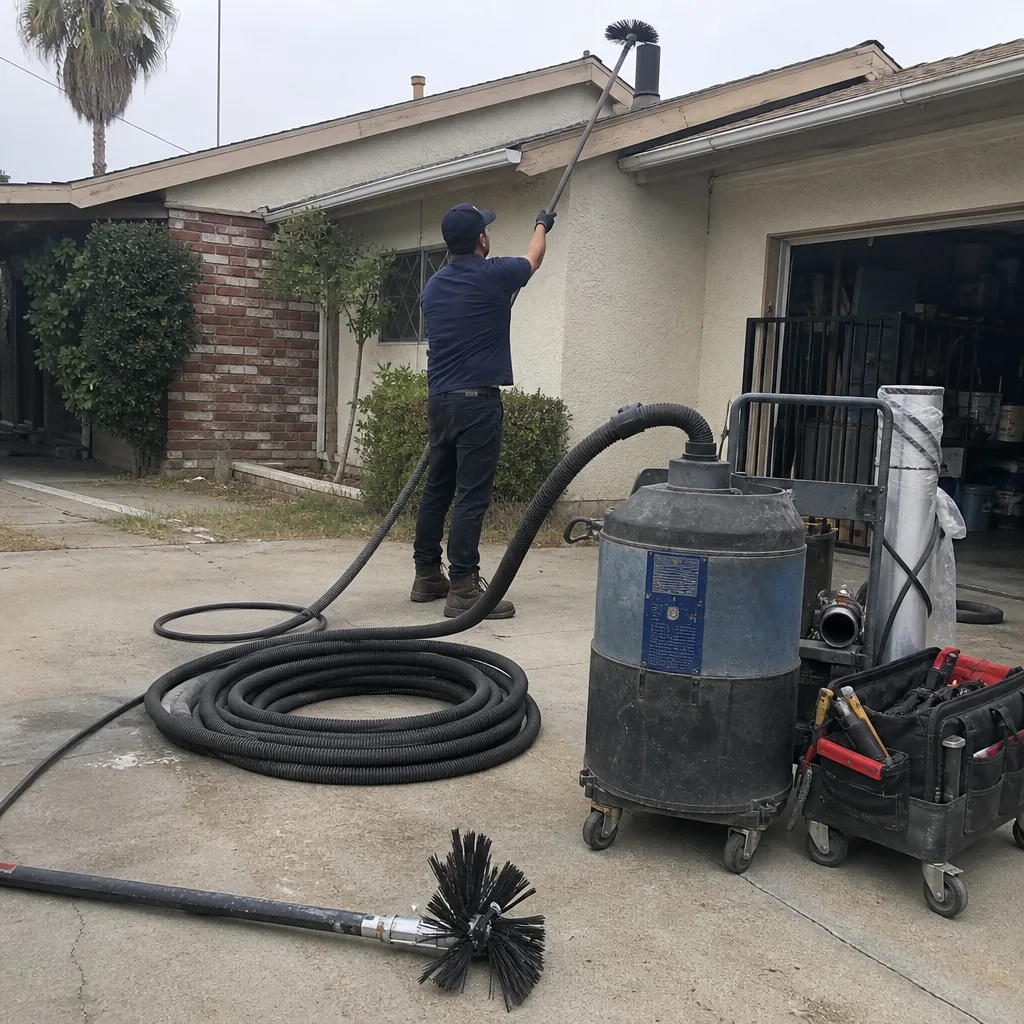 Before
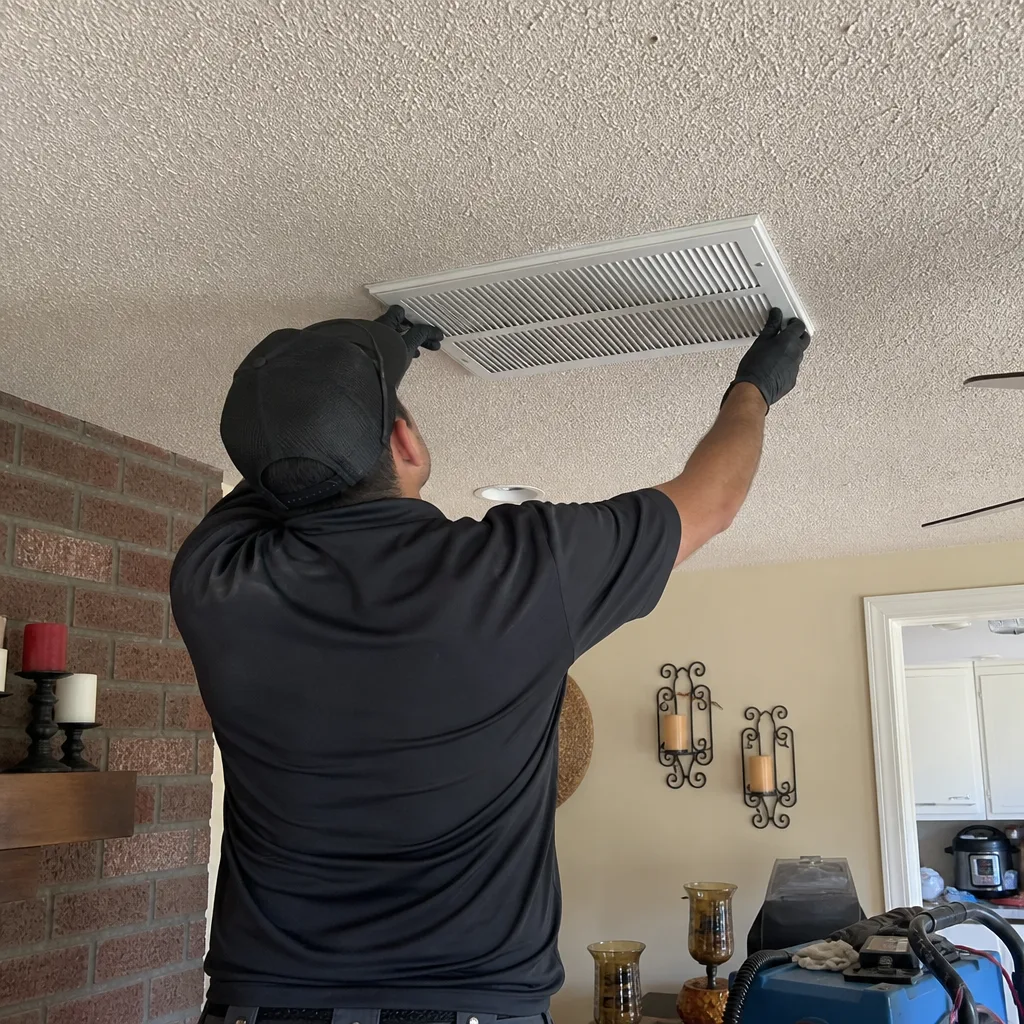 After
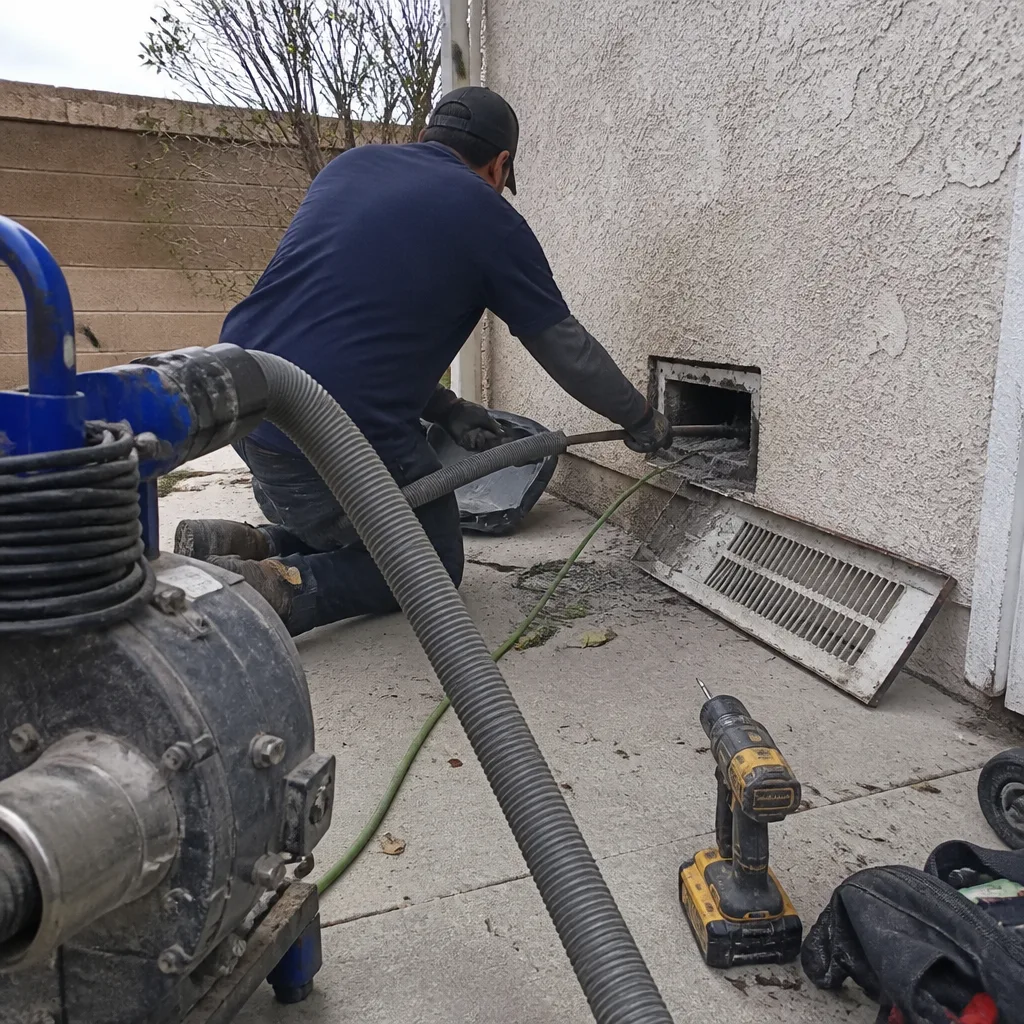 Before
 After
 Before
 After
When to Call a Professional
If you are planning to sell your Rialto home and you know or suspect that past duct work was performed without permits, call a professional before you list. A licensed contractor can assess the work, determine what needs correction, and help you navigate the retroactive permit process with Rialto Building & Safety. The same applies if your home inspection has already flagged an issue. If a cleaning technician finds structural duct problems, like a collapsed run or a torn plenum, do not wait. Explore our more guides & resources for additional homeowner information. The repair work will only become more expensive as the system continues to operate under stress. Duct Cleaning Rialto offers free estimates in Rialto, call (833) 630-3666 to schedule.
Frequently Asked Questions
No, air duct cleaning does not require a building permit anywhere in California, including Rialto. Cleaning is classified as maintenance, not construction. Duct repair or replacement work can require a permit depending on scope. Call (833) 630-3666 if you need guidance on your specific situation.
Replacing more than 40 linear feet of duct triggers a mechanical permit and Title 24 duct leakage testing requirements. Smaller replacements may be treated as exempt repairs, but the exact threshold depends on the scope and local interpretation. A licensed C-20 contractor can give you a written permit determination.
No. A handyman without a California contractor license cannot legally perform duct replacement work that requires a mechanical permit. The correct license is a C-20 HVAC classification. Hiring unlicensed labor for duct work creates unpermitted work that surfaces at resale and insurance claims.
Search the Rialto Building & Safety online permit portal by your address. The permit should show as Issued, display the contractor name, and eventually show a final inspection with a Passed status. You can also call the building counter directly to request verification.
The buyer’s home inspector will likely flag the work, the buyer will request permit records, and you may face a price reduction demand, a requirement to retroactively permit the work, or both. The retroactive process can cost thousands and delay escrow.
No. Dryer vent cleaning is a maintenance service and requires no permit. Dryer vent cleaning in Rialto is a dedicated service, not an add-on, and no building department paperwork applies.
The Bottom Line
Duct cleaning in California is maintenance, and maintenance has no permit requirement. But the transition from cleaning to repair is where legal exposure begins. The California Mechanical Code, Title 24, and Rialto’s building department all have specific thresholds for when duct work becomes permitted construction. A licensed C-20 contractor should be the one performing and permitting that work, and homeowners should demand written scope, permit determinations, and final inspection documentation. Unpermitted duct work follows a home through resale and can void insurance coverage when failures occur. For Rialto homeowners, the lesson is simple: clean ducts are maintenance, repaired ducts are construction, and only one of those needs a permit. If you need clarity on your system, start with a professional assessment. Our Duct Cleaning Rialto home page has information on our equipment and process, and our air duct cleaning in Rialto service page details how we approach the full system, including repairs when they are found. Call (833) 630-3666 for a free estimate.
Written by the team at Duct Cleaning Rialto, serving Rialto since 2015.