Last updated November 2, 2026
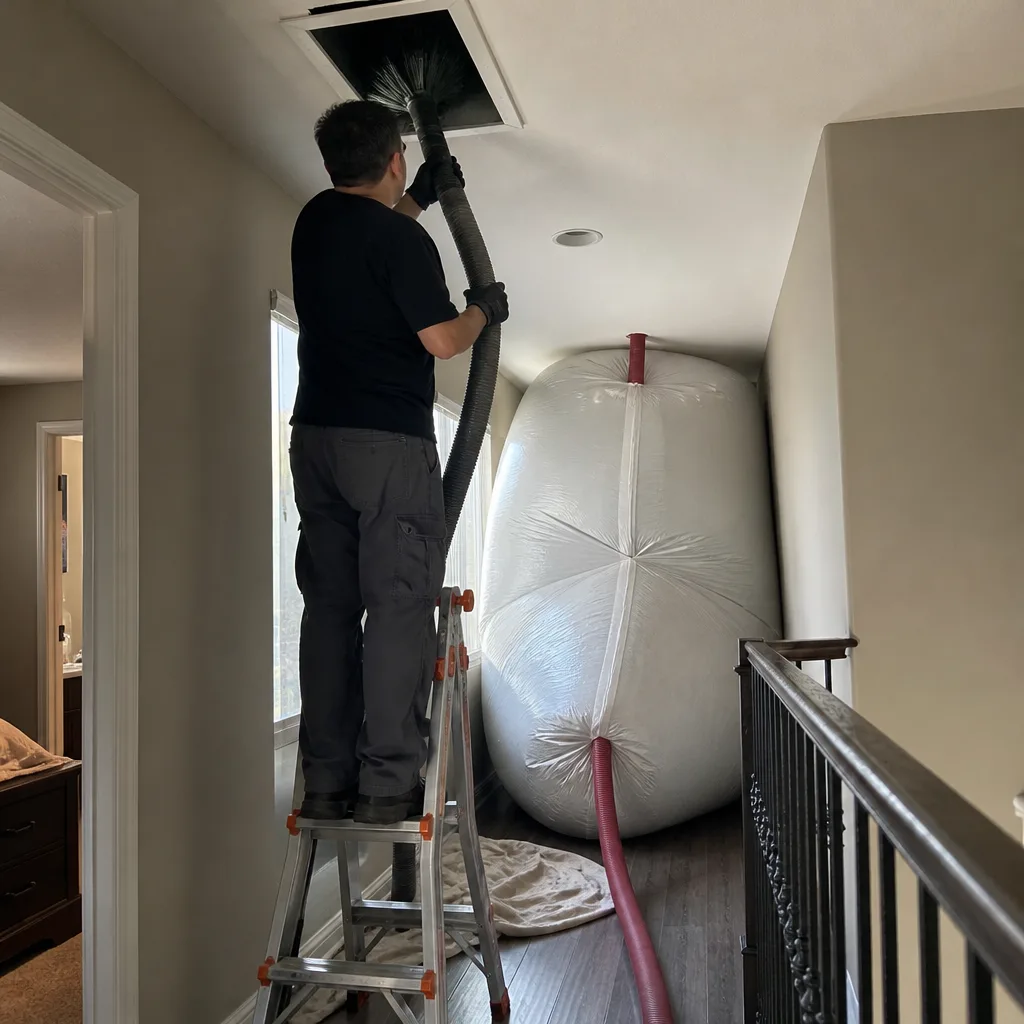
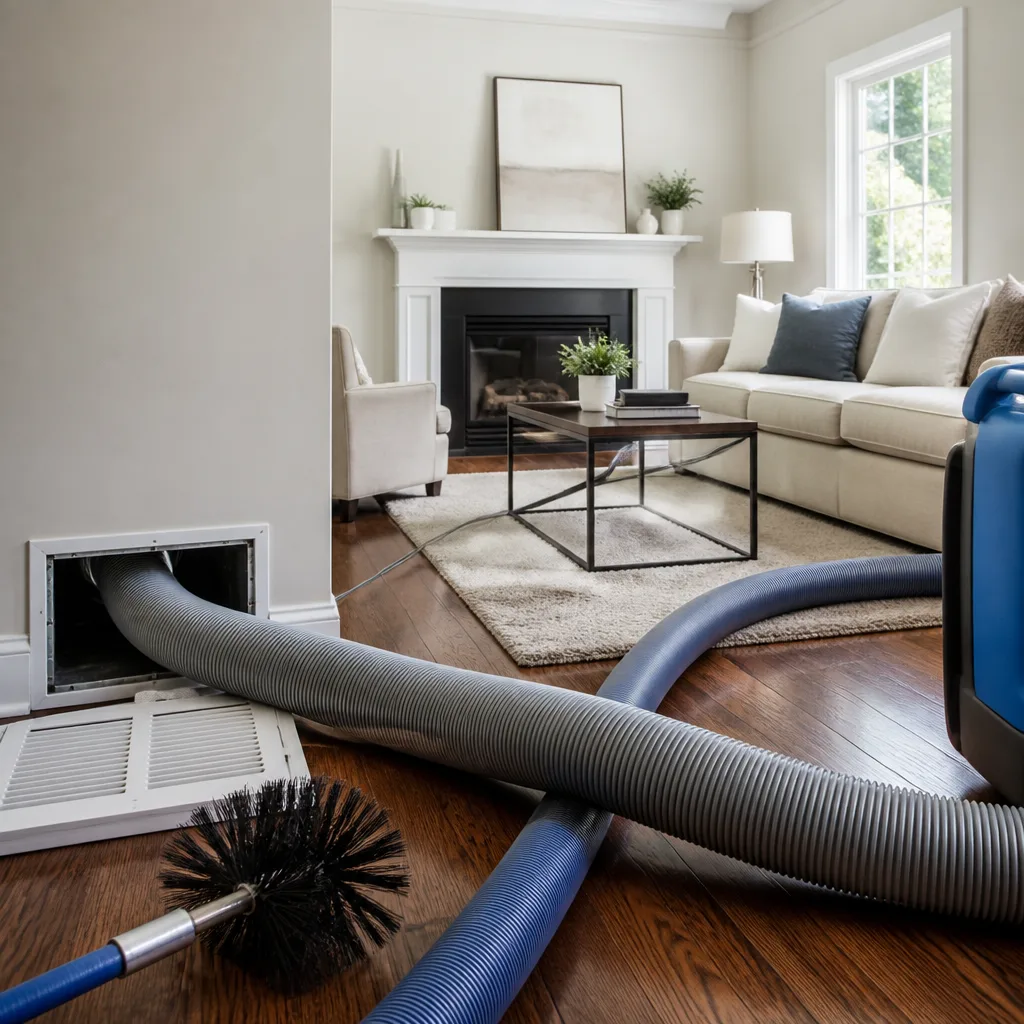 Whole-home duct cleaning
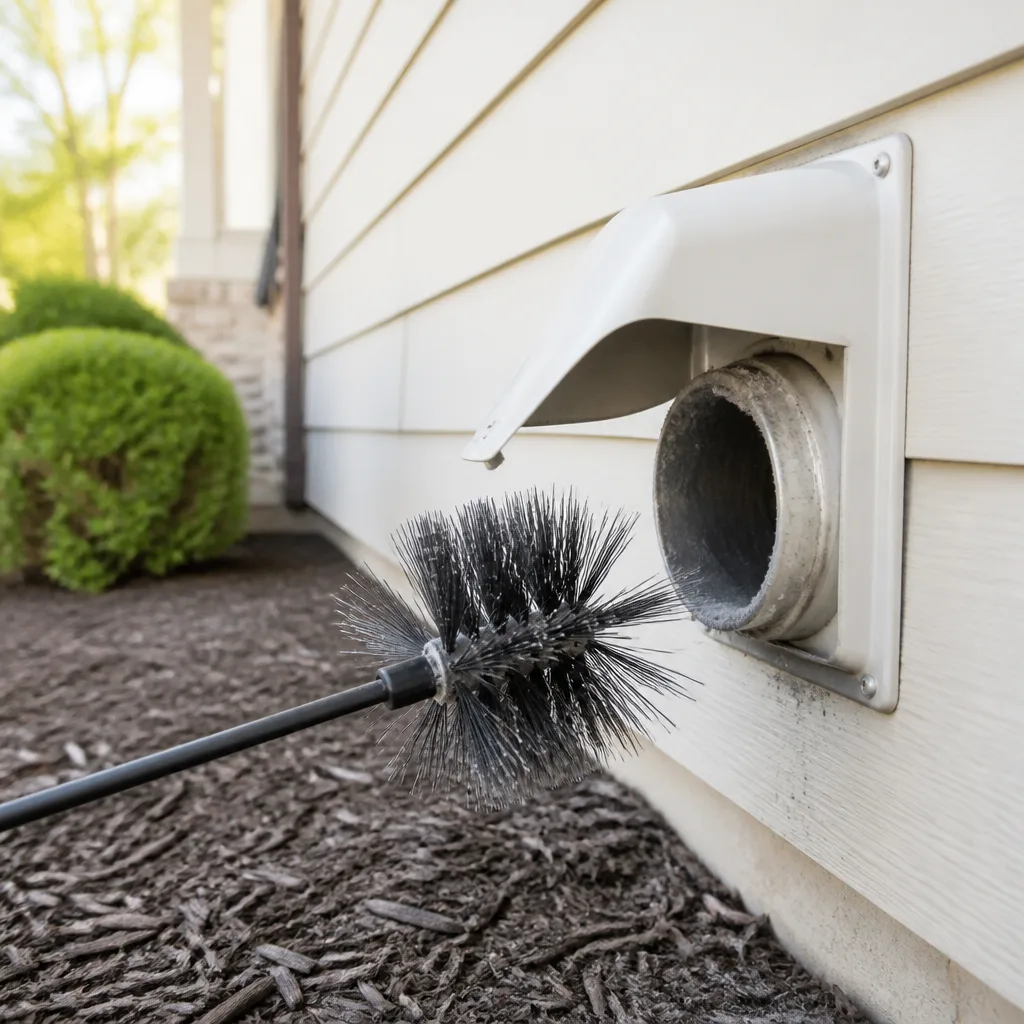 Dryer vent cleaning
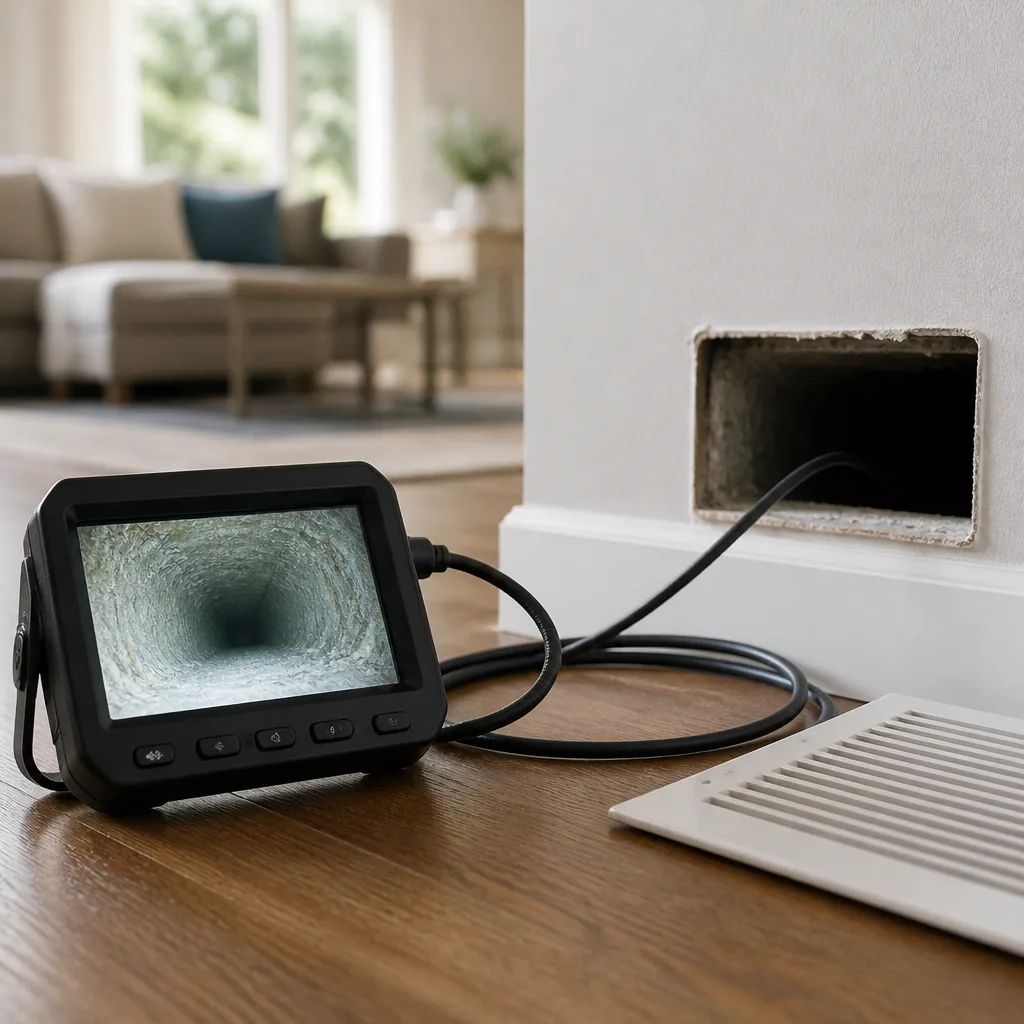 Camera inspection
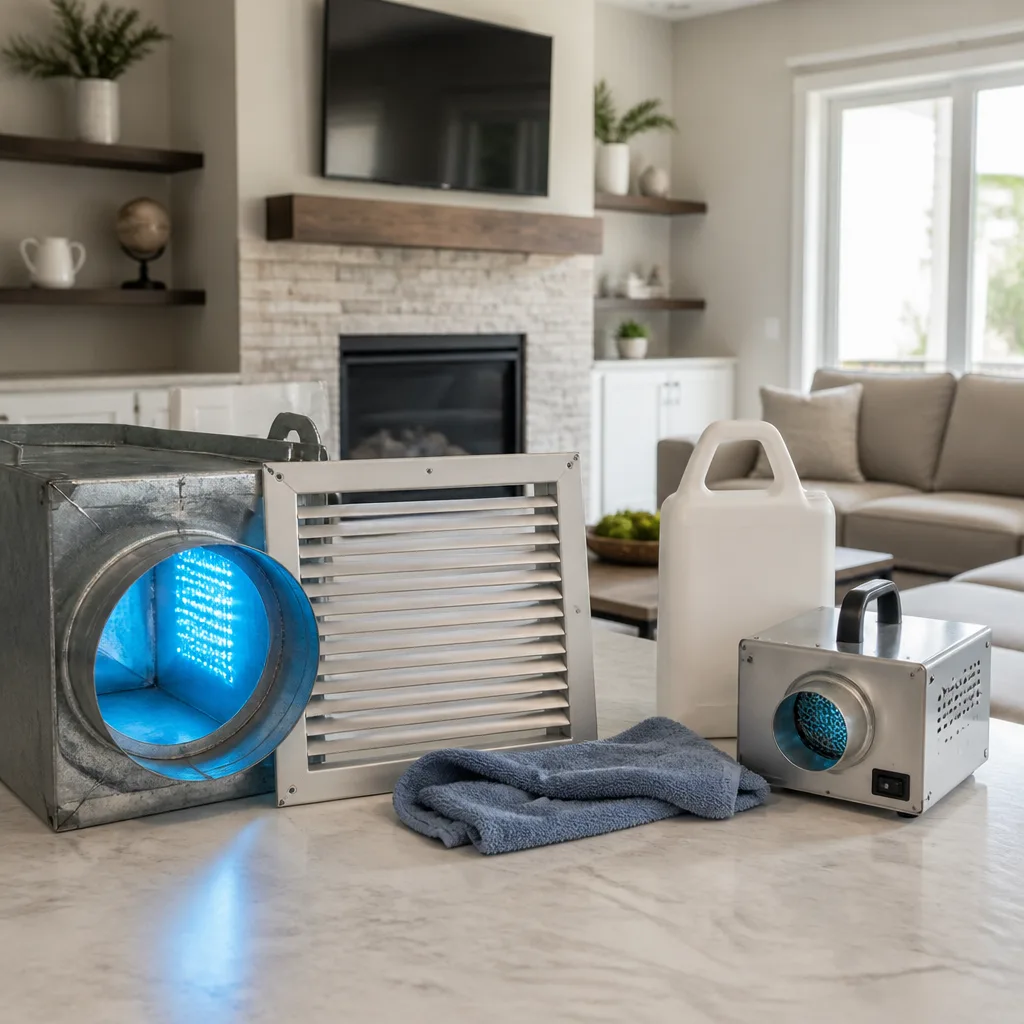 Sanitizing & deodorizing
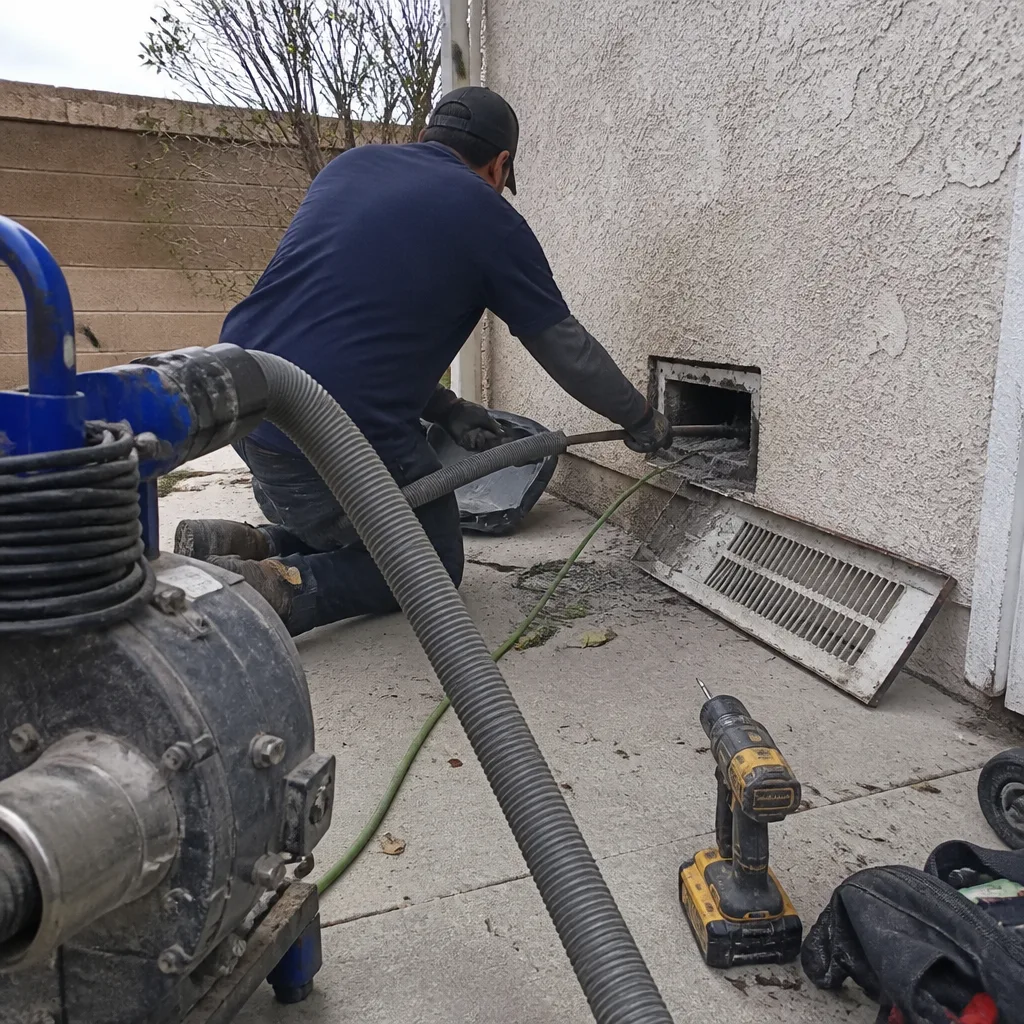
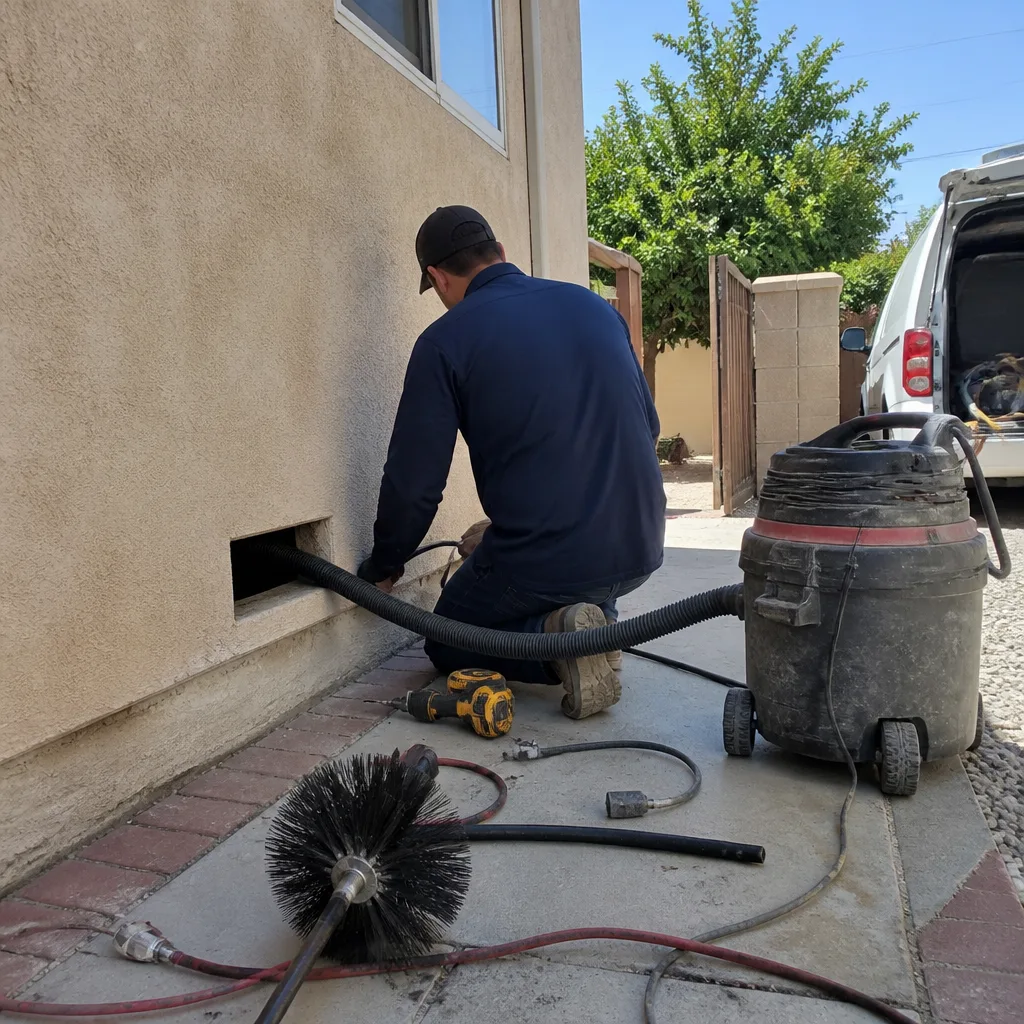
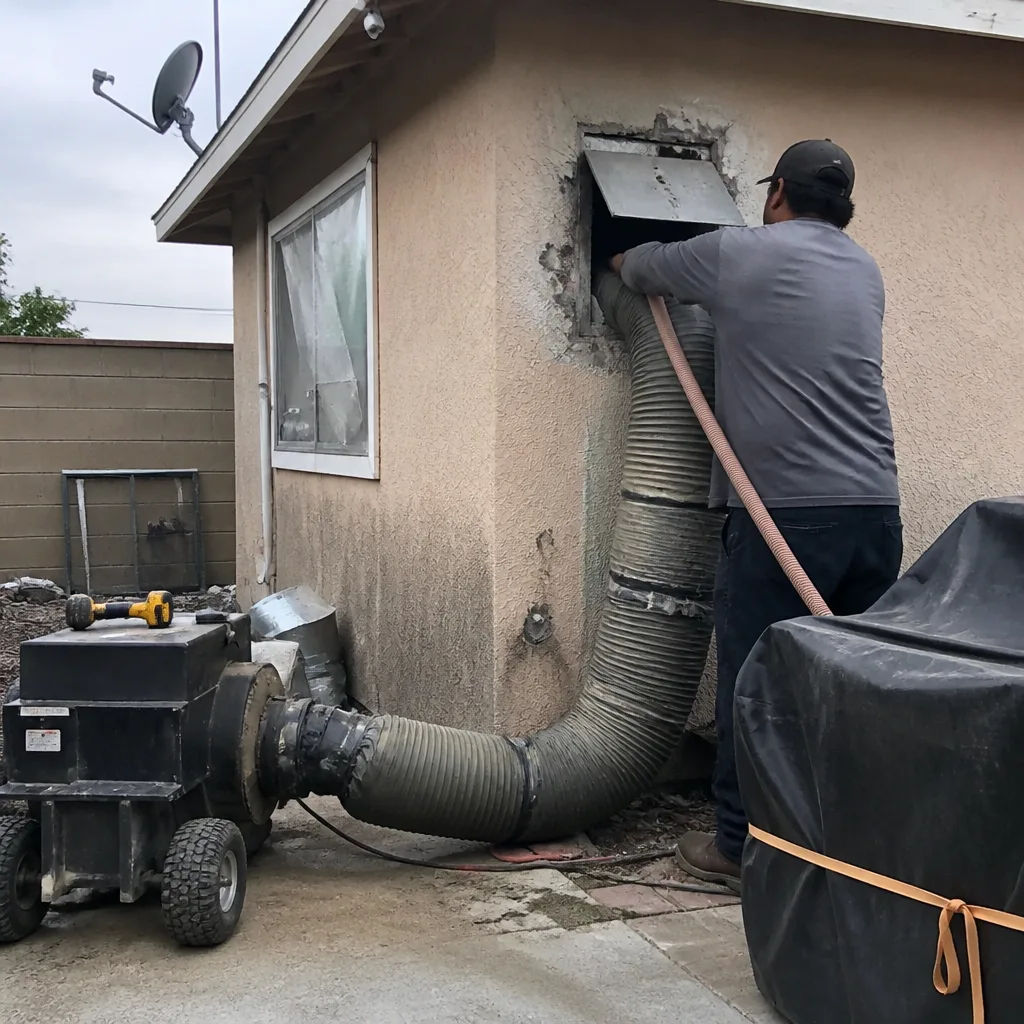
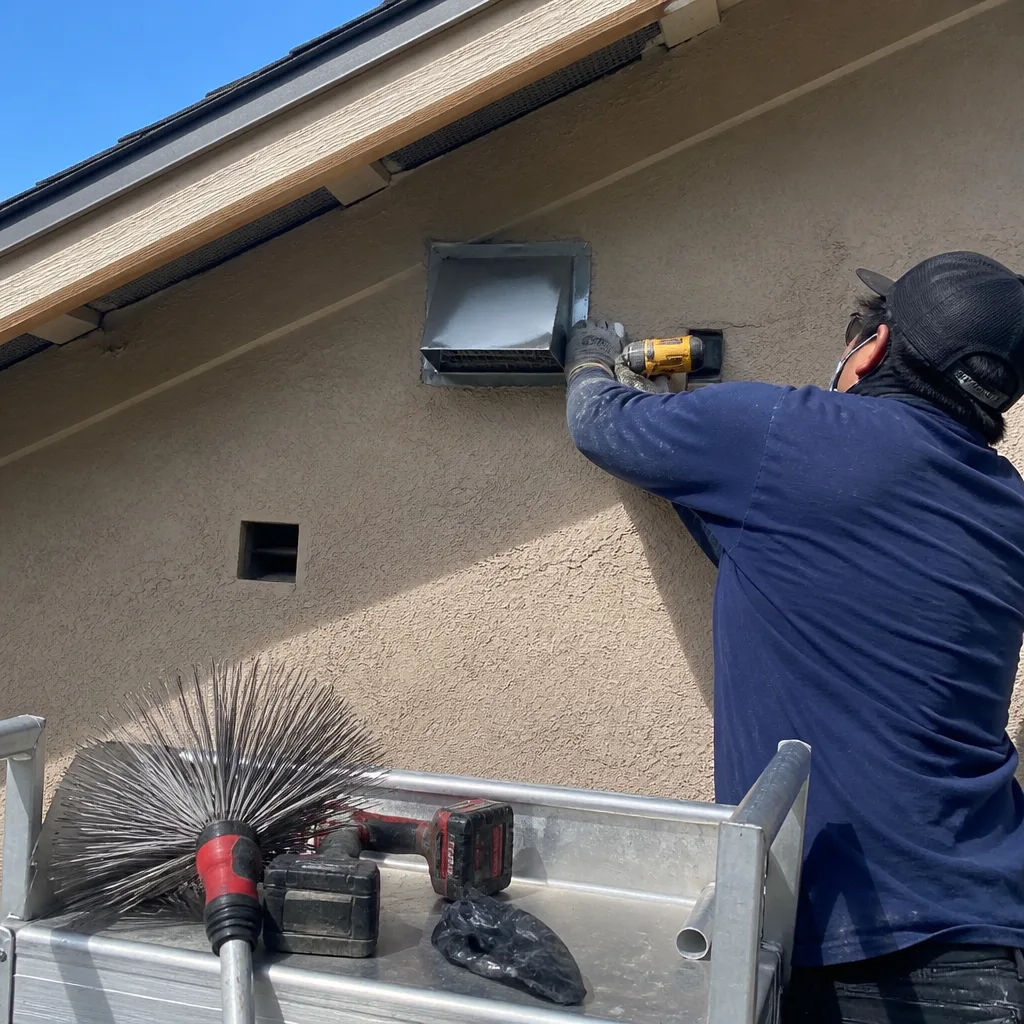
Whole-system duct and dryer vent check with before-and-after photos - you see exactly what came out of your vents
That "$99 whole-house special" is a bait ad - the real number appears once they are in your hallway, or the "clean" is a shop-vac at the register. We photograph the inside of your ducts before and after instead.
Air Duct Cleaning Emergency Preparedness Guide for Rialto Homes
During the 2020 wildfire season, air quality in Rialto spiked to AQI readings above 300, a level the EPA labels simply “Hazardous.” For days at a stretch, the air outside was too dangerous to breathe, and for many homes, the air inside wasn’t much better. The reason surprised a lot of homeowners: their forced-air systems were quietly pulling that smoke through leaky ductwork and circulating it through every room. Most emergency preparedness checklists cover food, water, batteries, and first aid. Almost none of them address the condition of your duct system before, during, or after a smoke event, windstorm, or earthquake. This guide closes that gap for Rialto homeowners, with specific, actionable protocols tied to the hazards we actually face here.
Styles & brands we work with
- Whole-home duct cleaning
- Dryer vent cleaning
- Camera inspection
- Sanitizing & deodorizing
Quick Answer
Air duct cleaning for emergency preparedness in Rialto means knowing three things: how to shut down and seal your forced-air system during a wildfire smoke event to prevent contaminated outdoor air from being pulled inside, how to inspect your ductwork for displacement after an earthquake before you run your furnace or AC again, and what to ask a professional duct cleaning contractor to document after any significant smoke or ash event so you know the system is clean and intact, not just assumed to be. Preparedness isn’t only about having supplies; it’s about knowing the operational status of the system that moves air through your home.
Table of Contents
- Pre-Event Protocol for Wildfire Smoke and High-AQI Days
- How Duct Leakage Changes Your Wildfire Smoke Decisions
- Post-Earthquake Duct Inspection Checklist
- How to Temporarily Seal a Duct System During an Emergency
- What to Request After a Smoke or Ash Event
- Building an HVAC Air Quality Emergency Kit
- Dryer Vent Fire Risk During Emergencies
- Common Mistakes to Avoid
- When to Call a Professional
- Frequently Asked Questions
- The Bottom Line
Pre-Event Protocol for Wildfire Smoke and High-AQI Days
When the AQI in Rialto pushes past 150, the calculation changes. The default instinct for many homeowners is to keep the AC running and hope the filter catches the smoke. In a perfectly sealed duct system with a MERV-13 filter, that works reasonably well. In a typical Rialto home with duct leakage between 10 and 20 percent, running the blower means actively drawing unfiltered outdoor air into the living space through every crack and gap in the ductwork. The system becomes a smoke pump, not a smoke filter.
Here is the pre-event protocol we recommend for Rialto homeowners:
- Know your filter size and MERV rating before smoke season starts. Write down the exact dimensions stamped on your current filter and buy a spare MERV-13 filter that fits. Most residential systems can handle MERV-13 without a significant airflow penalty, but if you have an older system, confirm with a professional. Honeywell and Aprilaire both manufacture MERV-13 filters in common residential sizes.
- Determine whether your duct system is worth running during a smoke event. This is the step almost nobody takes. If you’ve had a duct inspection in the past two years and were told the system is sealed and intact, you can run the blower with a clean MERV-13 filter and meaningfully reduce indoor particulate. If you’ve never had an inspection, or you know there are leaks, running the system during a Hazardous AQI event will make your indoor air worse than if the system were off.
- Seal return grilles and supply registers if you decide to shut the system down. Use foil tape, plastic sheeting, and painter’s tape to cover visible registers. This keeps smoke-stagnant air in the ducts from drifting into the rooms through natural convection.
- Close all windows and exterior doors. Obvious, but important. The goal is to stop any driven airflow through the house envelope.
The most important decision you’ll make during a Rialto smoke event is whether to run the fan or shut the system down entirely. For homes with known leakage, shut it down. For homes with sealed ducts and upgraded filtration, run the fan on continuous low speed. That distinction is where most generic preparedness advice falls apart.
How Duct Leakage Changes Your Wildfire Smoke Decisions
Duct leakage matters more in Rialto than in many other cities because our housing stock is older, and older homes in the Inland Empire were commonly built with duct runs through unconditioned attics. Attic ducts are exposed to extreme heat in the summer, and over time, the seams, connections, and plenum seals degrade. We’ve inspected attic duct systems in Rialto where visible gaps at the plenum were pulling in attic air on every single cycle, year after year, without the homeowner knowing.
Here’s the physics that matters: when the blower runs, the supply side of the system is under positive pressure. Air leaks out of the ducts into the attic. That escaping air creates negative pressure inside the home, which sucks outdoor air in through every opening in the building envelope. During a wildfire smoke event, that means the house is actively ingesting outside air through doors, window frames, and wall penetrations to replace the air the ducts are losing. You can run the highest-MERV filter you want, but you cannot filter air that bypasses the filter entirely.
The practical takeaway for Rialto homeowners is this: if you haven’t had your Air Duct Cleaning in Rialto performed with a leakage assessment in the last three years, assume the system is leaky when making emergency decisions. Assume that running the fan during a Hazardous AQI event will draw smoke inside. Assume you need to shut the system down and rely on portable HEPA purifiers instead, or plan to have your ductwork sealed before the next smoke season begins.
Professional-grade equipment makes the assessment faster and more accurate. When Duct Cleaning Rialto performs a cleaning, the process uses Duct Cleaning Rialto home service standards built around Rotobrush rotary-brush agitation and Nikro HEPA-rated vacuuming. Loosened debris is captured at the source, not redistributed. But beyond cleaning, the assessment tells you whether the ducts are actually intact, which is the piece of information you need for emergency planning.
Post-Earthquake Duct Inspection Checklist
Rialto sits in a seismically active zone, close enough to the San Andreas and San Jacinto fault systems that a significant earthquake is not a hypothetical. When the shaking stops, most homeowners check for gas leaks, cracks in walls, and broken windows. Almost nobody looks at their duct system. That’s a mistake, because a displaced duct run can go unnoticed for months while it pumps conditioned air into an attic or crawlspace, or pulls contamination into the house.
Here is the post-earthquake duct inspection checklist we recommend for Rialto homeowners, to be completed before the first furnace or AC cycle after a significant seismic event:
- Check visible duct runs in the attic or crawlspace with a flashlight. Look for sections that have slipped at their connections, pulled away from plenums, or dropped from their hangers. A displaced section will often show a visible gap at the joint, sometimes with a ring of dirt or insulation dust where the two segments separated.
- Inspect the plenum connections at the air handler and at the trunk line. The plenum is the metal box that transitions from the equipment to the duct runs. After shaking, the seal between the plenum and the equipment can crack open. Run your hand along the seam, feeling for gaps, or shine a flashlight and look for light coming through where it shouldn’t.
- Check flexible duct runs for kinks, tears, or pinches caused by shifting. Flex duct is resilient but can be pulled tight when the structure shifts, creating a restriction or a tear. Look for sections that are suddenly taut or visibly damaged.
- Verify duct hangers and strapping are still attached. Look for hangers that have pulled away from framing members, allowing sections of duct to sag. Sagging creates low points where dust and moisture collect.
- Inspect the return air path for shifted or separated components. The return draws the most air through the system. If the return plenum or duct is compromised, the system will draw attic or crawlspace air directly into the house on every cycle.
- If you see any displacement, do not run the system until a professional has repaired it. Running the system with a displaced connection can introduce fiberglass insulation fibers and dust into the living space, and it wastes energy by conditioning air you never receive.
Displacement after an earthquake looks remarkably consistent once you know what to look for: a visible gap at a joint, dust accumulation at a connection point, a section of flex duct hanging lower than its neighbors, or a plenum seam that has cracked its mastic seal. If you find any of these conditions, the correct next step is Air Duct Repair in Rialto, performed before you put the system back into service. Clean ducts and intact ducts are two different goals, and after seismic activity, intact is the priority.
How to Temporarily Seal a Duct System During an Emergency
During a multi-day smoke event in Rialto, shutting the system down and covering registers is the right move for a leaky duct system. But contaminated air can still migrate through the ducts into living spaces through convection, especially if there are temperature differences between the attic and the house. A temporary seal meaningfully reduces that migration. This is not a permanent fix and not a substitute for professional sealing, but it’s a practical short-term measure.
Here is a step-by-step process for temporarily sealing a duct system during a prolonged smoke event:
- Confirm the HVAC system is completely off. Set the thermostat to “Off” and switch the system breaker off at the electrical panel. Do not attempt to seal registers while the blower is running.
- Gather materials. You’ll need foil tape (not duct tape, which dries out and fails on metal surfaces), painter’s tape or masking tape, heavy plastic sheeting, and scissors. All of these are available at any hardware store in Rialto.
- Seal every supply register in the house. Cover each register opening with a layer of plastic sheeting, then secure it with painter’s tape around the entire perimeter. The plastic creates a barrier, and the tape holds it in place without leaving residue on the wall or floor.
- Seal the return air grille or grilles. The return is more important than the supplies because it’s most directly connected to potential attic infiltration. Cover it with plastic and tape as well.
- Close and seal the filter access door on the air handler if accessible. This is a secondary measure, but it helps if the equipment is in a garage or closet with access to outside air.
- Label each sealed register with a small piece of painter’s tape marked “SEALED” so no one in the household forgets and turns the system back on while registers are covered. Running the system with registers sealed can damage the blower motor.
This temporary seal is not a perfect solution. It does not address leaks inside the attic duct runs themselves. But during a multi-day Hazardous AQI event, the goal is damage reduction, not perfection. Every register you seal is one less pathway for airborne contamination to enter the living space. When the smoke clears, remove all tape and plastic, replace the filter, and have the system inspected before returning it to service.
What to Request After a Smoke or Ash Event
After a significant wildfire smoke or ash event in Rialto, the duct cleaning conversation changes. This is not a routine maintenance cleaning. This is a post-contamination response, and the questions you ask determine whether you get a meaningful result or a surface-level pass.
Here is what to request from a duct cleaning contractor after a smoke or ash event:
- Ask whether they use source-capture vacuuming. The equipment matters. A professional-grade setup like Nikro HEPA-rated vacuuming captures particulate at the source during agitation, rather than allowing loosened debris to become airborne in the living space. If a contractor uses a basic shop-vac method, the cleaning can make indoor air quality worse, not better, by disturbing settled ash and recirculating it.
- Ask whether they use brush agitation, not just vacuuming. Ash and smoke particulate adhere to duct walls and plenum surfaces. Vacuuming alone does not reliably remove adhered material. Rotobrush rotary-brush agitation systems physically dislodge bonded debris so the vacuum can capture it. A cleaning without mechanical agitation is incomplete by definition.
- Ask about containment during the job. The contractor should describe how they prevent cross-contamination during service. Abatement Technologies containment equipment is the standard for remediation-level work in this industry. If the answer is vague, be concerned.
- Request before-and-after photographic documentation of the duct interior. You should see the condition of the plenum, trunk lines, and branch runs before the work begins and after it’s completed. If a contractor can’t or won’t provide photographic proof, that’s a red flag.
- Request a visual duct integrity assessment as part of the visit. Post-event cleaning is the right time to identify any structural issues: separated connections, failed seals, damaged flex sections. A contractor that offers Air Duct Repair in Rialto can address these findings during the same visit, which is far more efficient than finding out later that the system was cleaned but still leaking.
The difference between a routine post-event cleaning and a remediation-level response comes down to equipment, documentation, and whether the contractor can actually repair what they find. Duct Cleaning Rialto runs Rotobrush and Nikro systems alongside Abatement Technologies containment on every job, not just post-event work. That’s the standard to look for.
Building an HVAC Air Quality Emergency Kit
Every Rialto household should have an emergency kit for air quality, and it’s not the same thing as a general disaster kit. This kit is specifically about managing your forced-air system and indoor air during an environmental emergency. The components are inexpensive, available locally, and most of them will sit in a bin in the garage until the day you need them. That’s exactly the point.
Here is the minimum HVAC air quality emergency kit for a Rialto home:
- Two spare MERV-13 filters in the exact size your system uses. Check the size stamped on your current filter before you buy. Most Rialto homes use 1-inch filters in common sizes like 16x20x1 or 20x25x1, but yours may differ. Honeywell and Aprilaire both make MERV-13 filters in standard residential sizes, and either brand will do the job.
- One roll of foil tape. Foil tape, not duct tape. Foil tape adheres to metal surfaces, resists temperature cycling, and does not degrade like cloth-backed duct tape. It’s used for temporary sealing of visible gaps and for securing plastic sheeting over registers.
- A heavy-duty flashlight and spare batteries. Post-earthquake duct inspection happens in attics and crawlspaces. You need a reliable light source. A headlamp is even better because it leaves both hands free.
- A roll of heavy plastic sheeting. For covering registers and returns when you decide to seal the system during a smoke event.
- One roll of painter’s tape. For securing plastic to registers without damaging surfaces, and for labeling sealed registers so no one accidentally runs the system while it’s covered.
- A written note with your filter size, the date of your last duct inspection, and the phone number for a professional duct cleaning company in Rialto. The note matters more than you’d think. During an emergency, memory fails. Having the size written down means you can replace a filter without hunting for the old one.
This kit costs under $75 to assemble and takes one trip to a hardware store. It sits untouched for years, hopefully. But when the AQI in Rialto climbs into the Hazardous range, or an earthquake shakes the house, that kit turns a panicked reaction into a measured response.
Dryer Vent Fire Risk During Emergencies
There’s a second, quieter emergency pathway that deserves attention in this guide: the dryer vent. During extended smoke events or windstorms in Rialto, exterior dryer vent terminations collect airborne lint, ash, and dust much faster than they normally would. A partially clogged dryer vent is the leading cause of residential dryer fires, and emergency conditions accelerate the buildup.
Here is what Rialto homeowners should do about dryer vents as part of emergency preparedness:
- Inspect the exterior dryer vent termination before and after windstorms. High winds in the Inland Empire drive debris into exterior vents. Check that the flap opens freely and closes fully, and remove any visible accumulation.
- Do not run the dryer during a Hazardous AQI smoke event. Dryers exhaust large volumes of air outside, which creates negative pressure inside the home and draws outdoor air in through the envelope. The same dynamic as a leaky HVAC system, but faster.
- Schedule a professional Dryer Vent Cleaning in Rialto if the duct has not been cleaned in the past 18 months. This is a dedicated service, and it should be performed with professional-grade equipment, not as a cursory add-on to another job.
Duct Cleaning Rialto treats dryer vent cleaning as a fire-safety service, using the same equipment standard applied to air duct work. The goal is to remove the accumulated lint and debris that creates a fire hazard, not to make the dryer run slightly more efficiently. For Rialto homeowners who have never had their dryer vent cleaned, this is the single most impactful emergency-preparedness action they can take this month.
Common Mistakes to Avoid
- Running the HVAC system during a smoke event with a leaky duct system. This is the most common mistake we see in Rialto. Homeowners assume the filter protects them, but a leaky system with a 10 to 20 percent leakage rate pulls unfiltered smoke directly into the house. If you haven’t had a duct inspection, assume leakage and shut the system down.
- Using duct tape for emergency sealing. Duct tape fails on metal surfaces, especially when exposed to temperature cycling in attics. Use foil tape. The name “duct tape” is misleading; it was never the right product for ducts.
- Assuming a routine duct cleaning is the same as post-event remediation. A standard cleaning removes dust and debris. A post-event response removes ash, soot, and smoke particulate, and requires source-capture vacuuming and containment that many basic contractors don’t offer. Ask about equipment before you book.
- Running the furnace or AC after an earthquake without inspecting the ducts. Displaced connections and broken plenum seals go unnoticed for months, silently pumping conditioned air into attics and crawlspaces. Post-seismic inspection is a 20-minute flashlight check that can prevent months of wasted energy and contaminated indoor air.
- Sealing registers and then forgetting to unseal them before running the system. Running a blower against sealed registers creates excessive static pressure and can damage the blower motor. Label every sealed register clearly, and remove all seals before restoring power.
- Neglecting the dryer vent during emergency preparedness. The dryer vent is a fire hazard that accumulates debris faster during wind and smoke events. A clogged dryer vent is a leading cause of residential fires, and emergency conditions accelerate the problem.
- Buying the wrong size filter before a smoke event. During a smoke emergency, stores run out of common filter sizes quickly. If you don’t know your size, you end up without a replacement when you need it most. Write it down and buy a spare now.
When to Call a Professional
Some emergency-prep tasks are clearly do-it-yourself: assembling a kit, inspecting visible duct sections with a flashlight, and temporarily sealing registers. Others are not. If you find visible displacement after an earthquake, separated connections at the plenum, or signs of contamination after a smoke event, a professional response is warranted. Post-event cleaning requires source-capture HEPA vacuuming and mechanical agitation to remove adhered ash and soot, and structural repairs require expertise most homeowners don’t have. Duct Cleaning Rialto provides free estimates and honest assessments in Rialto. Call (833) 630-3666 to schedule a duct inspection before the next emergency season arrives.
Frequently Asked Questions
Rialto homeowners should complete three steps before wildfire season: confirm the filter size and MERV rating of their HVAC system and purchase two spare MERV-13 filters, have a duct inspection performed to determine whether the system is sealed or leaky (which changes every smoke-event decision), and assemble an HVAC emergency kit with foil tape, plastic sheeting, painter’s tape, and a flashlight. Call (833) 630-3666 for a free estimate on a pre-season duct inspection.
You should run your AC during a smoke event only if you have confirmed that your duct system is sealed and intact, and you have a clean MERV-13 filter installed. If you have leaky ducts or have never had an inspection, running the system will pull unfiltered smoke into the house, making indoor air quality worse. In that case, shut the system off and seal registers and returns with plastic sheeting and painter’s tape.
After an earthquake in Rialto, inspect your ducts by examining all visible duct runs in the attic or crawlspace with a flashlight, checking for separated connections, sagging sections, torn flex duct, and cracked plenum seals. Look for visible gaps at joints and dust rings around connection points, which indicate displacement. If you find structural damage, do not run the system until a professional has repaired it.
Post-smoke-event duct cleaning in Rialto typically falls in the $450 to $900 range for a whole-home system, depending on square footage, number of duct runs, and the severity of contamination. Homes with significant ash infiltration or damaged ductwork may see higher costs, especially if Air Duct Repair in Rialto is needed. Call (833) 630-3666 for an exact quote; estimates are free.
Routine duct cleaning removes normal household dust and debris from a functioning system. Post-event remediation removes ash, soot, and smoke particulate that has adhered to duct surfaces, and it requires source-capture HEPA vacuuming, mechanical agitation, and containment to prevent cross-contamination during the job. Duct Cleaning Rialto runs Rotobrush agitation and Nikro HEPA systems with Abatement Technologies containment on every job, meeting the remediation standard regardless of the job type.
Dryer vents in Rialto should be professionally cleaned every 12 to 18 months under normal conditions, and more often if you run laundry daily, have a long vertical vent run, or live in an area with significant wind and dust, which describes much of the Inland Empire. Dryer Vent Cleaning in Rialto is a dedicated fire-safety service that removes accumulated lint and debris from the entire vent run, not just the visible exterior opening.
The Bottom Line
Emergency preparedness in Rialto has a gap, and that gap is the duct system. Wildfire smoke, windstorms, and earthquakes all interact with your forced-air system in ways that generic preparedness checklists ignore. The protocol is straightforward: know your filter size, know whether your ducts are sealed or leaky, shut the system down and seal registers during Hazardous AQI events if leakage is suspected, inspect for displacement after seismic activity, and use a professional duct cleaning contractor with remediation-grade equipment after any significant smoke or ash event. The kit costs under $75 to assemble. The inspection takes one visit. The alternative, running a compromised system during an environmental emergency, means actively pumping contamination into the air your family breathes. For Rialto homeowners, preparedness now beats remediation later.
Written by the team at Duct Cleaning Rialto, serving Rialto, California with professional-grade air duct cleaning, dryer vent cleaning, and air duct repair services.
See the difference
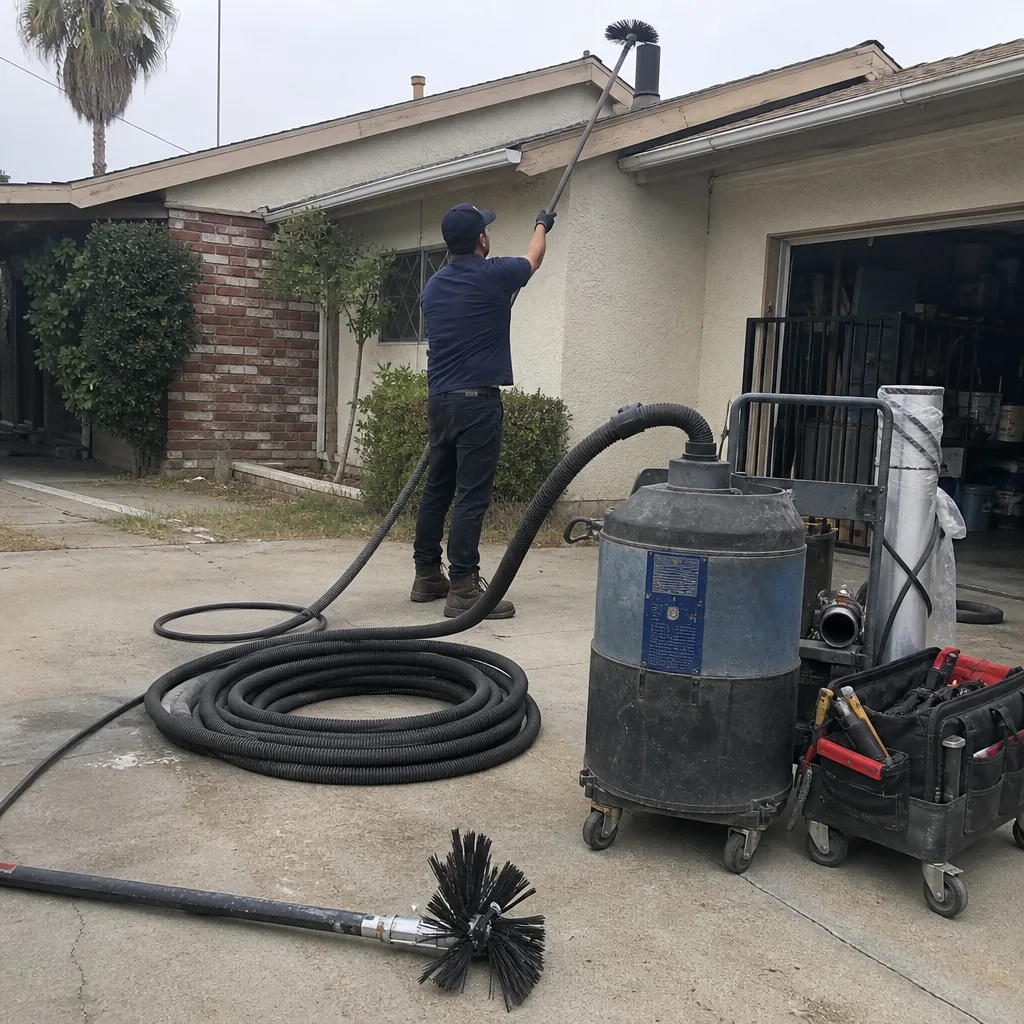 Before
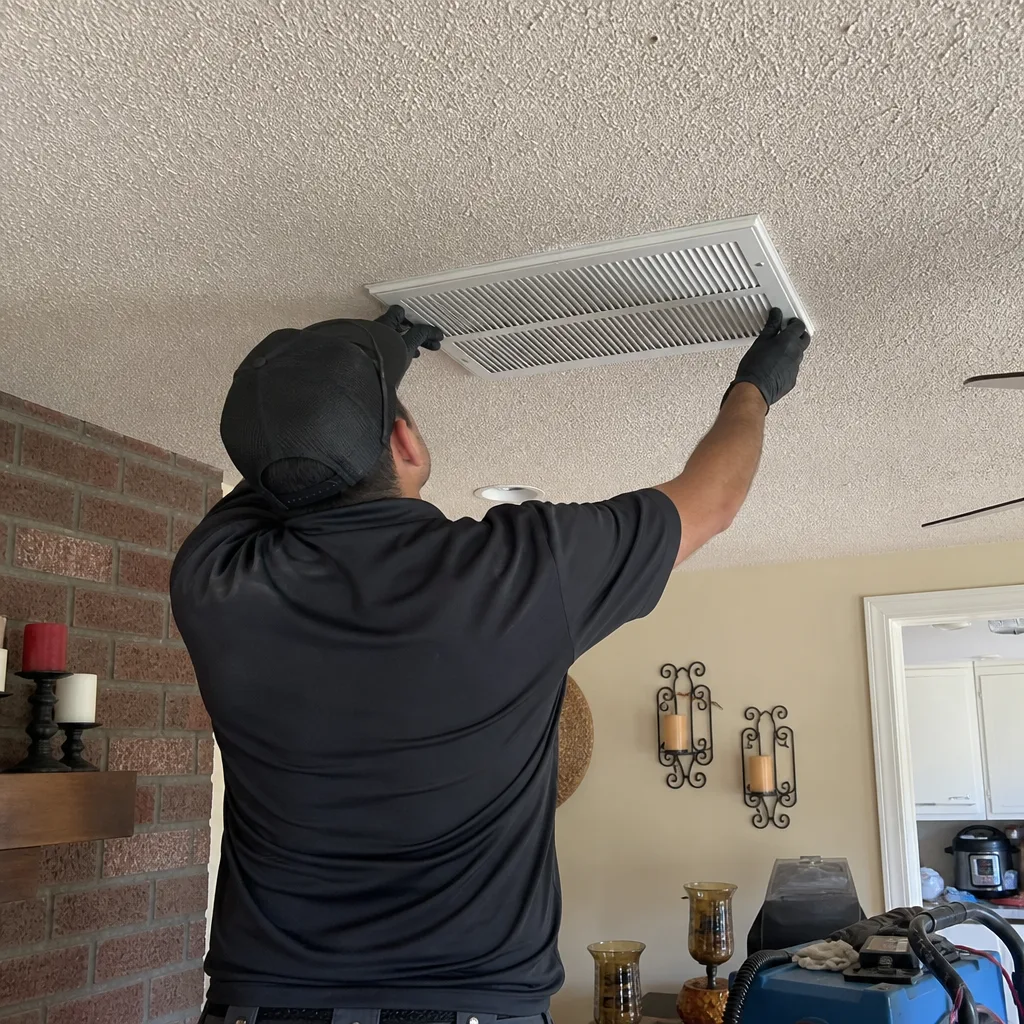 After
 Before
 After
 Before
 After